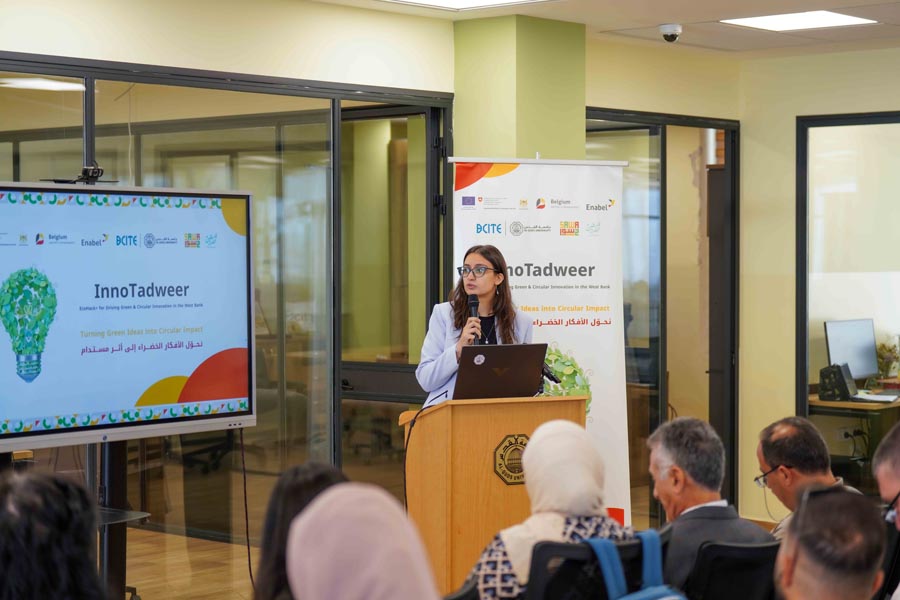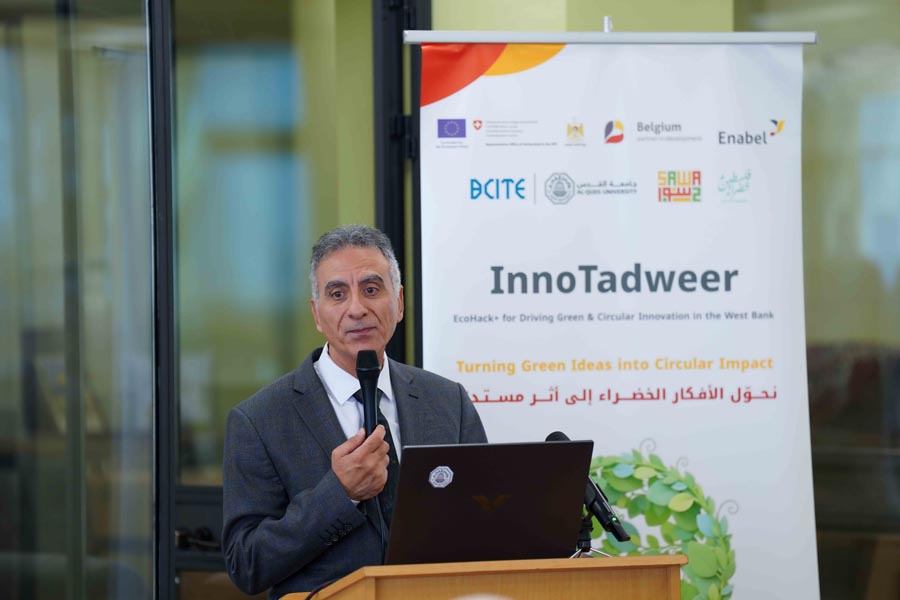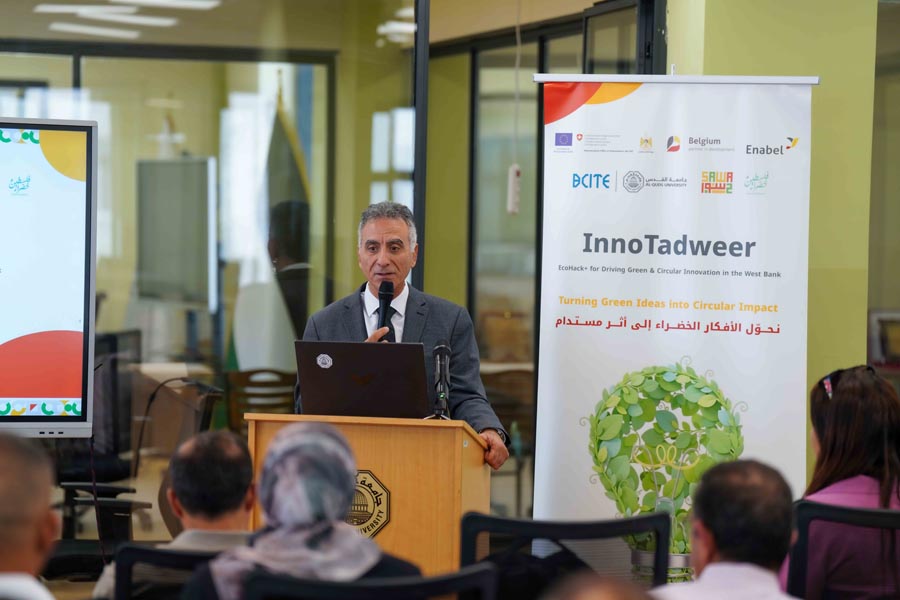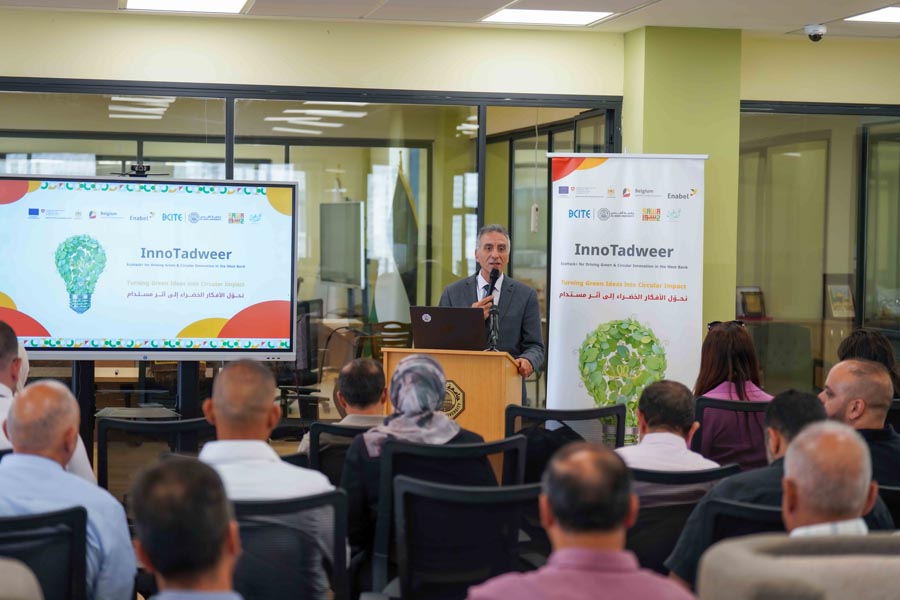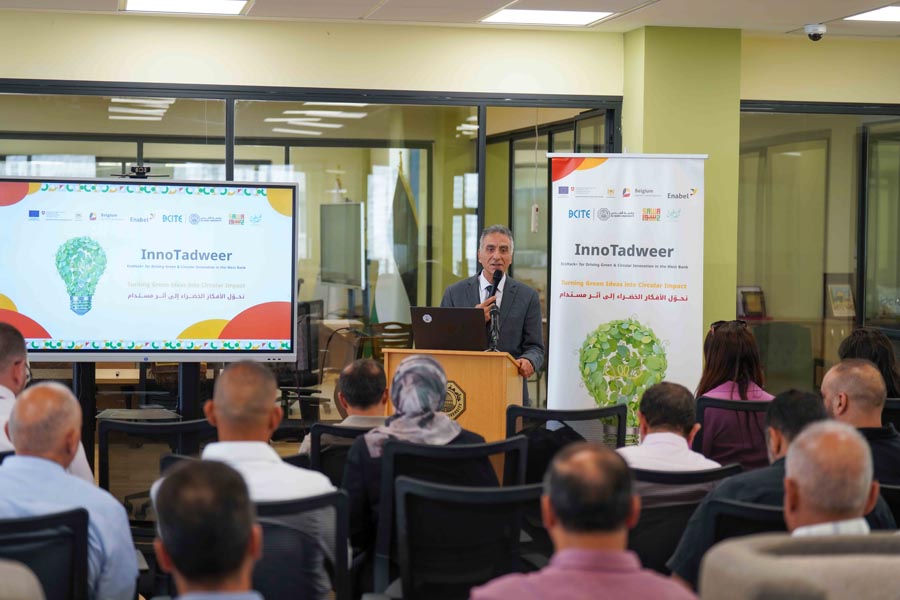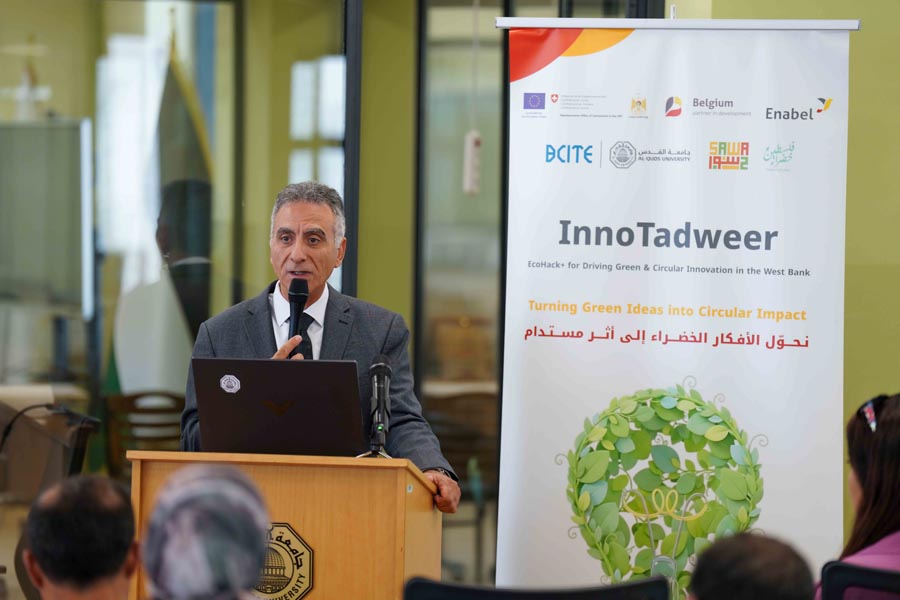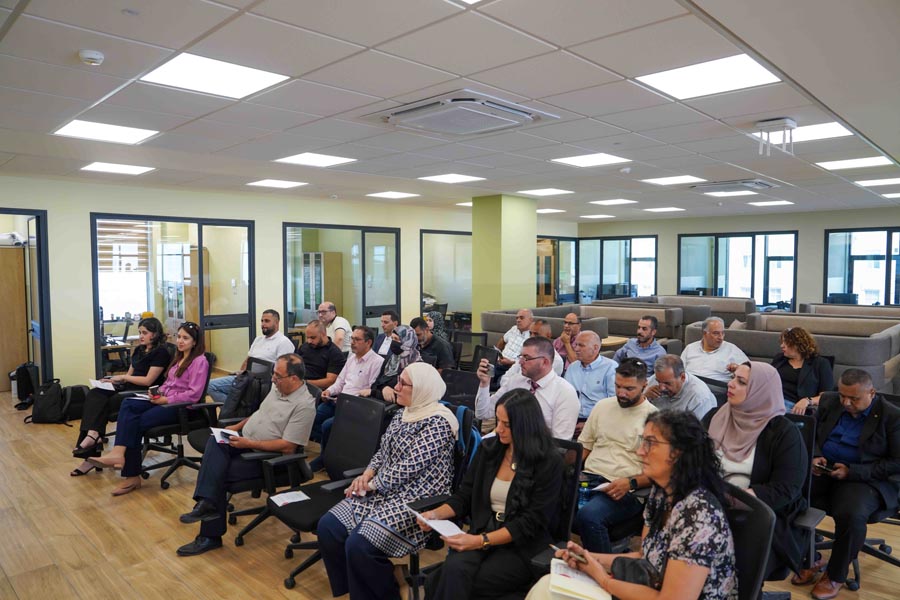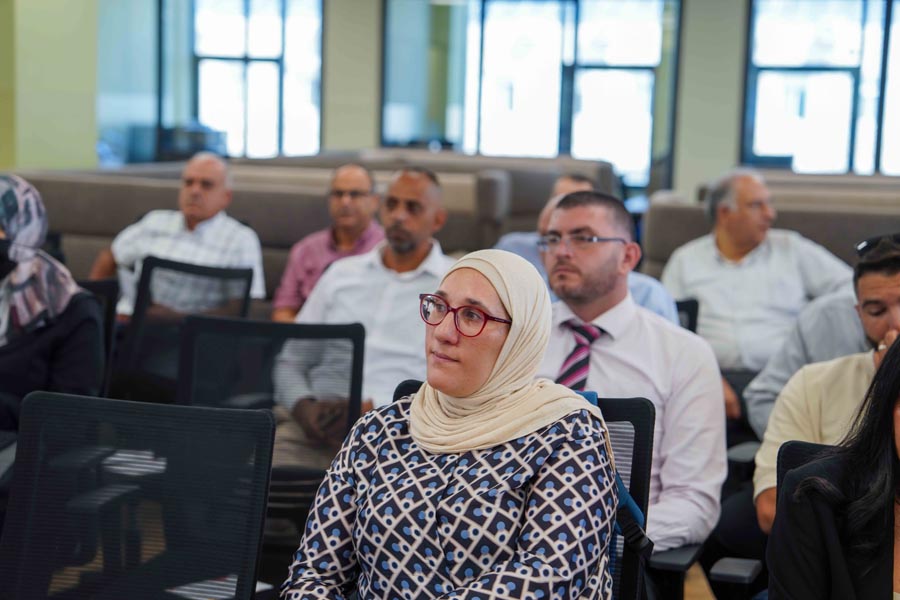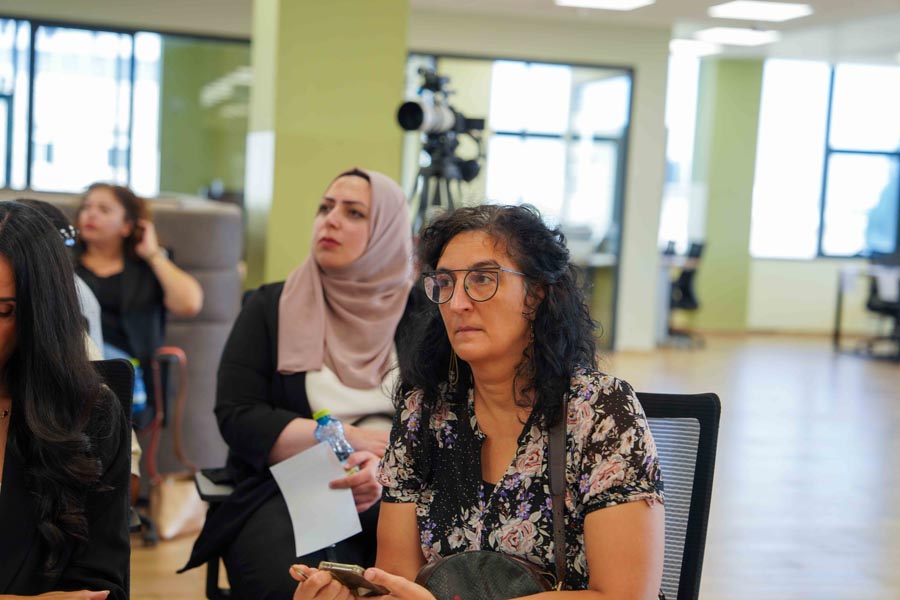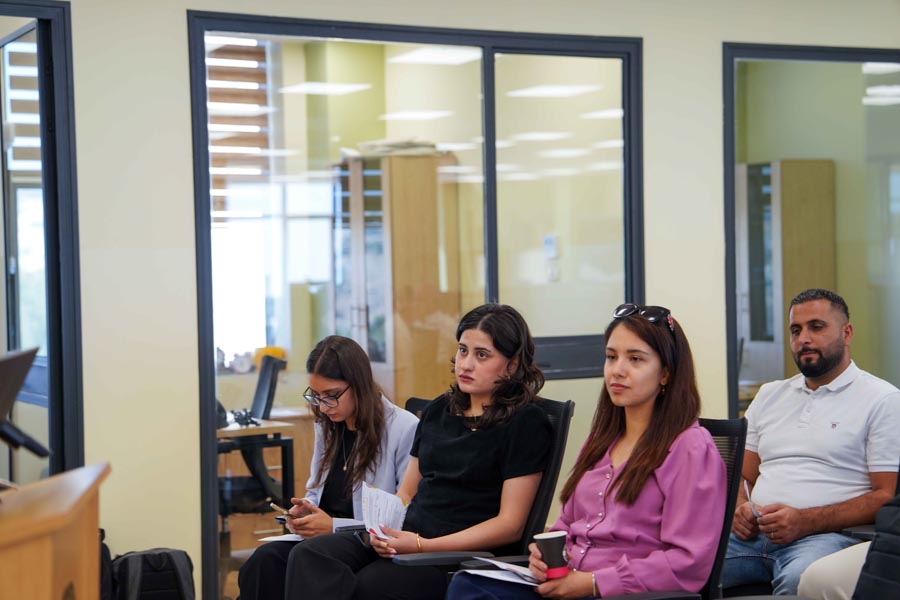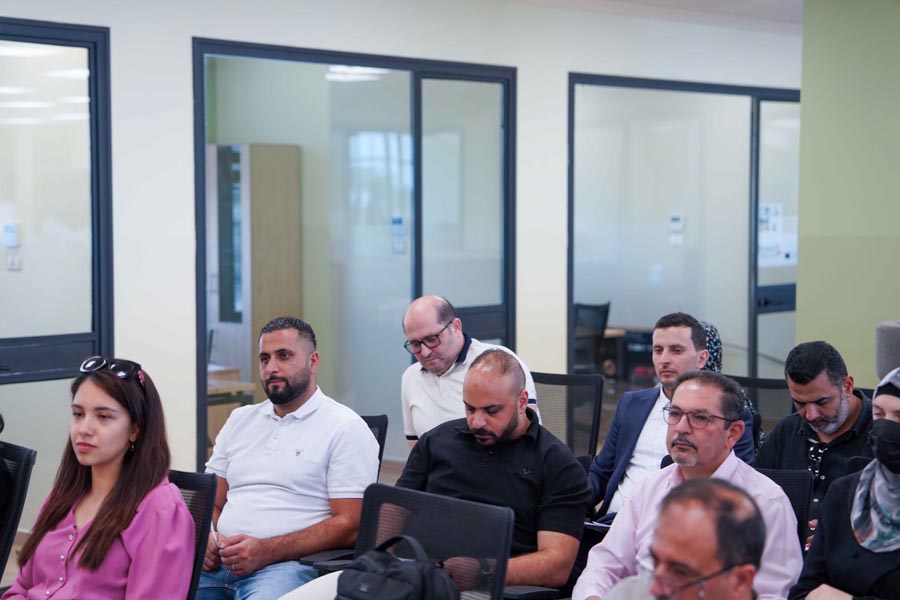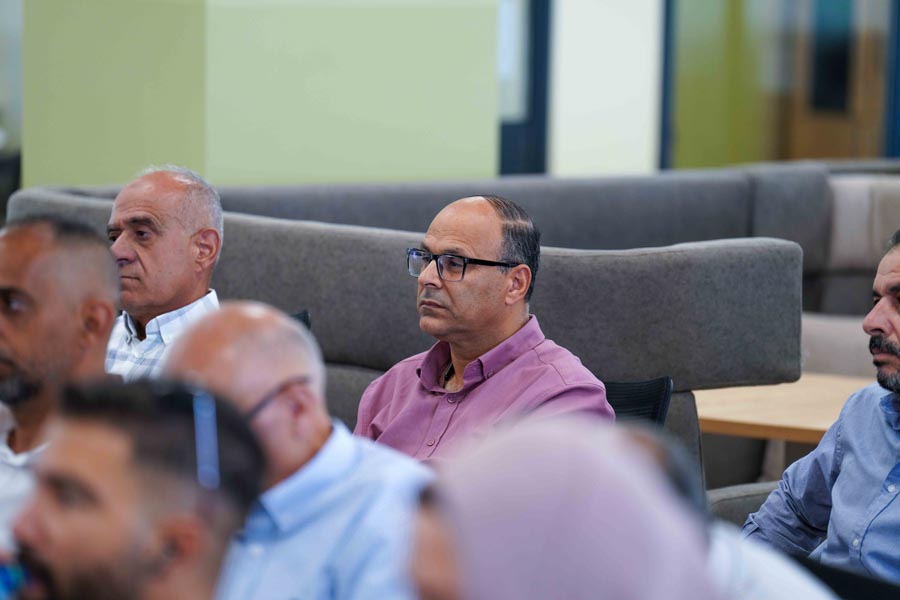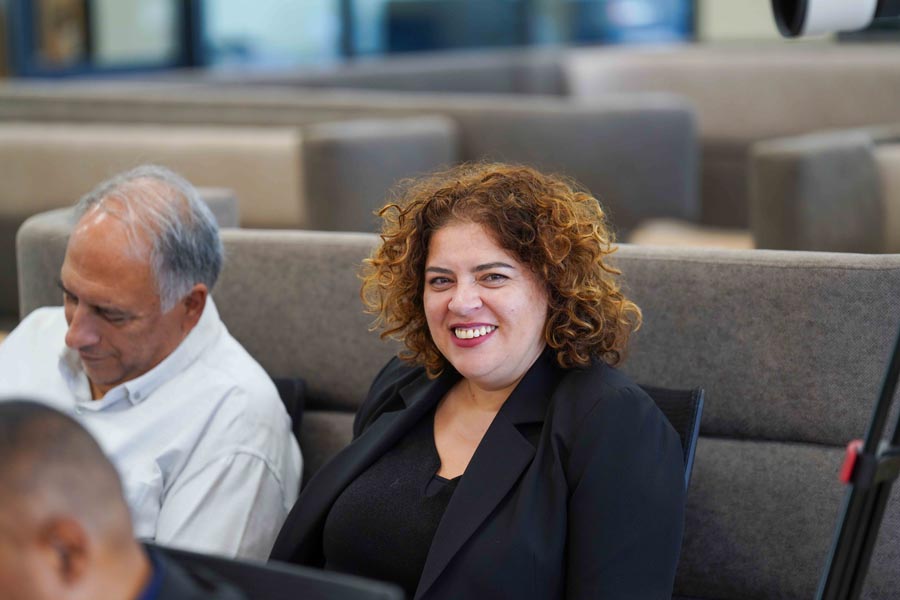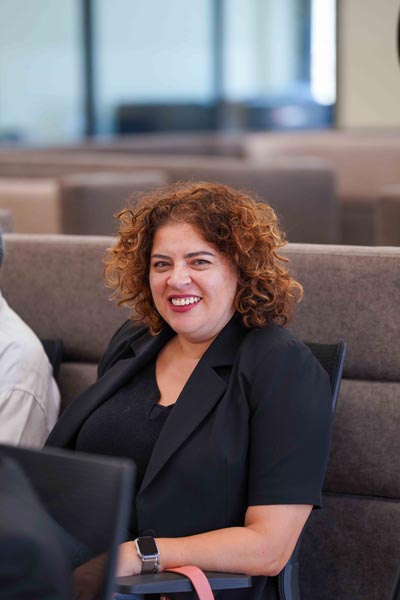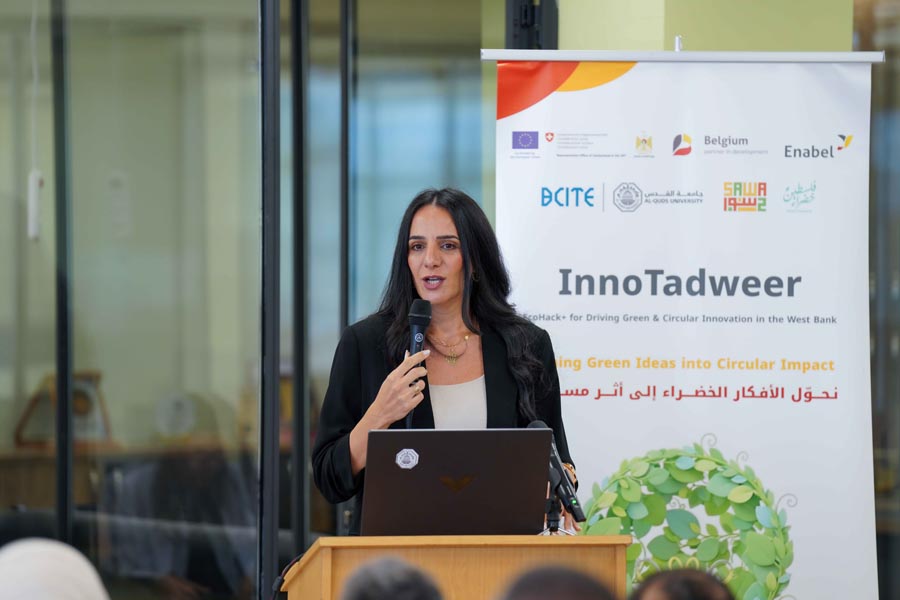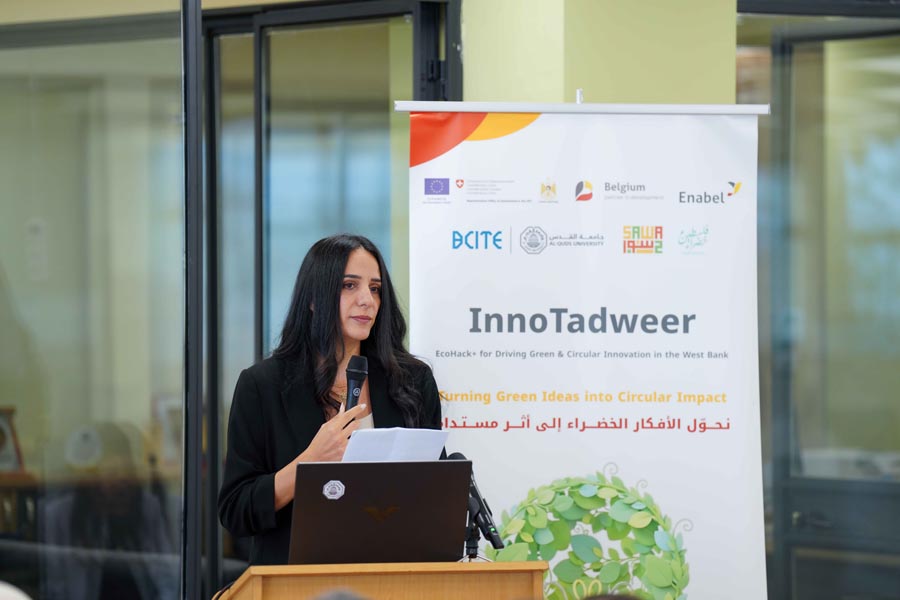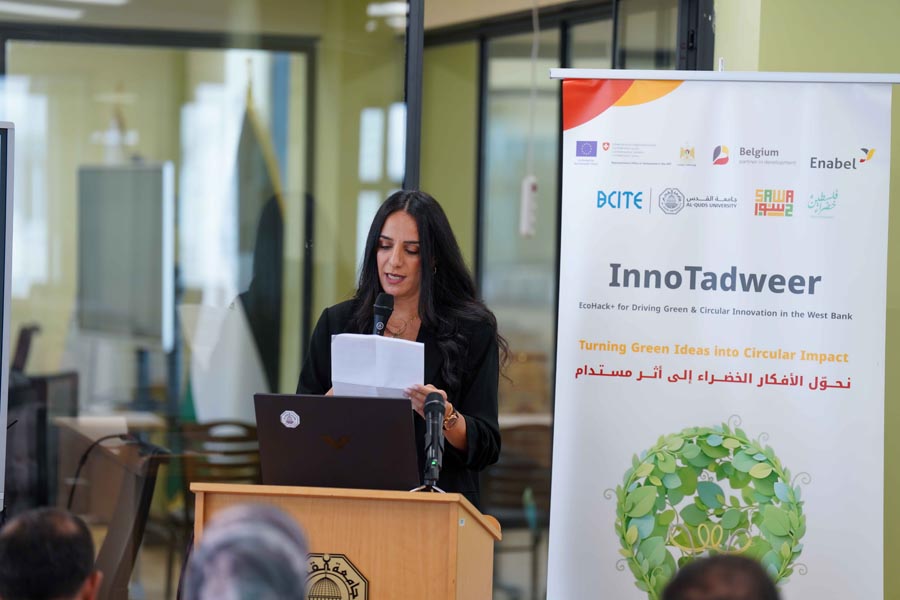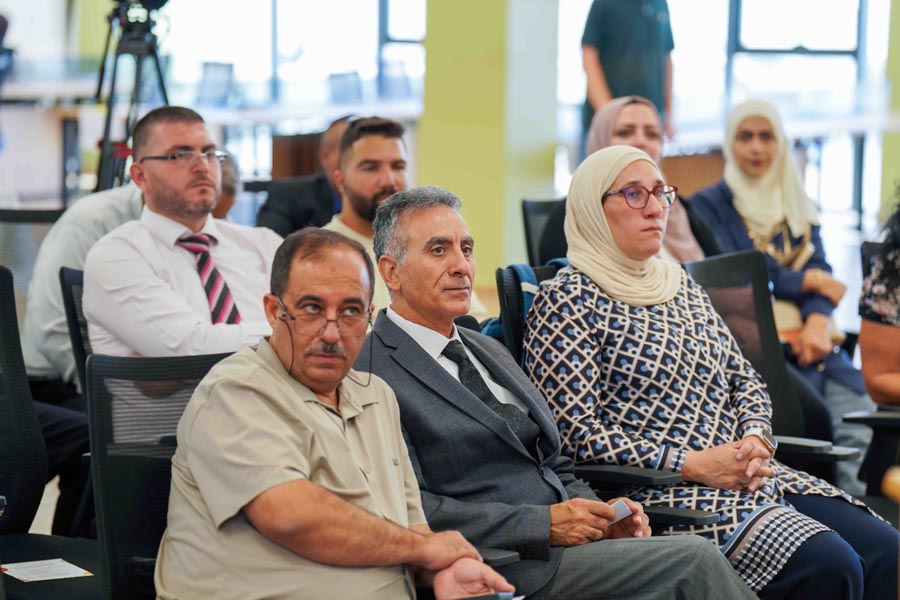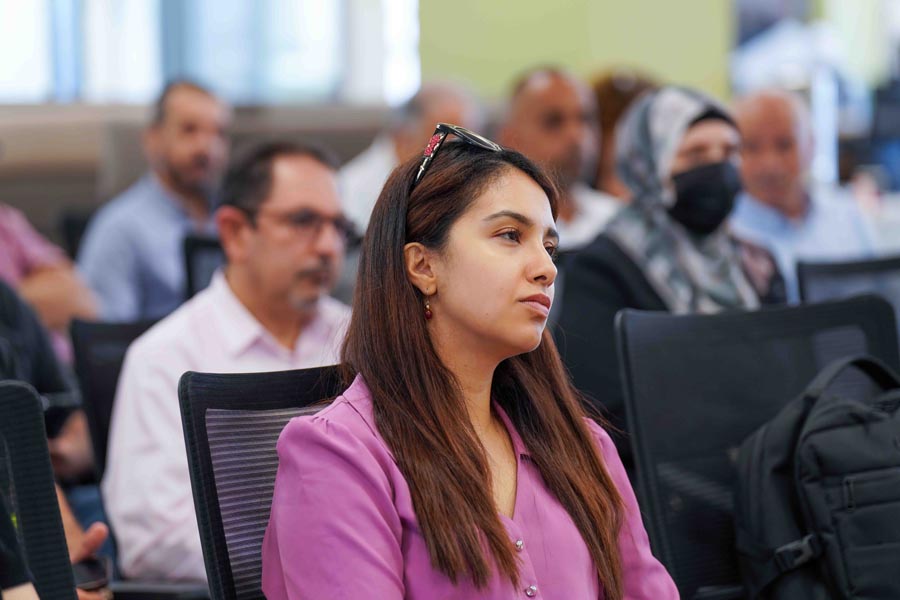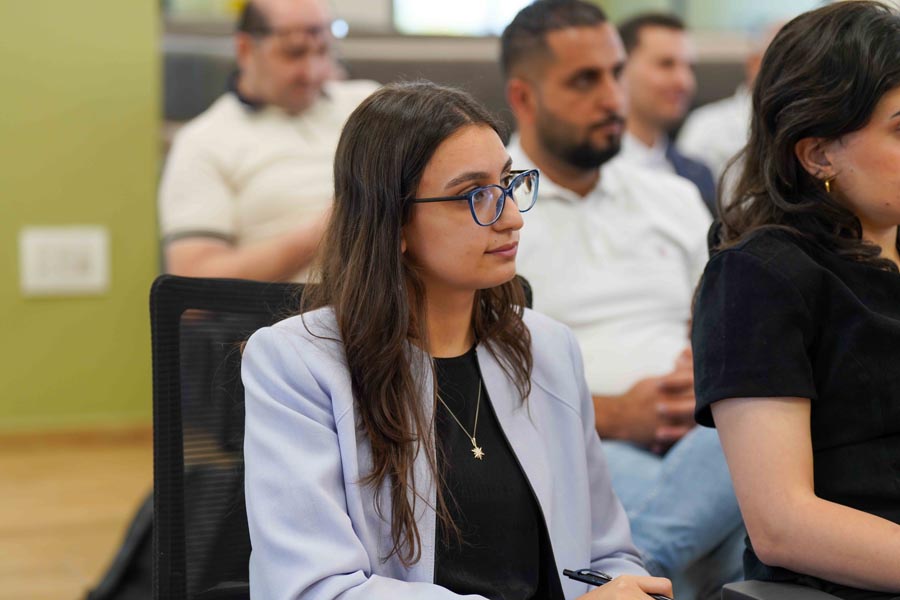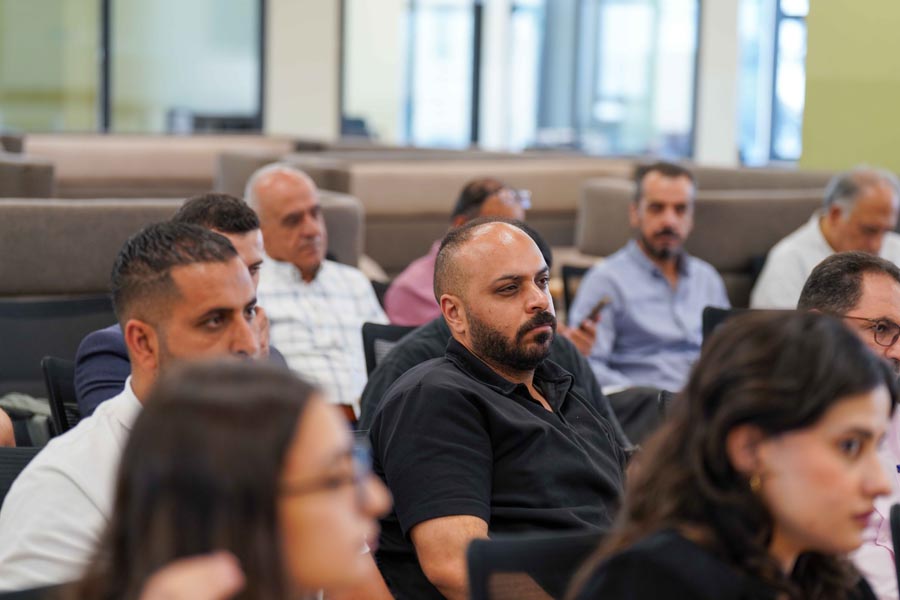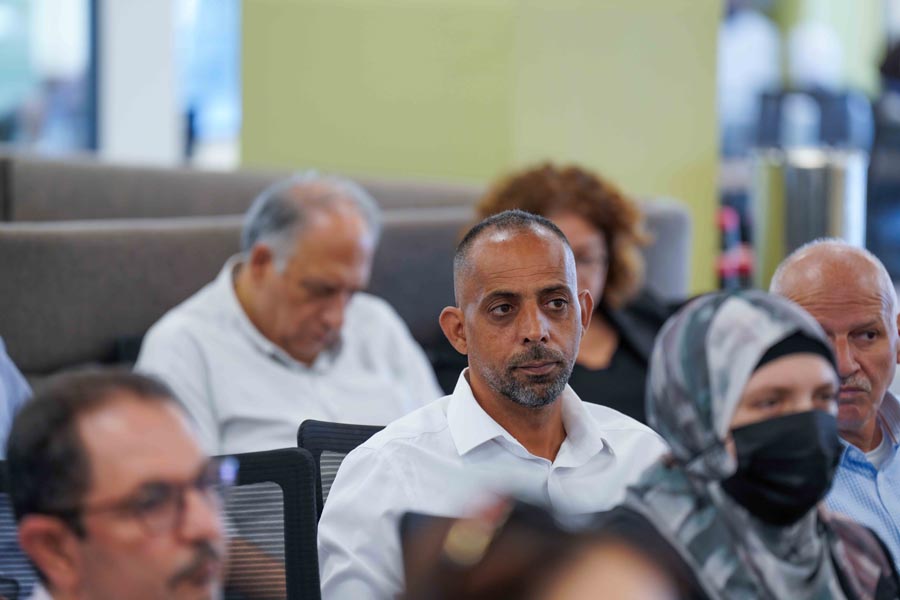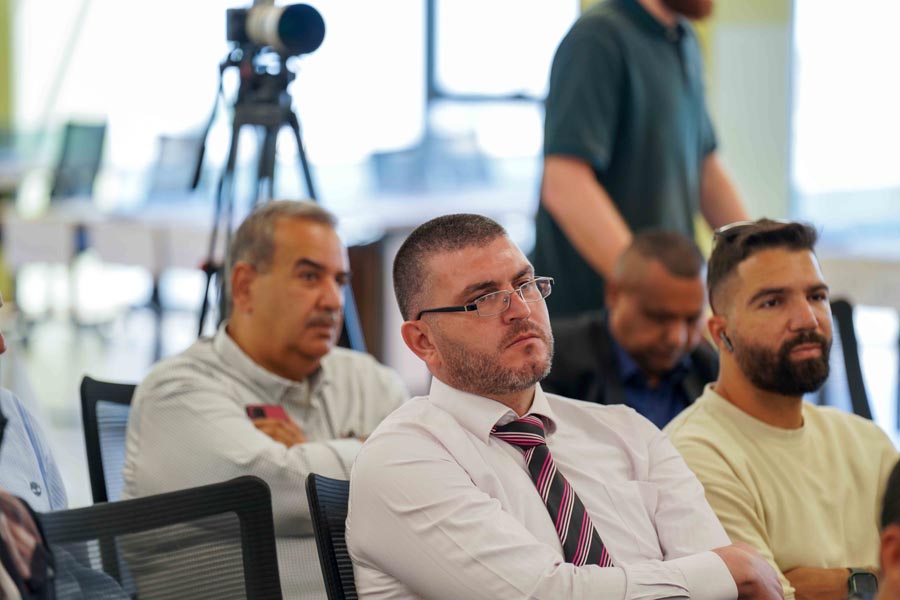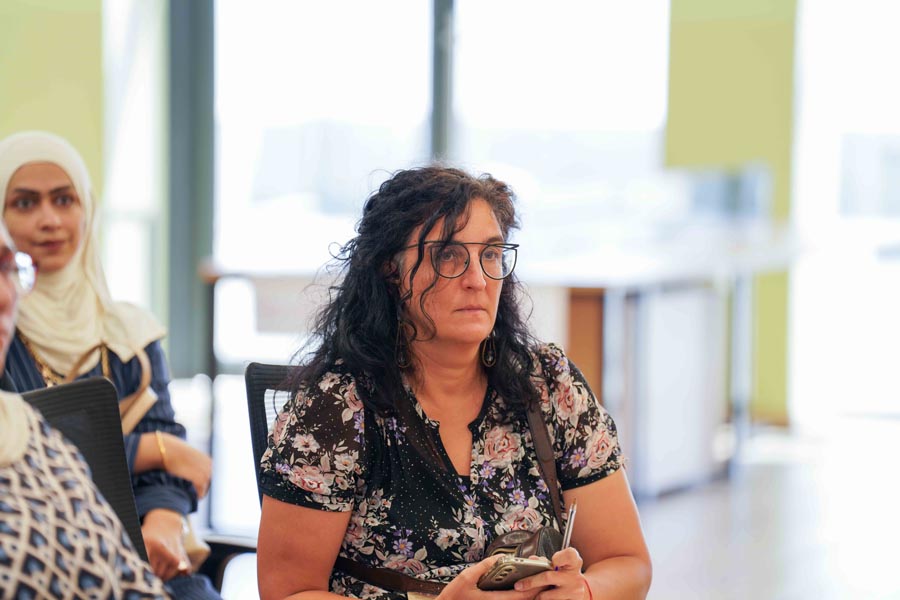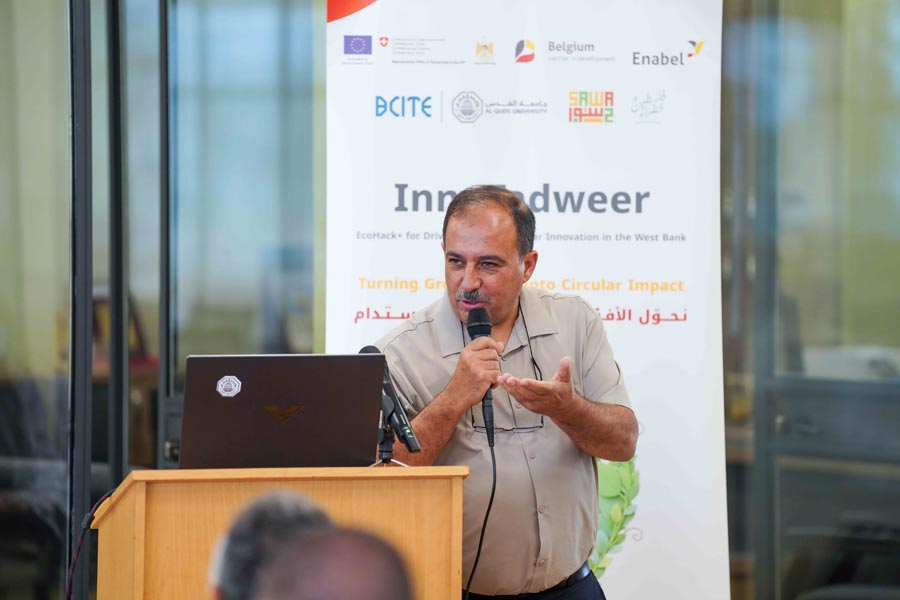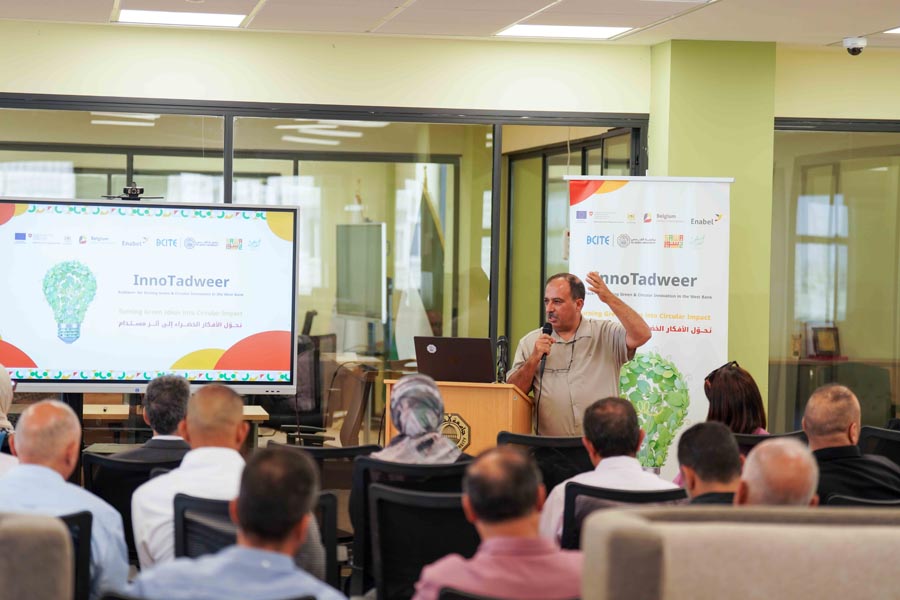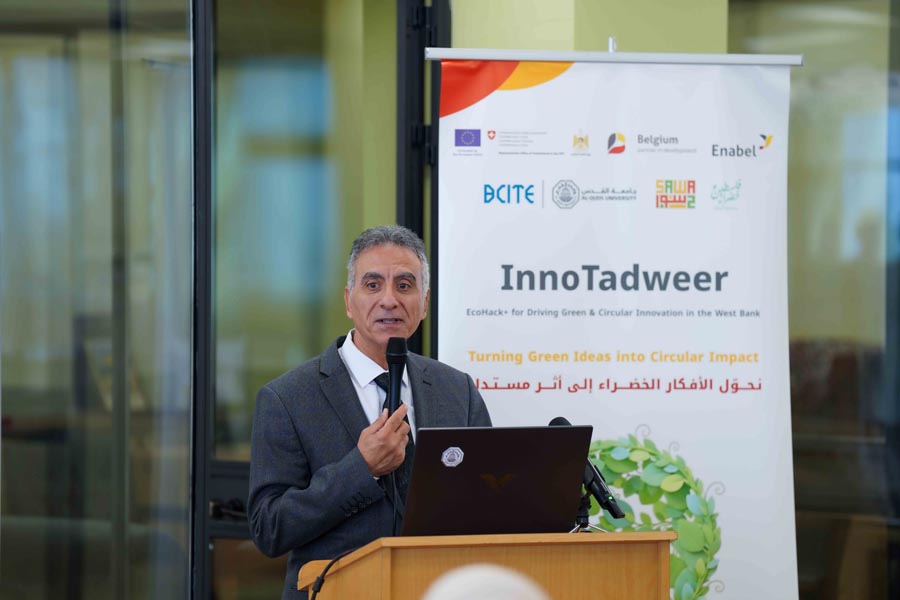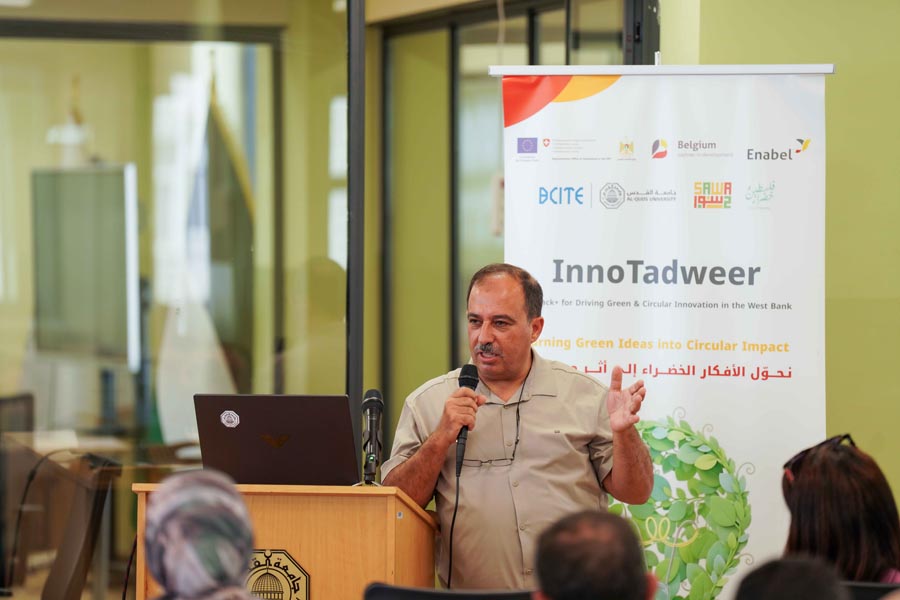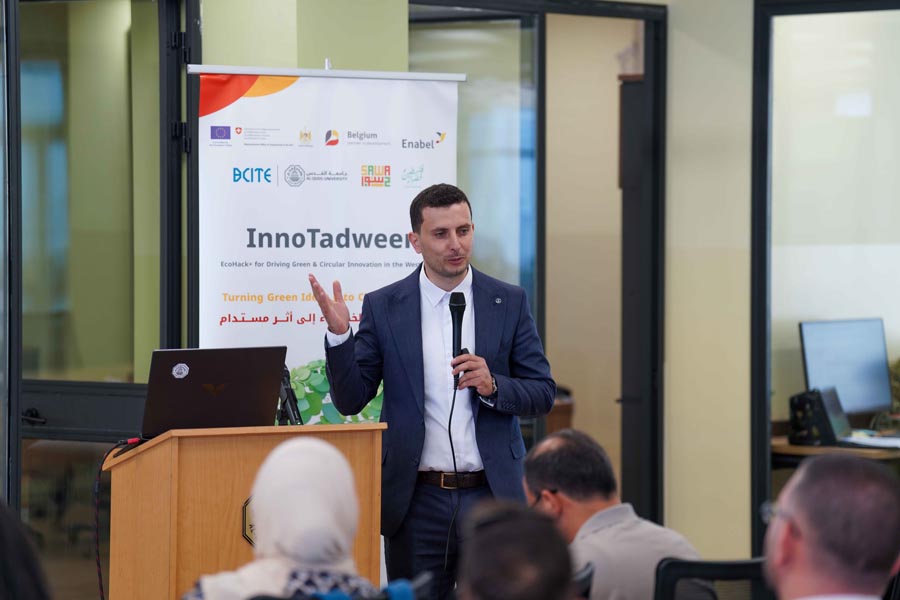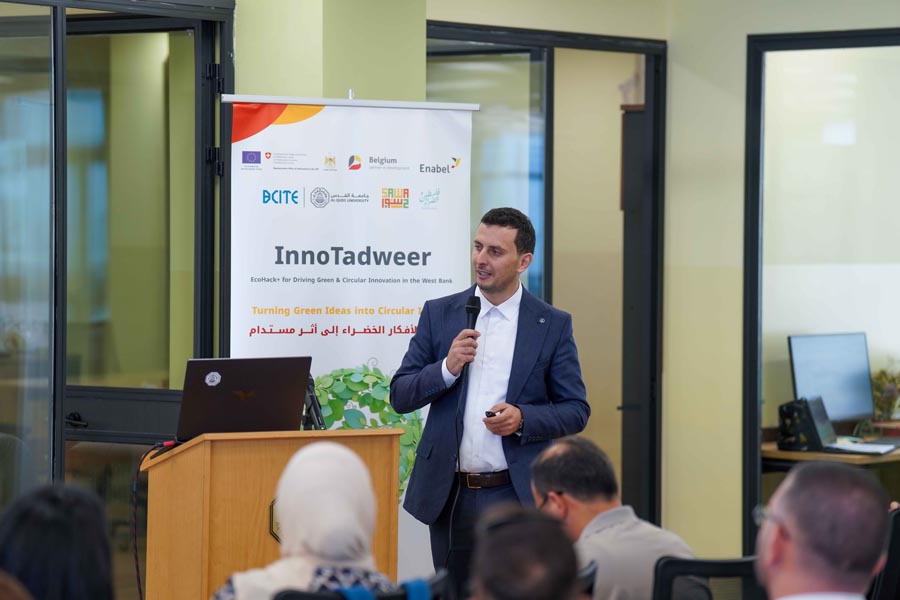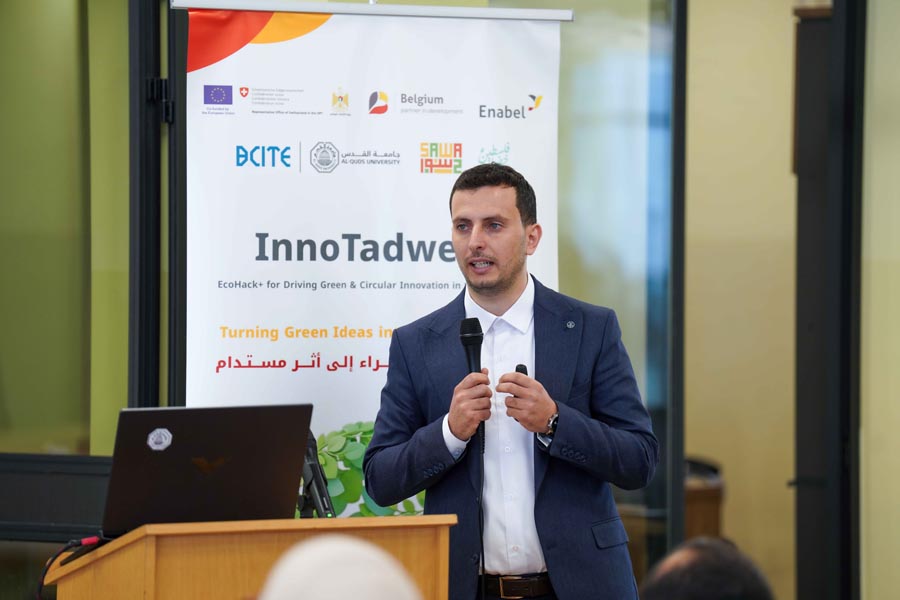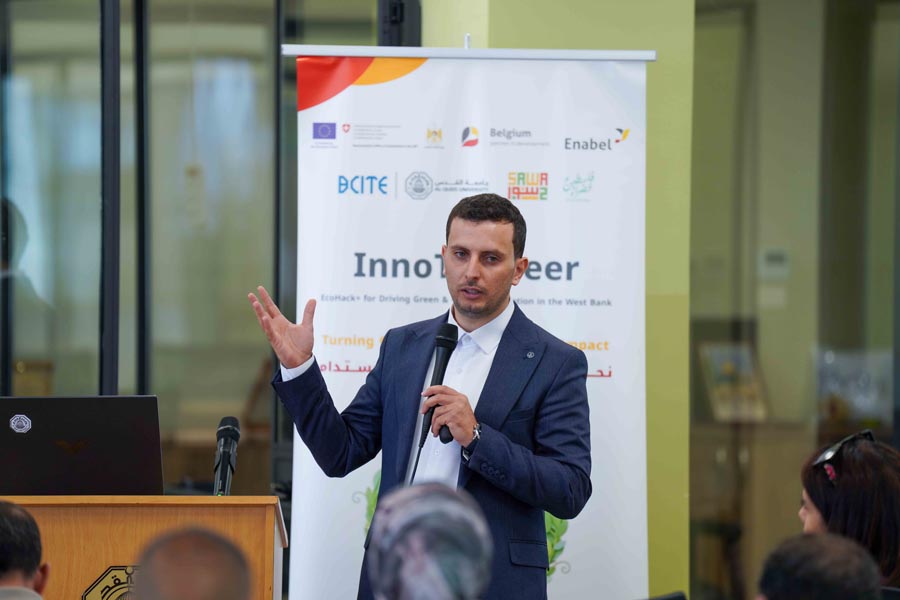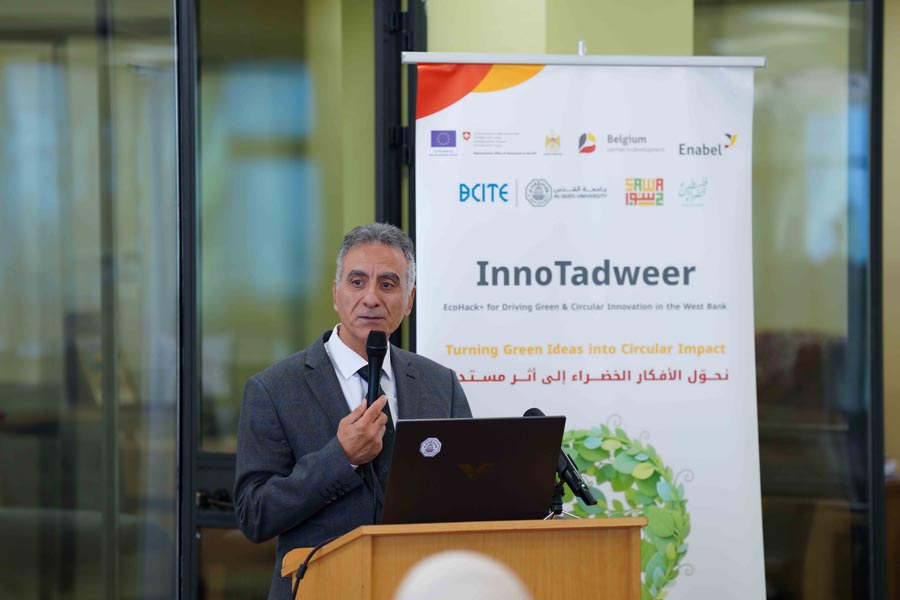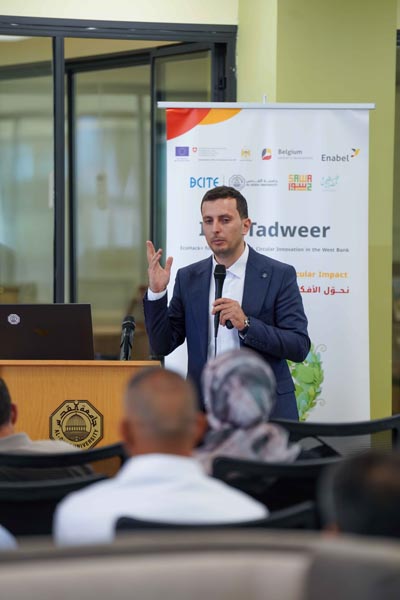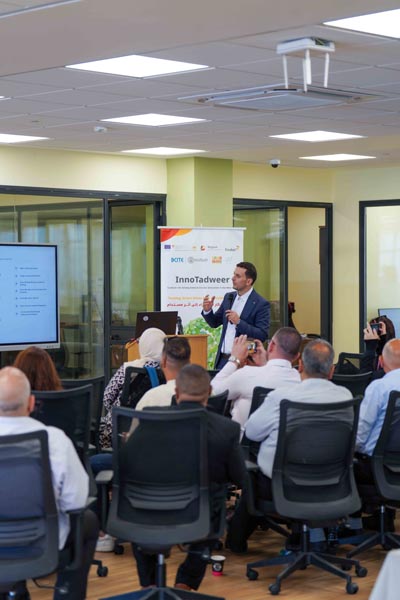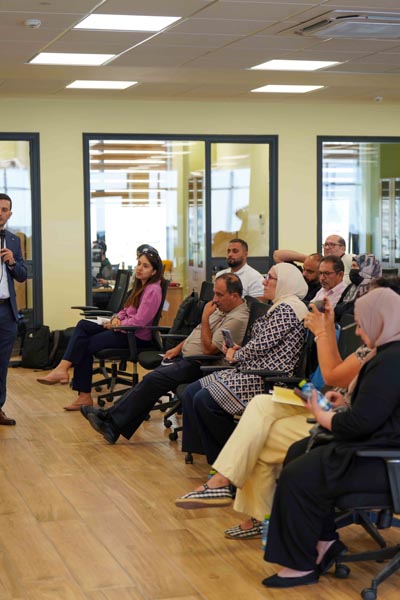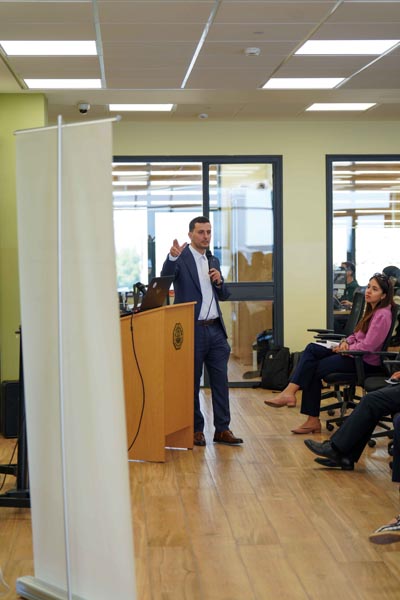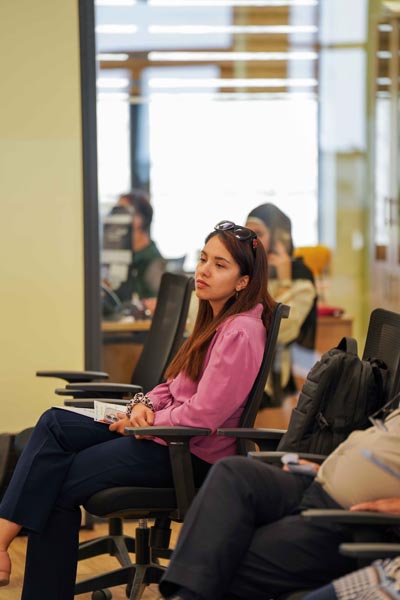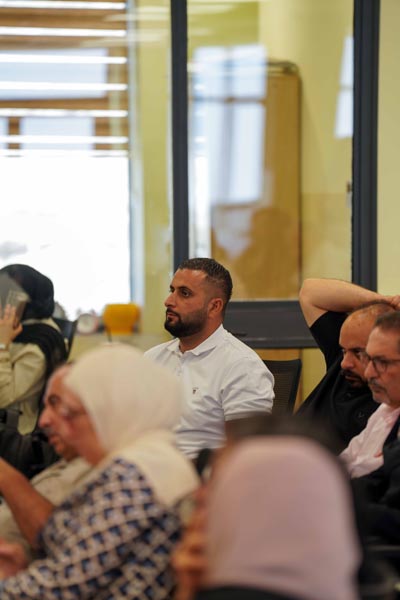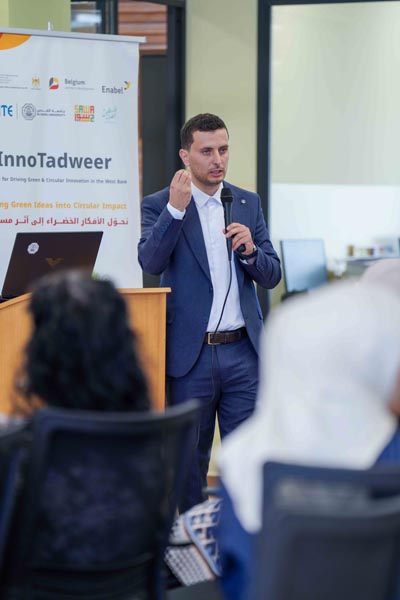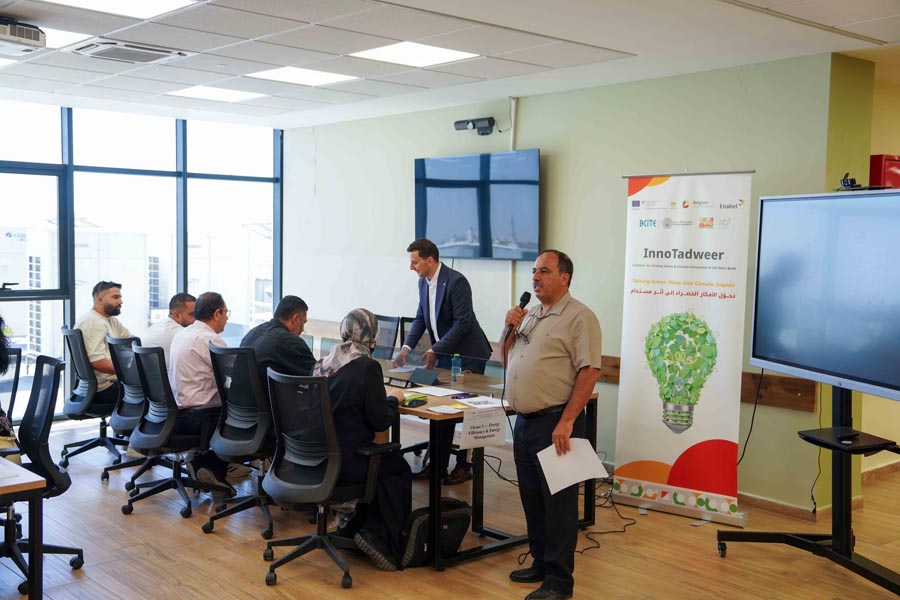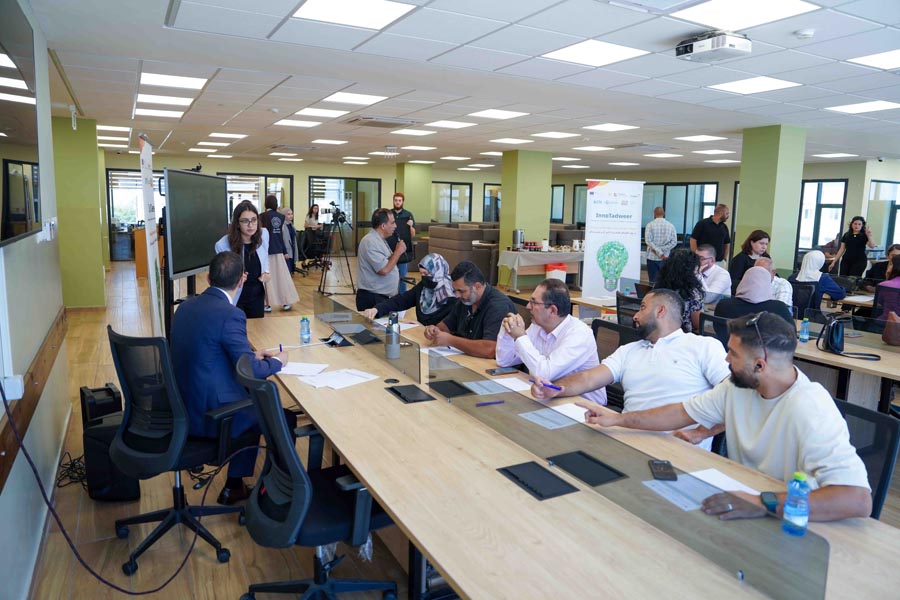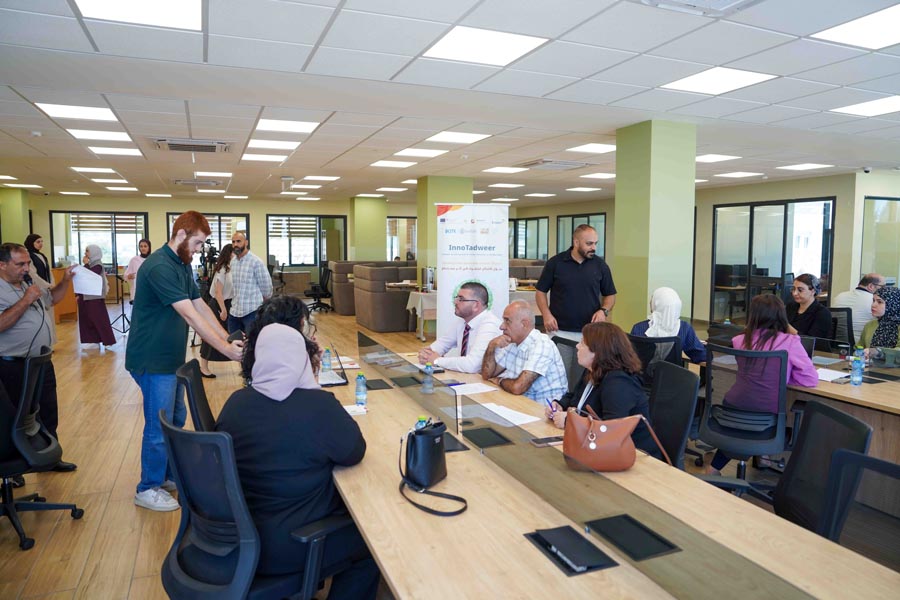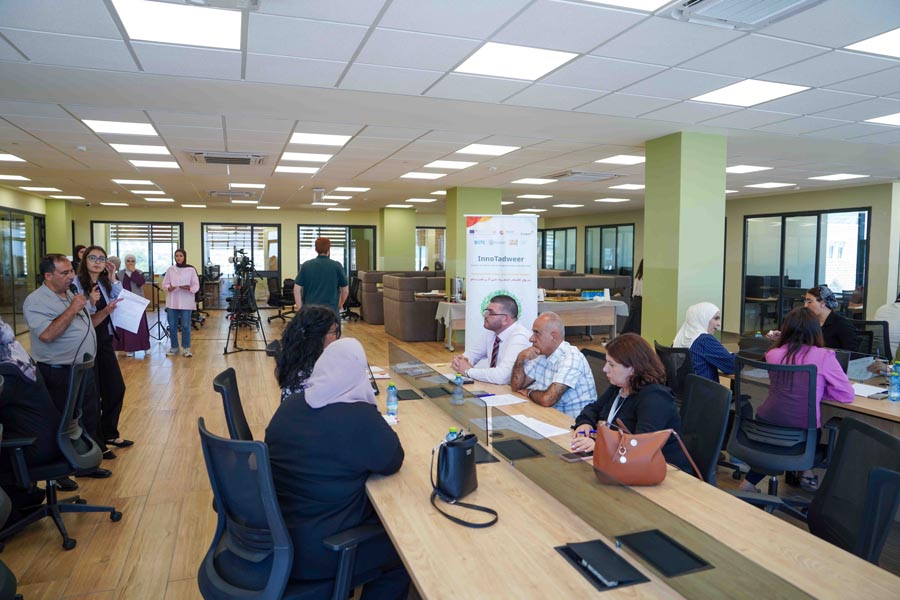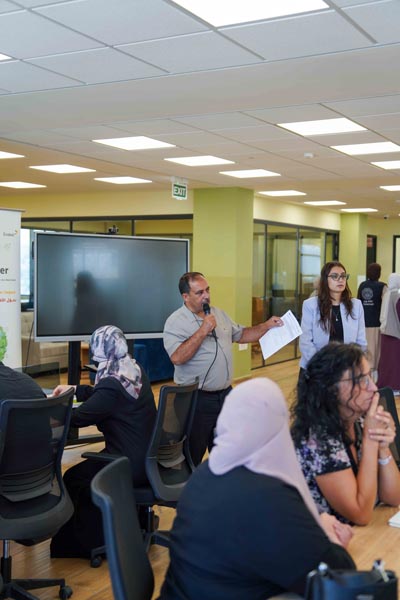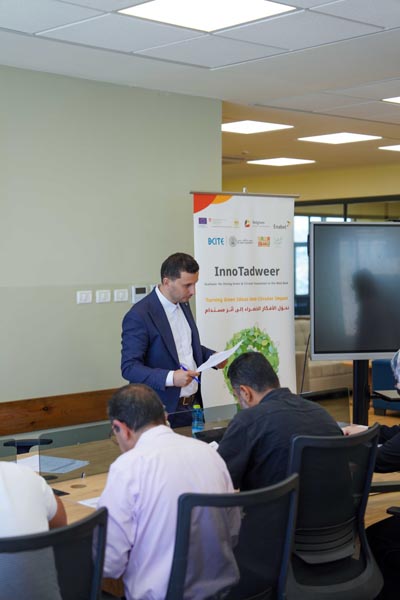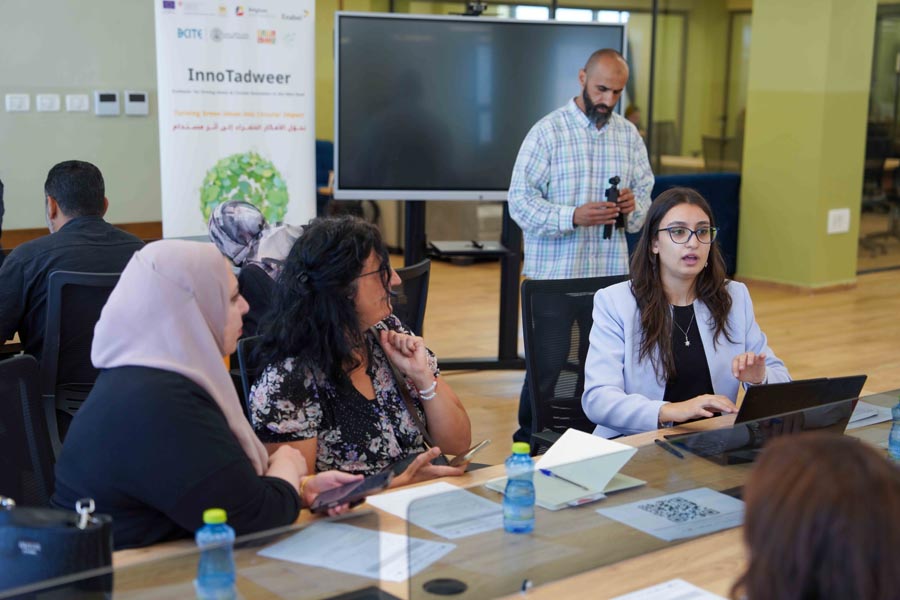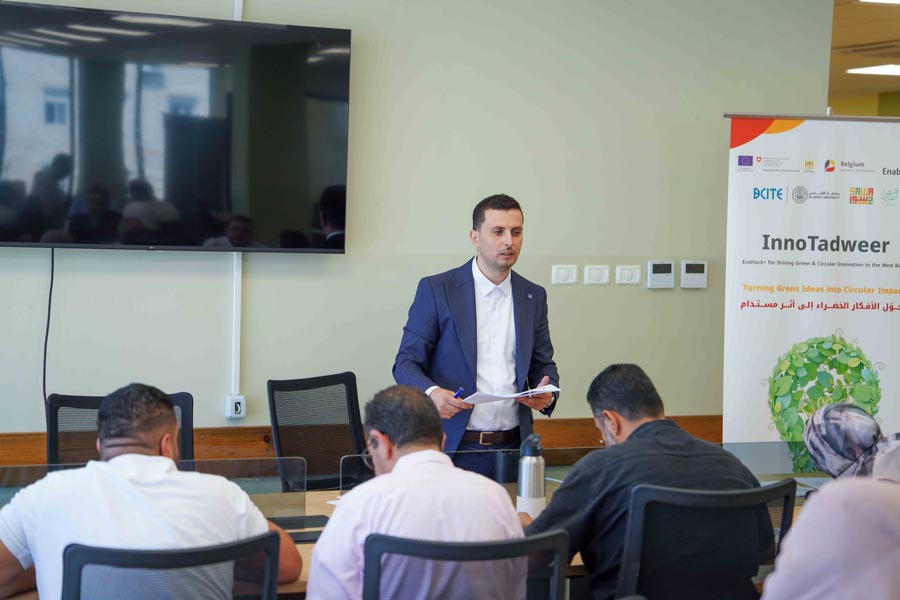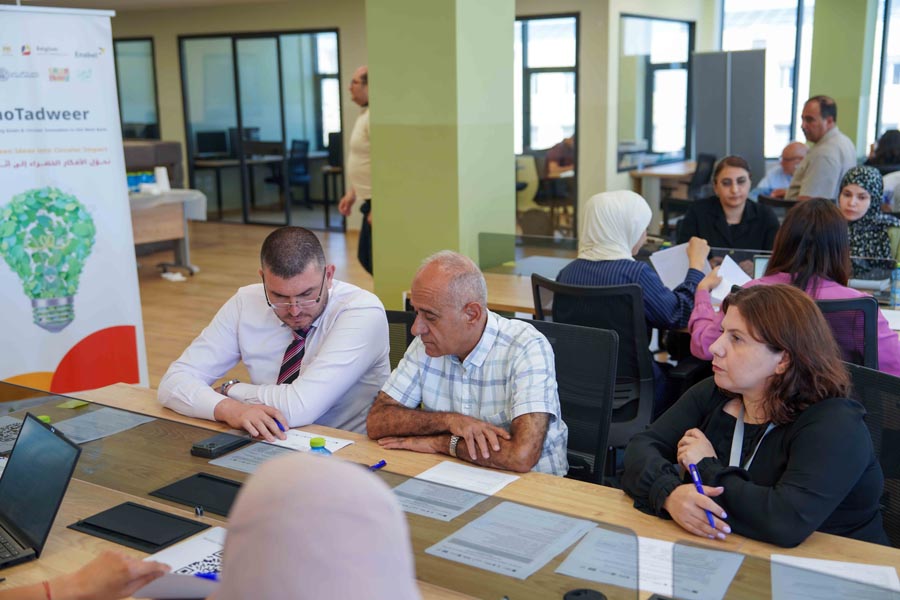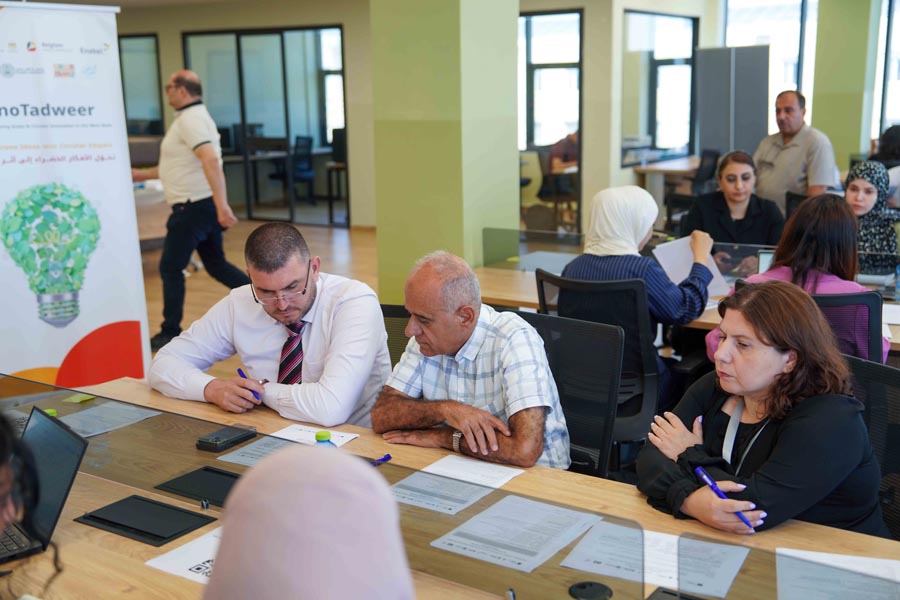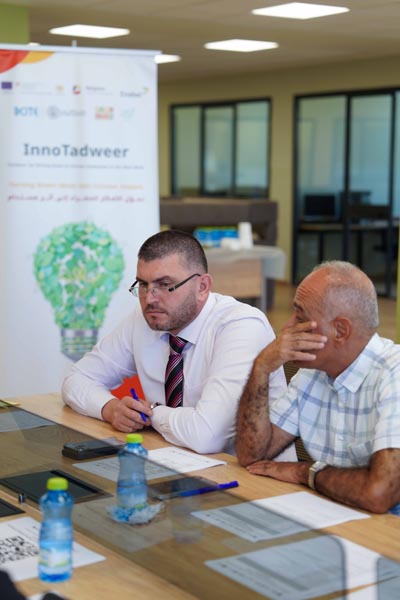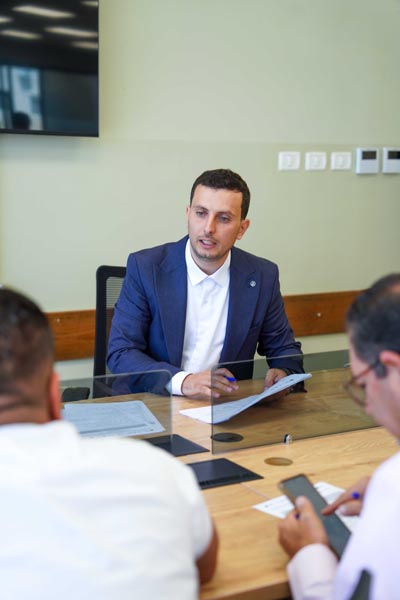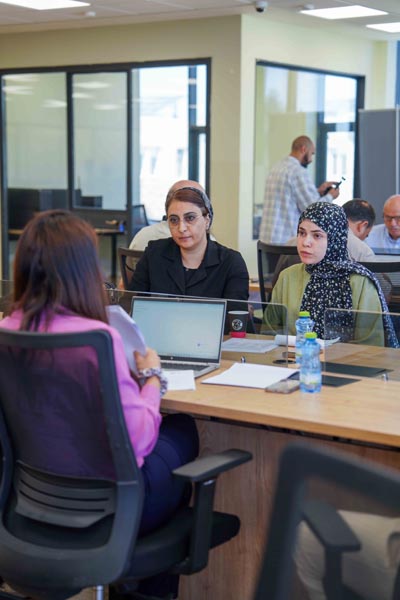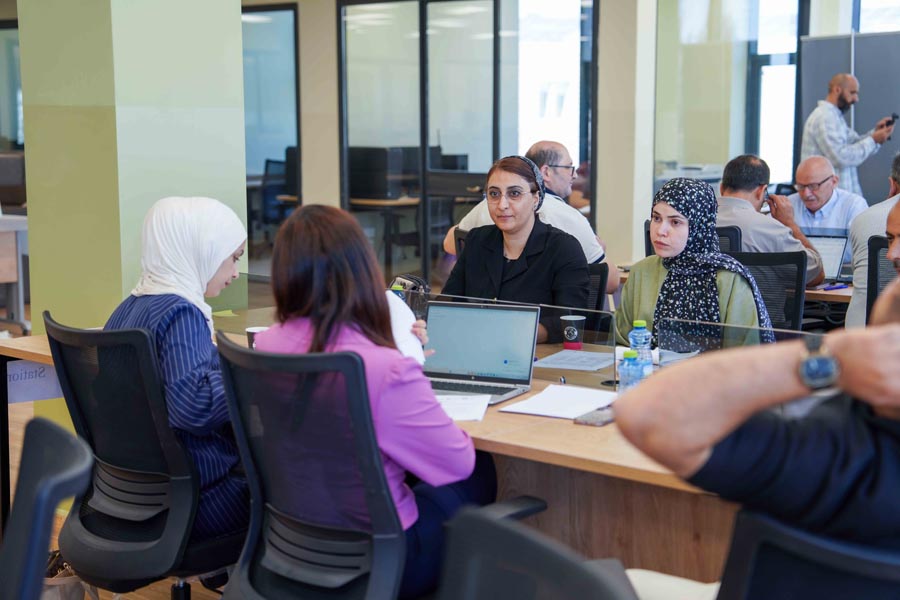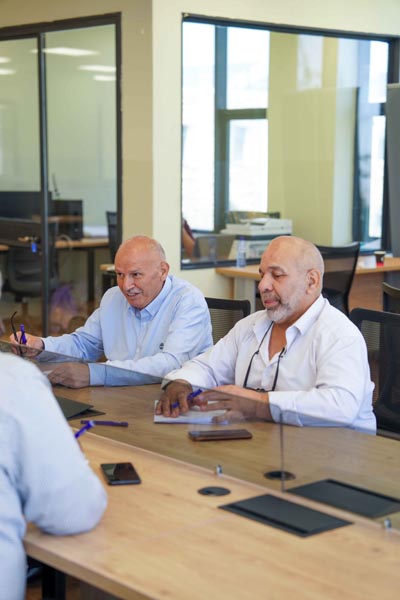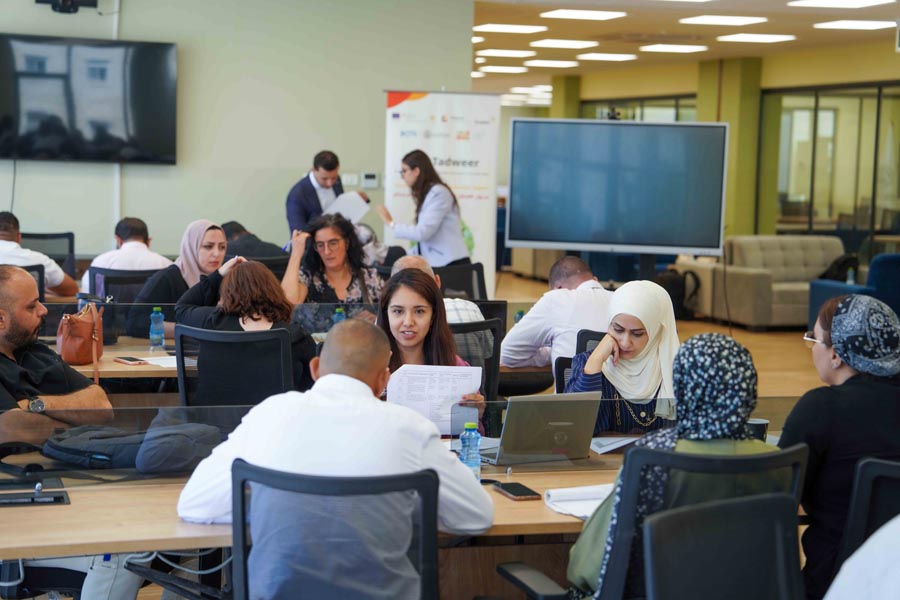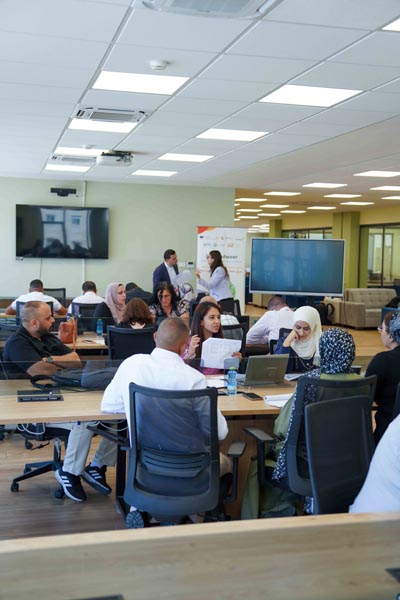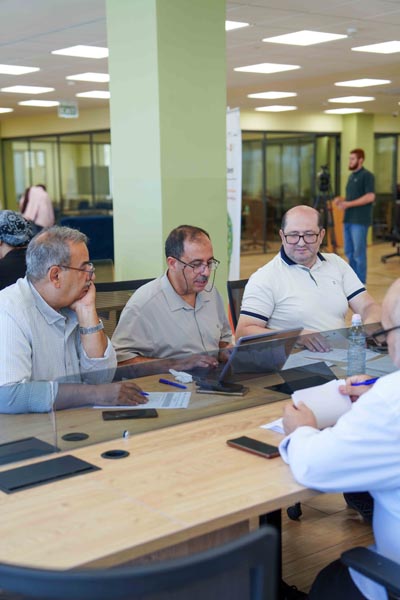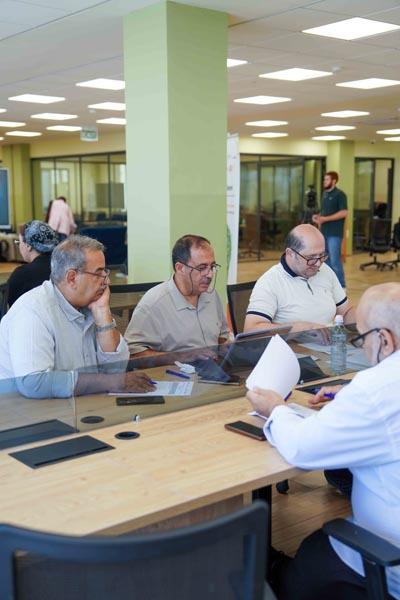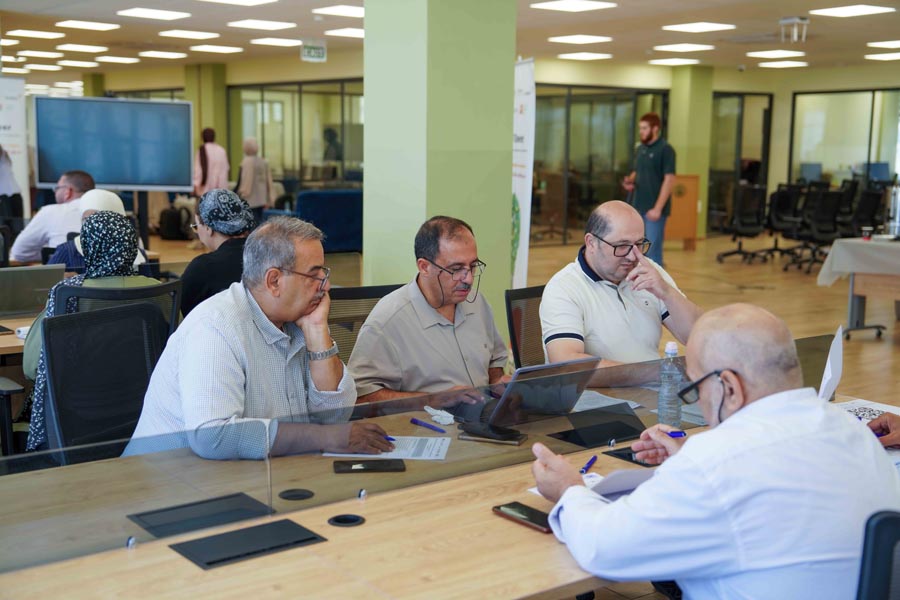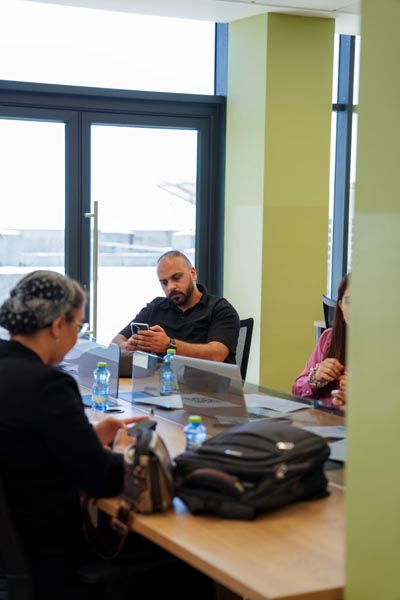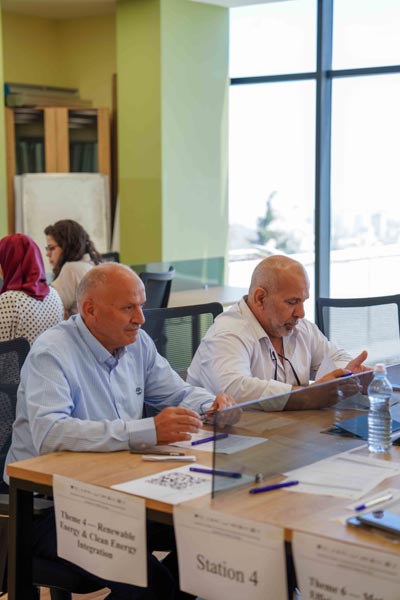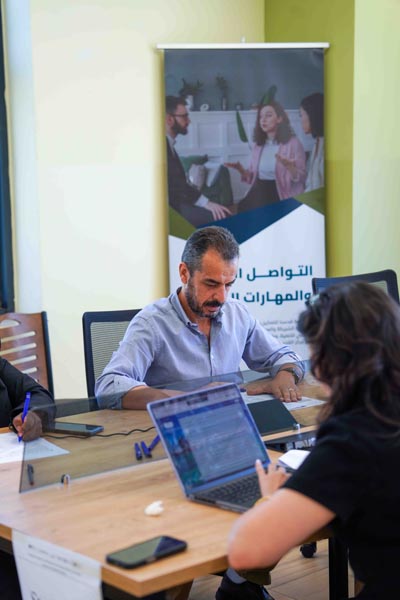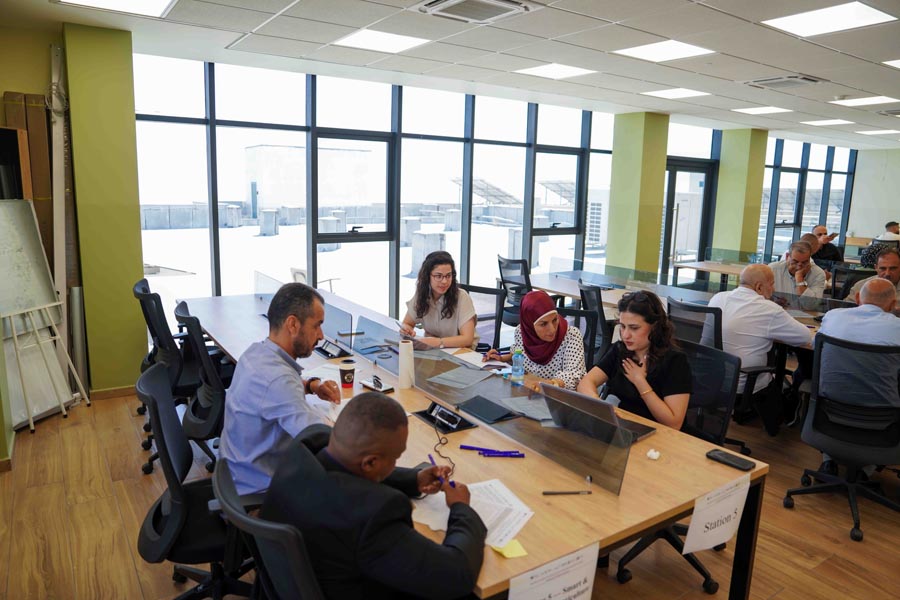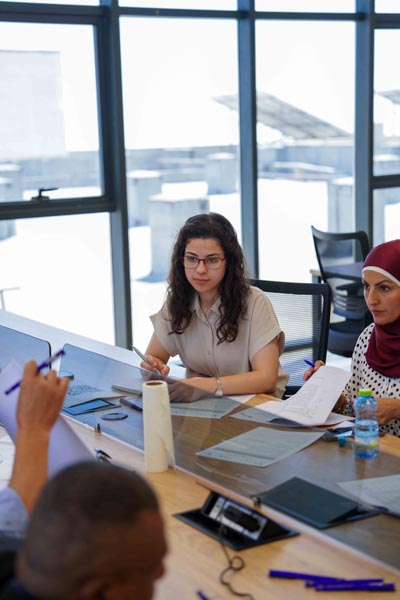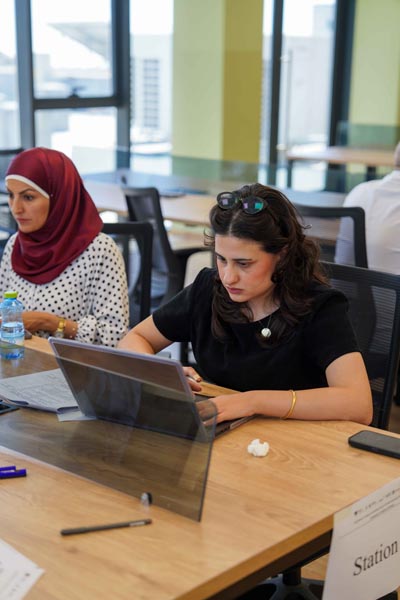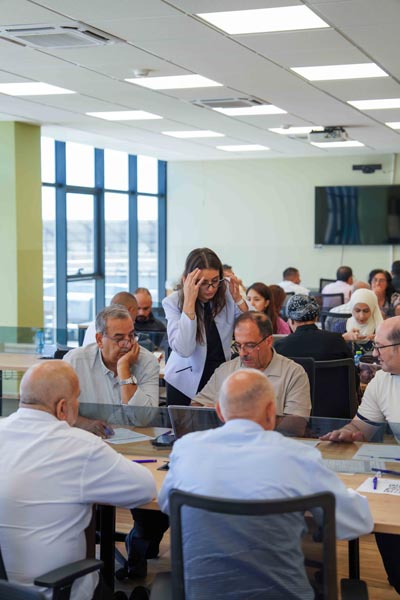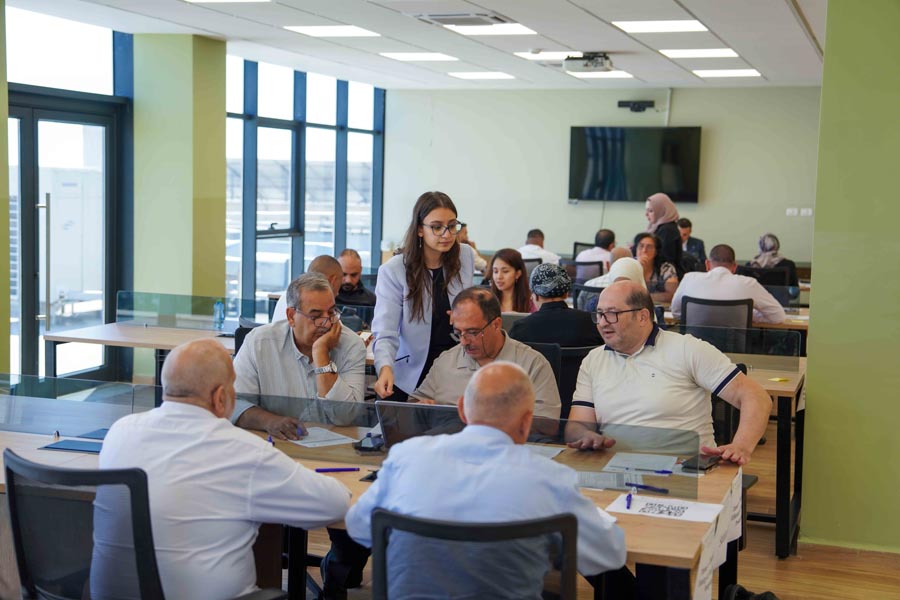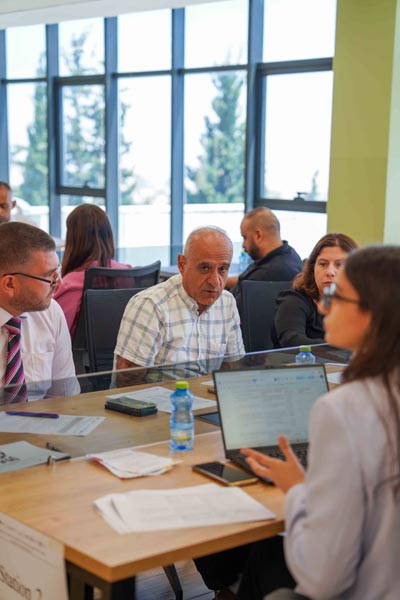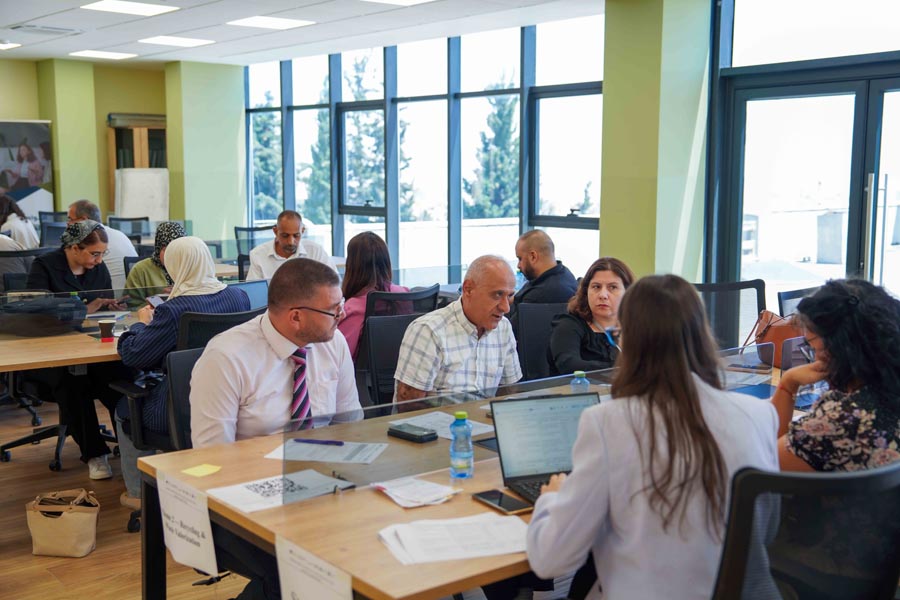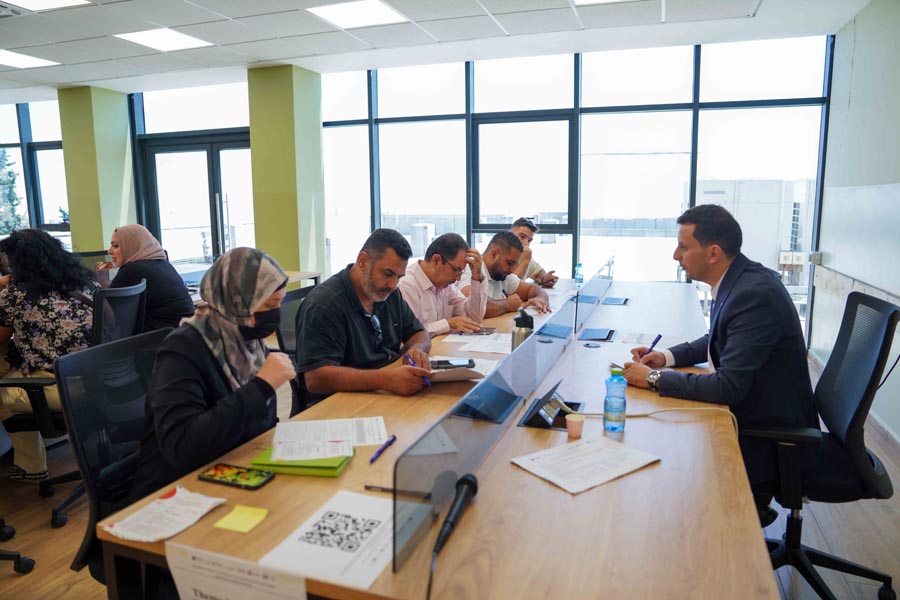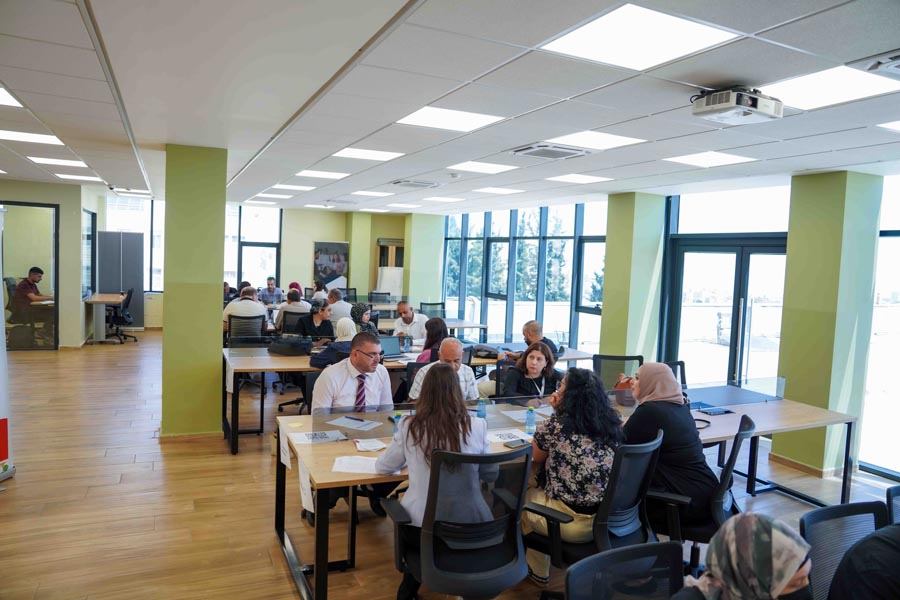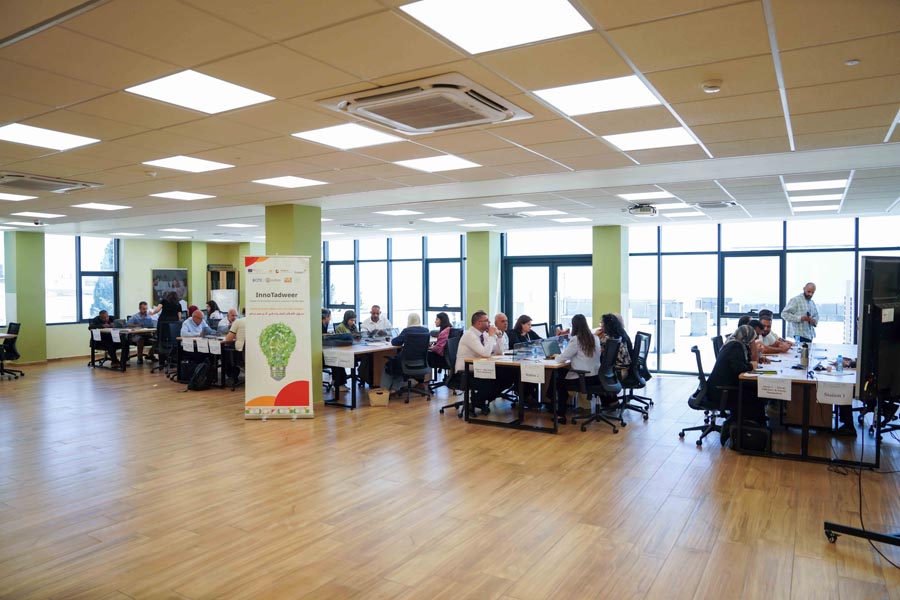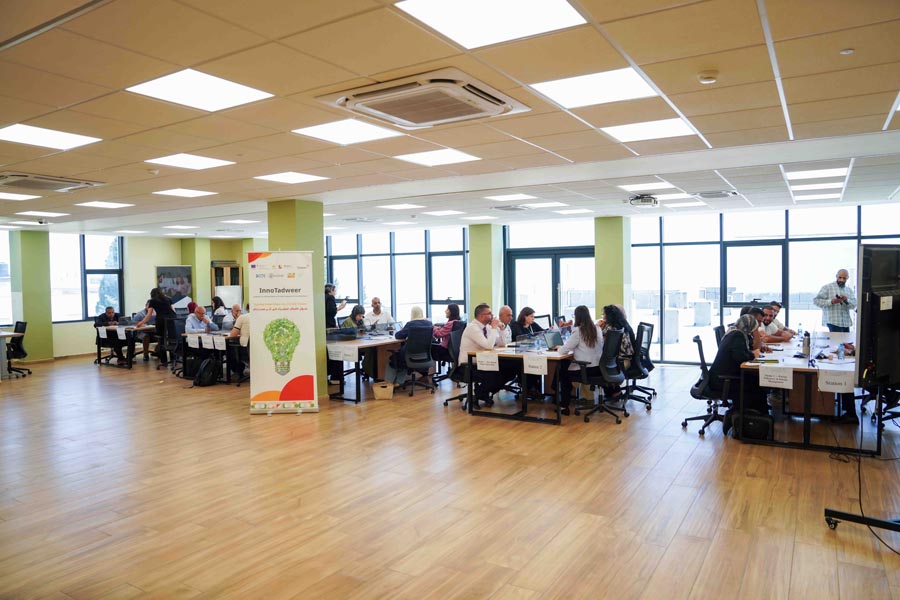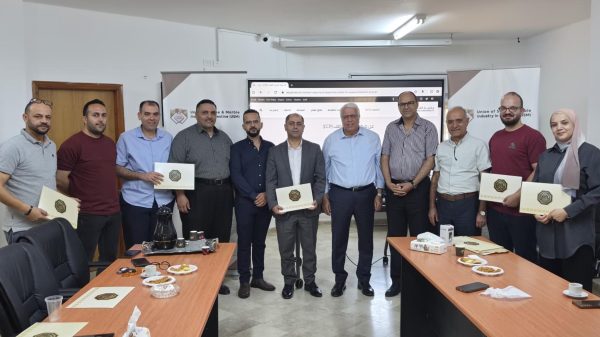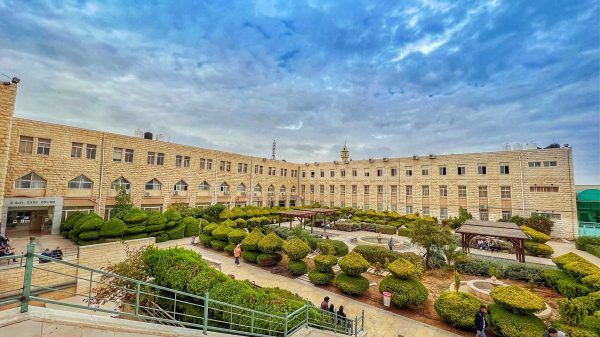

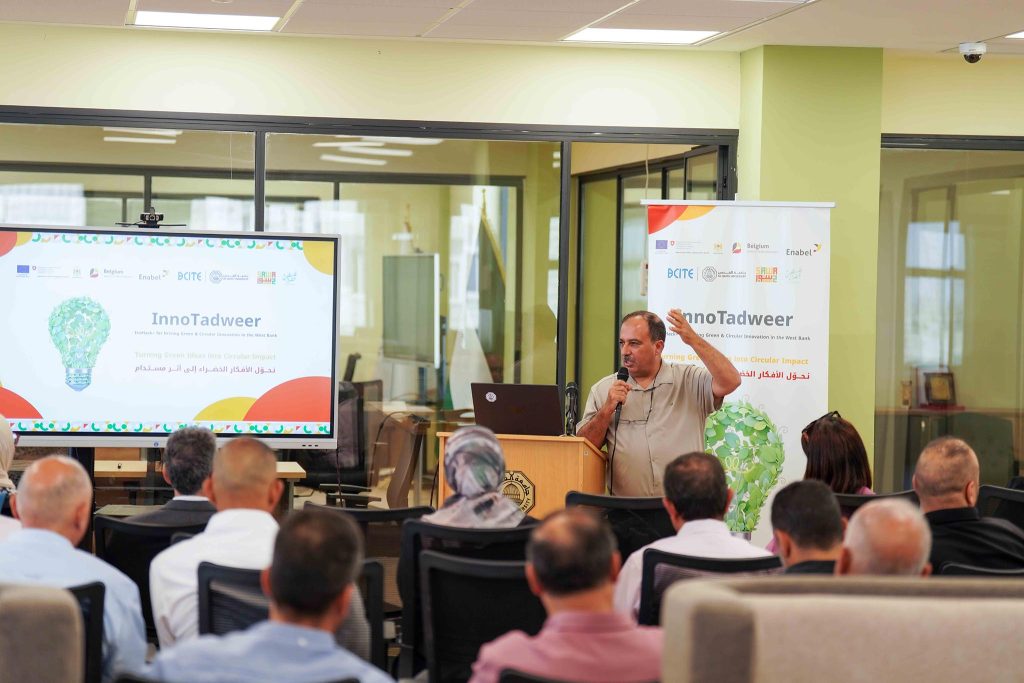
The Al-Quds Business Center for Innovation, Technology & Entrepreneurship (BCITE) at Al-Quds University, the introductory and validation workshop for “InnoTadweer: EcoHack+ for Driving Green & Circular Innovation in the West Bank,” at the University’s main campus. The workshop brought together a distinguished group of experts, academics, researchers, and representatives of micro, small, and medium-sized enterprises (MSMEs).
The 18-month project is jointly implemented by Al-Quds University, represented by BCITE, and the Belgian Development Agency (Enabel) under the SAWA II and Green West Bank projects, with co-funding from the European Union and the Belgian State. It aims to advance green and circular innovation and transform innovative ideas and solutions into viable prototypes and scalable ventures.
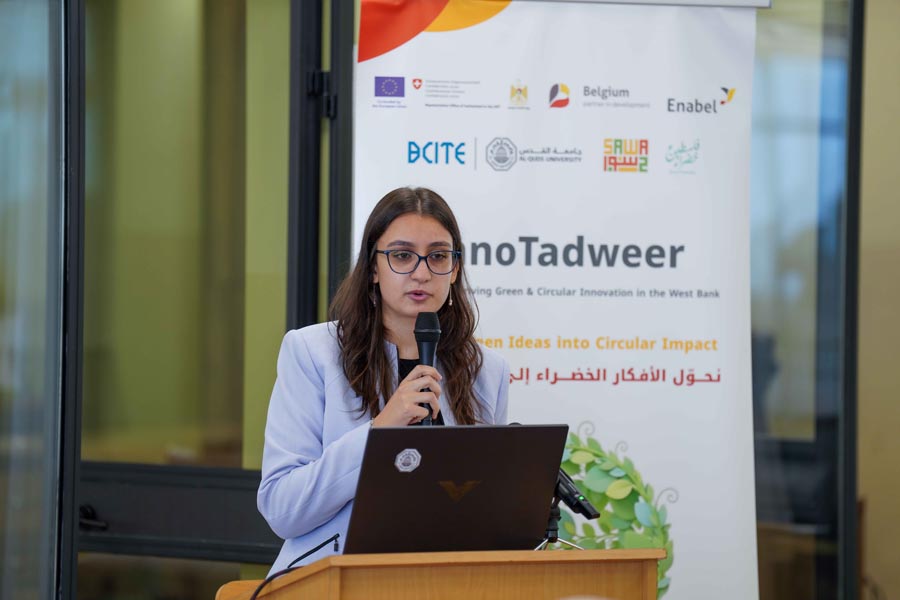
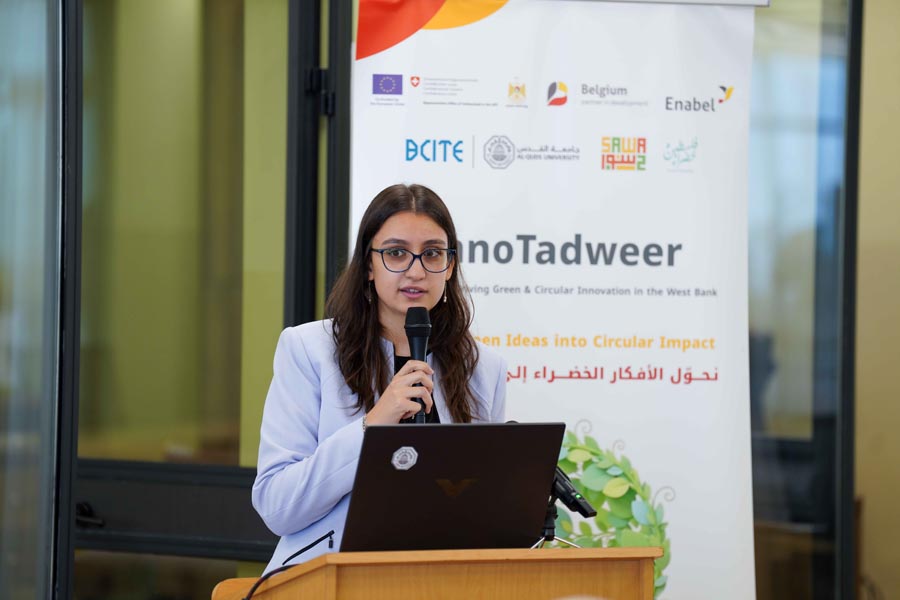
The workshop opened with welcoming remarks by Dr. Hanna Abd Al Noor, followed by a project overview delivered by Eng. Razan Habash from the Enabel team. Dr. Radwan Qasrawi, Director of BCITE, then provided a technical introduction to the project and its various tracks. Green and Circular Economy (GCE) Expert Eng. Najda Mustafa presented the preliminary findings of a survey examining key green and circular economy challenges across the West Bank, outlining the assessment methodology and criteria used to prioritize sector-specific challenges.
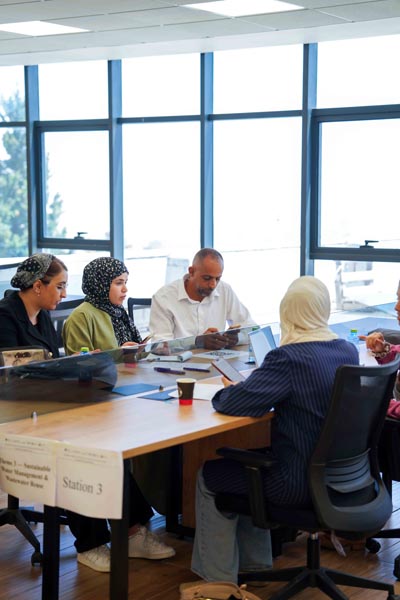
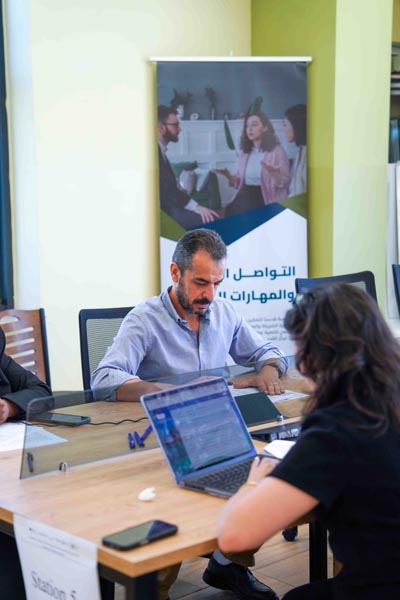
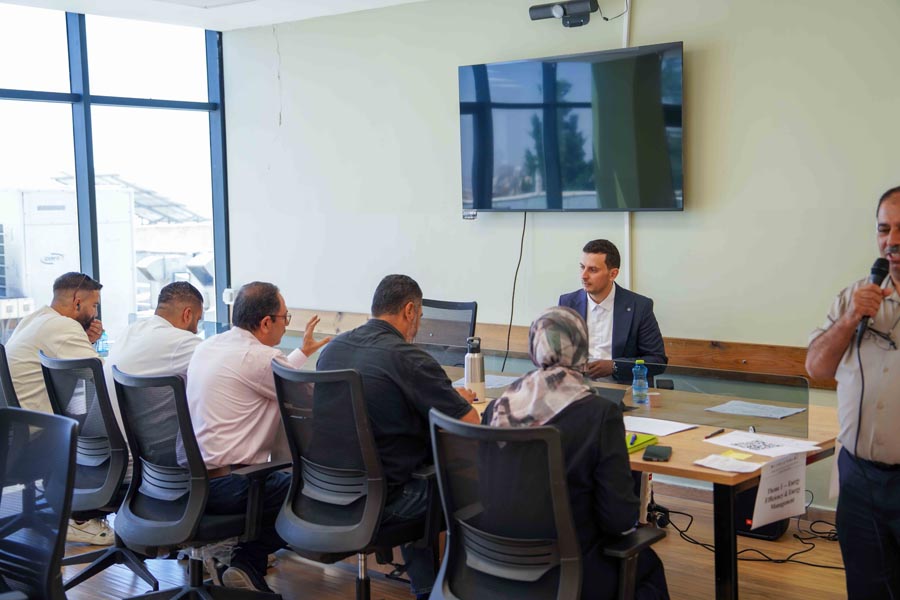
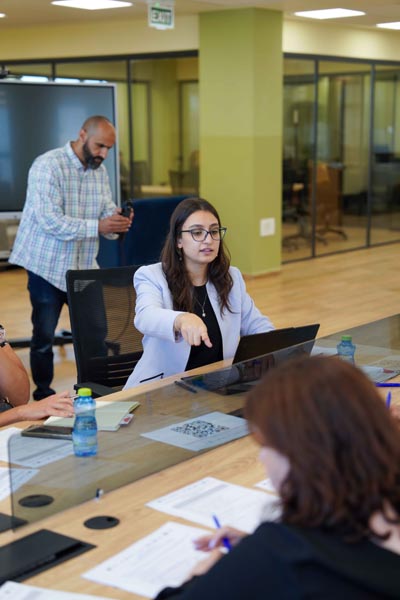
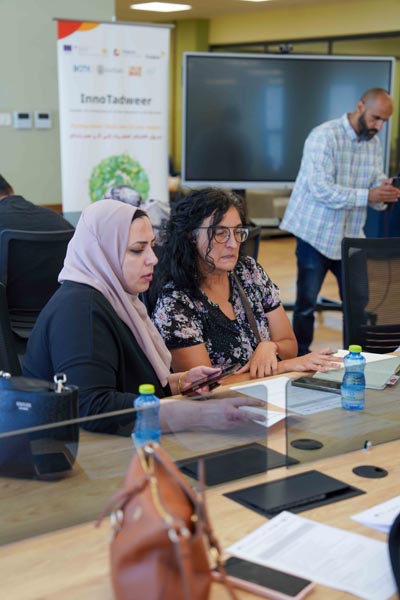
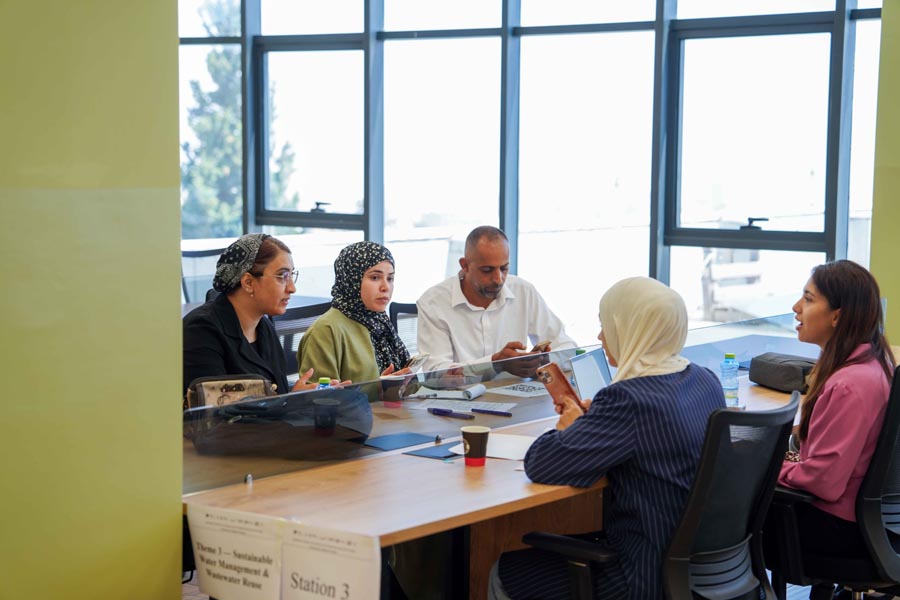
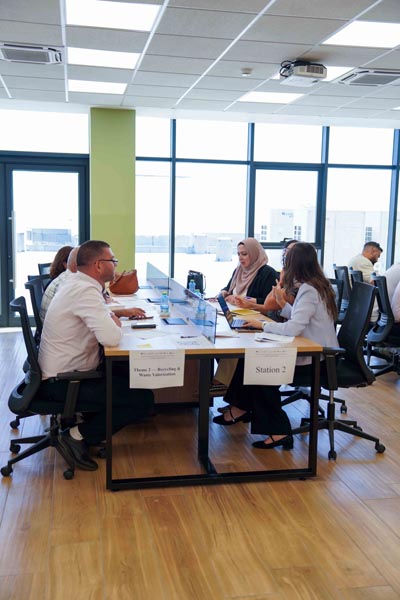
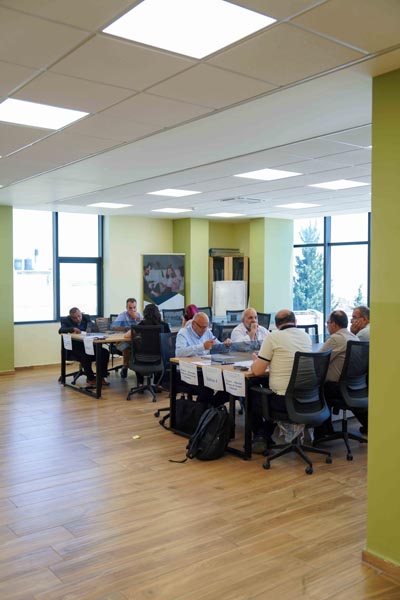
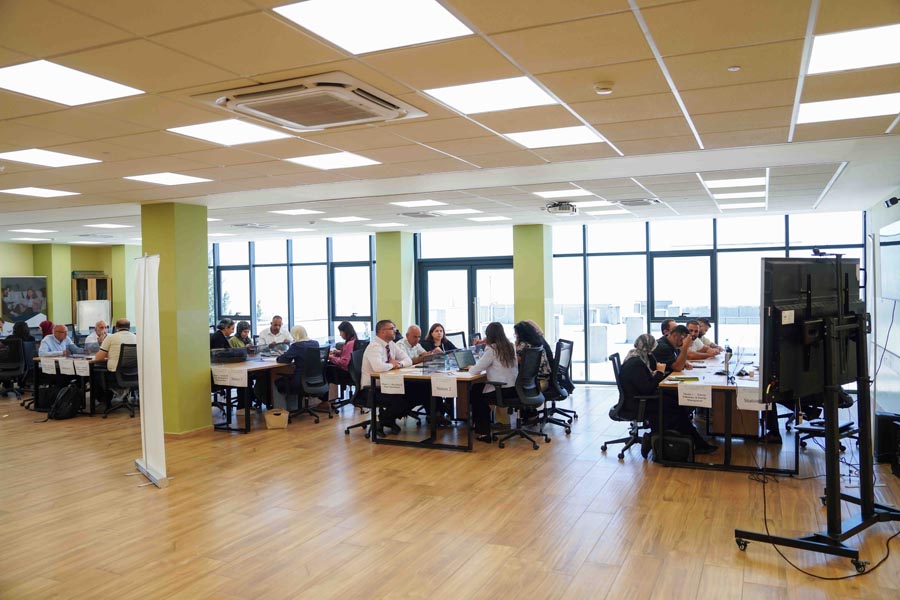
The program also featured an interactive, participatory validation session based on the World Café methodology, organized across five specialized discussion stations. Participants rotated between the stations to discuss and validate the identified sectoral challenges and link them to the different tracks of the InnoTadweer project. The session brought together a multidisciplinary group of GCE experts, academics and researchers, as well as representatives of local micro, small, and medium-sized enterprises.
The workshop aimed to review and validate the preliminary findings through a participatory process, identify key challenges facing relevant sectors, and directly map these challenges onto the project’s tracks, thereby supporting the design of practical interventions that respond to actual needs and facilitate the transition from idea generation to technical validation, market fit, incubation, and funding.
InnoTadweer operates across the northern, central, and southern regions of the West Bank through three main tracks. The first targets young innovators with early-stage ideas; the second supports the commercialization of applied research and prototypes by advancing applied research and development; while the third assists local micro, small, and medium-sized enterprises in adopting cleaner production practices, circular operations, and waste reduction measures.
Over the course of the project, 55 teams will be trained, 33 green prototypes or ventures will receive seed funding, and at least two policy tools or guidelines will be developed to help reduce regulatory ambiguity. The project also targets an 85% inclusion rate for youth and women and integrates Decent Work principles throughout its implementation.
The InnoTadweer project reflects Al-Quds University’s commitment, through BCITE, to strengthening the innovation and entrepreneurship ecosystem, connecting knowledge and research with market and community needs, and supporting practical solutions that contribute to building a more sustainable and resource-efficient economy.