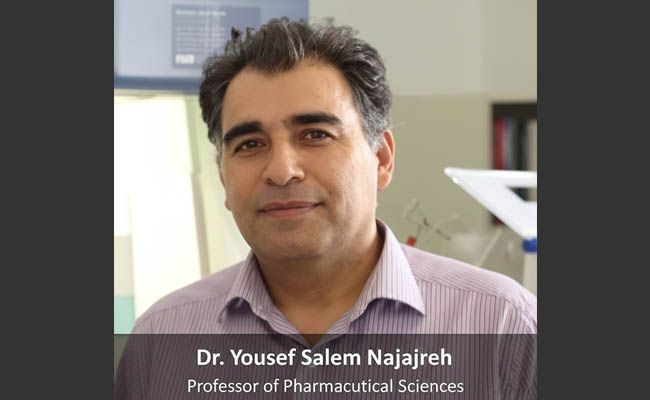


Dr. Youssef Najajreh from Al-Quds University, in collaboration with a German-Polish research team from the Jülich Research Center, Düsseldorf University, Bonn-Rhein-Sieg University of Applied Sciences in Germany, and the University of Opole in Poland, has published a scientific article in the prestigious international journal ACS Omega. The journal is classified as a first-quartile (Q1) journal in Chemical Engineering and a second-quartile (Q2) journal in Chemistry according to the SCImago Journal Rank (SJR). The article is titled:
“Molecular Insights into the Incorporation of Platinum-Based Drugs into Lipid Aggregates.”
The study provides a molecular-level understanding of the mechanisms governing the interaction and incorporation of platinum-based anticancer drugs within biological lipid systems. These systems are widely used in the development of novel drug delivery and targeting strategies, particularly for anticancer drugs, with the aim of enhancing their therapeutic effectiveness while reducing potential side effects.
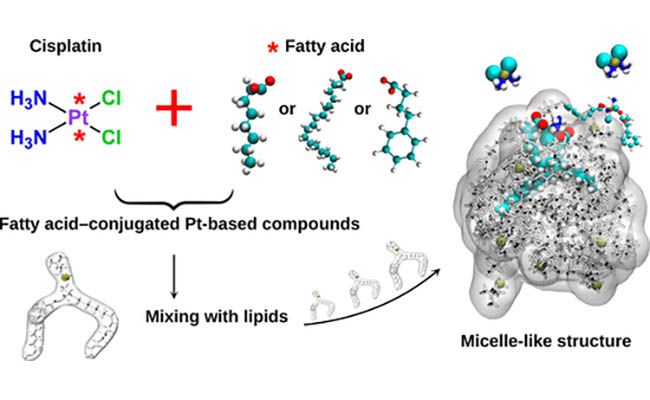
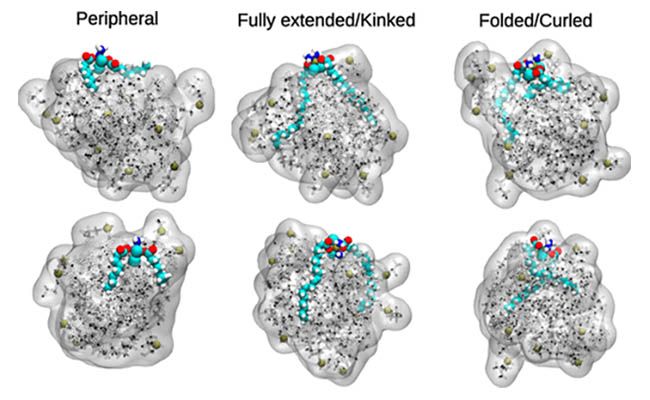
In this study, the researchers employed atomistic molecular dynamics simulations to investigate the interactions between a series of platinum-based anticancer compounds—including the drug cisplatin—as well as several lipid-linked derivatives, and biological phospholipids representing key components of cell membranes. The simulation results demonstrated the spontaneous formation of micelle-like molecular aggregates.
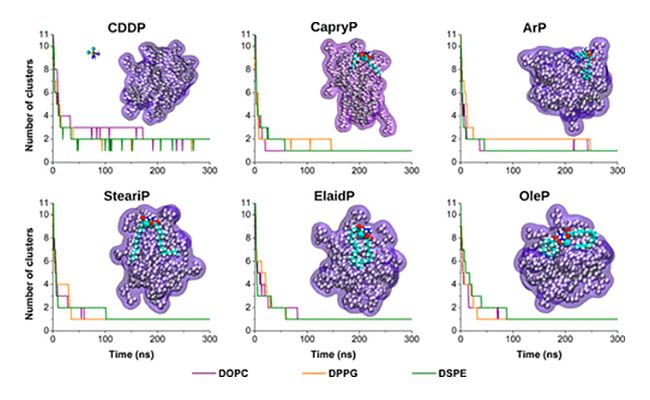
The findings showed that micelle-like aggregates form spontaneously when the pharmaceutical compounds are mixed with lipid molecules. This process is primarily driven by hydrophobic interactions, while the aggregation pattern is influenced by the chemical structure of the functional groups attached to the platinum compounds. Molecular cluster analyses also revealed differences in aggregation dynamics among the various compounds, indicating that the length of the fatty acid chain and the degree of unsaturation play significant roles in the rate of aggregate formation and their overall stability.
These findings provide an advanced molecular-level understanding of the structural factors that control the incorporation of platinum compounds linked to fatty acids within lipid systems. This opens promising prospects for developing new strategies to enhance the efficiency of anticancer drug delivery using lipid-based delivery systems.
The publication of this research in a high-impact international scientific journal highlights the importance of international research collaboration. It also reflects the researchers’ contribution to advancing scientific knowledge in pharmaceutical chemistry and drug delivery system design, while strengthening the global scientific presence of Palestinian researchers.