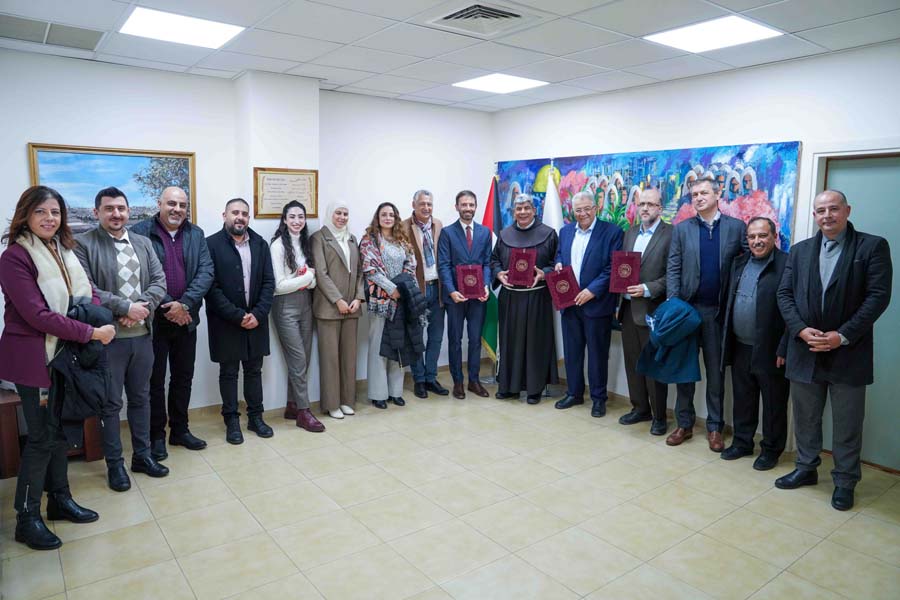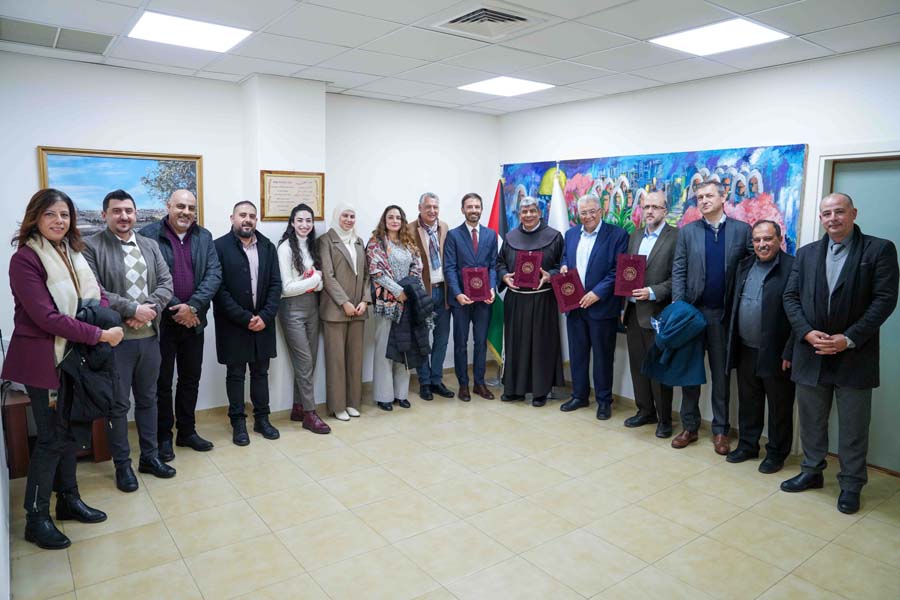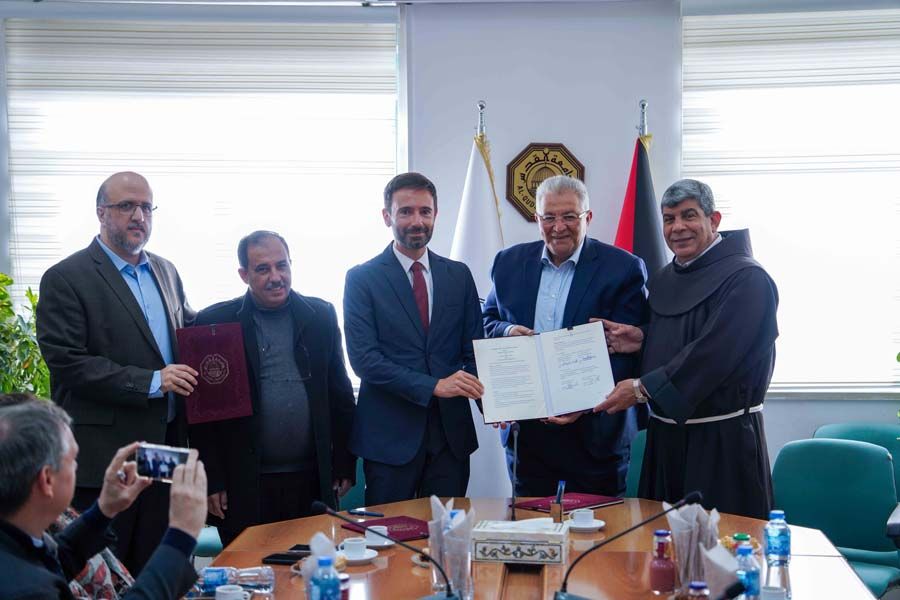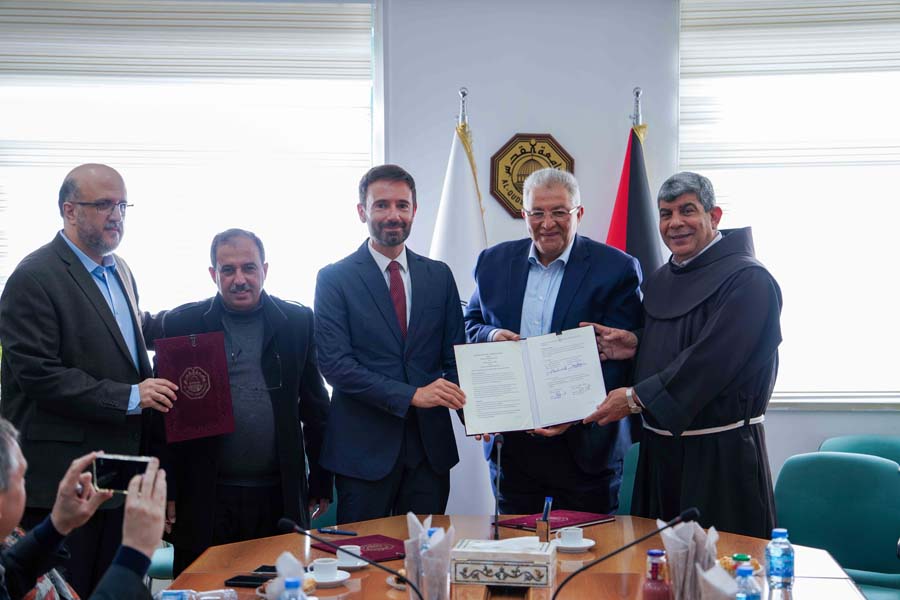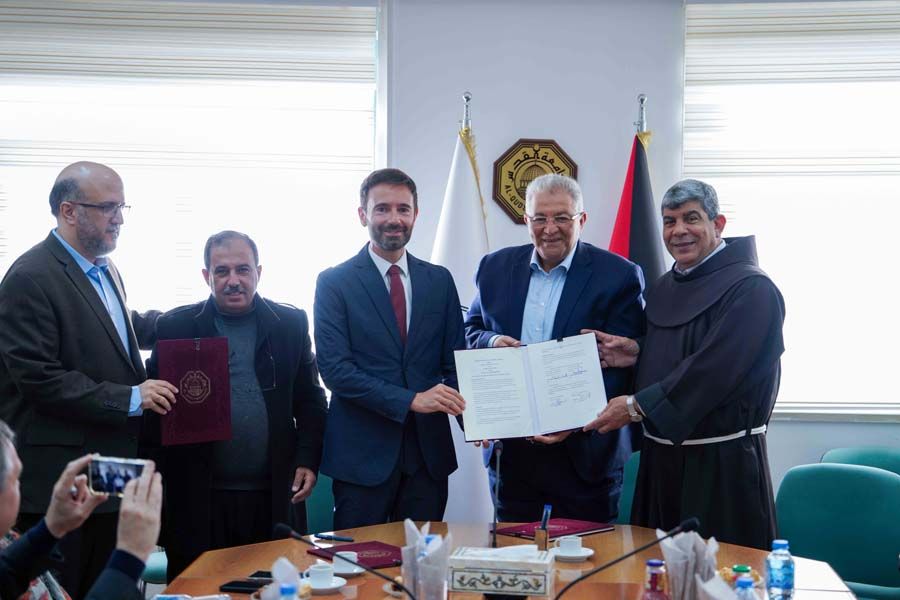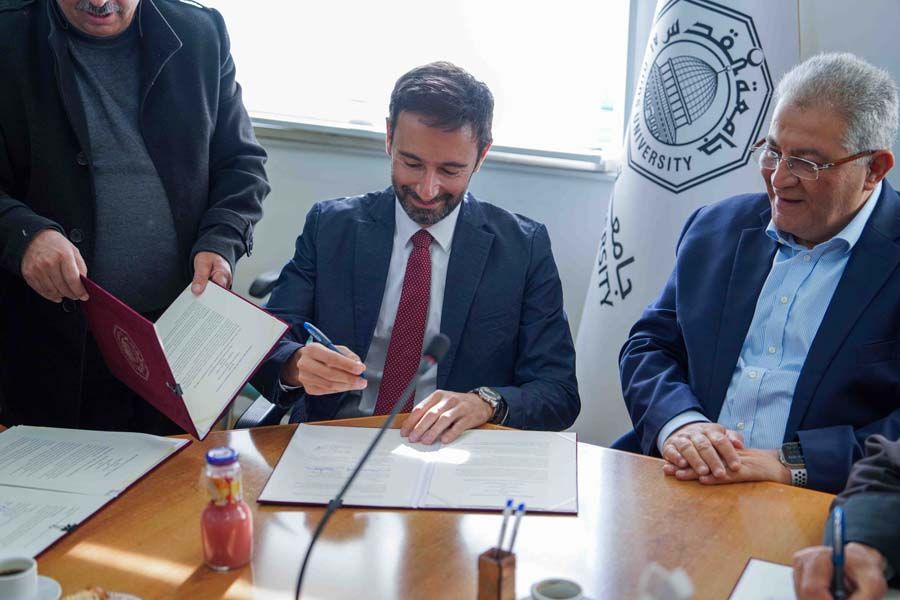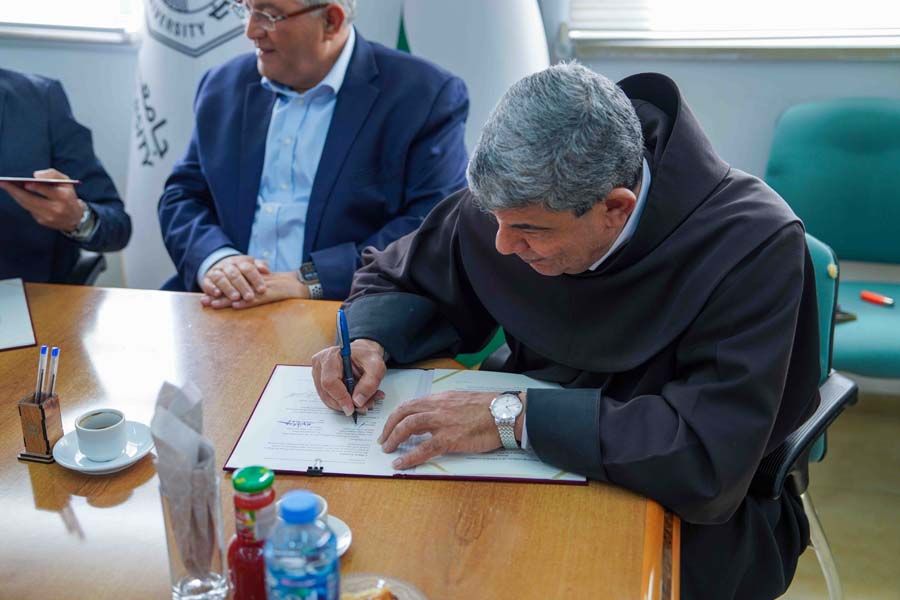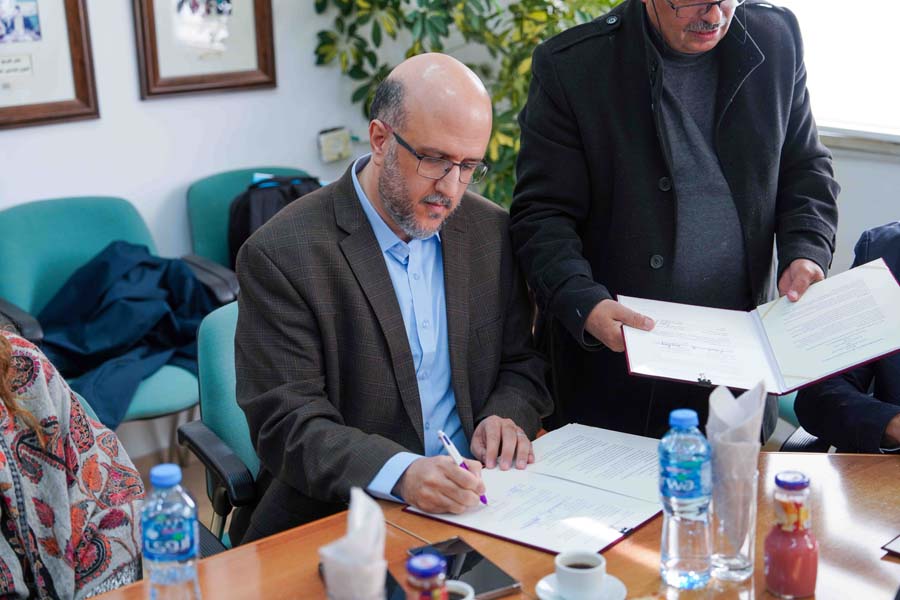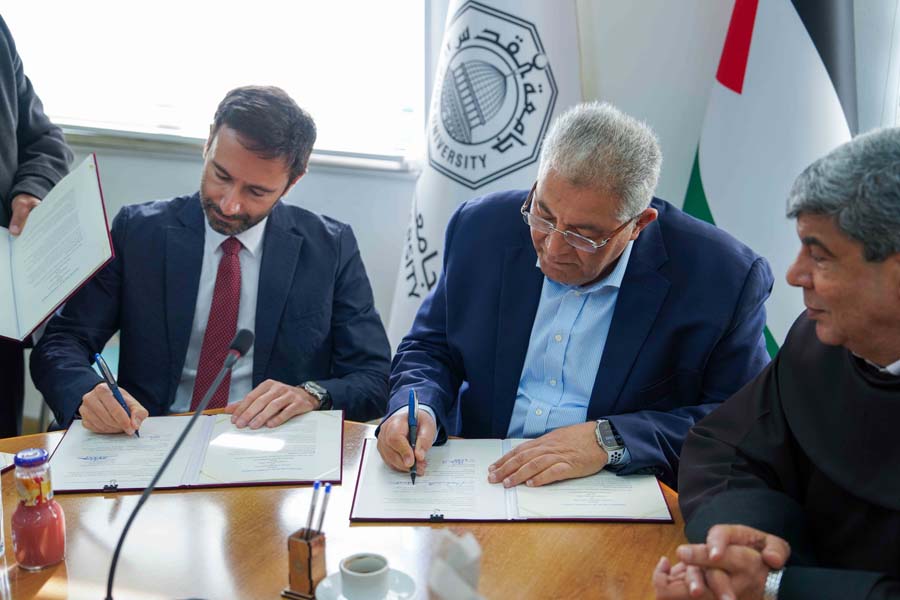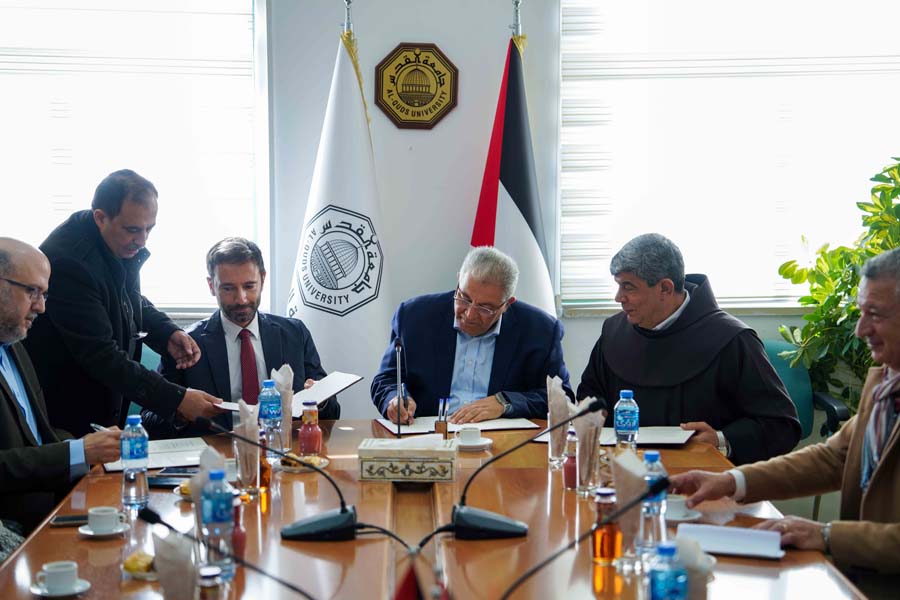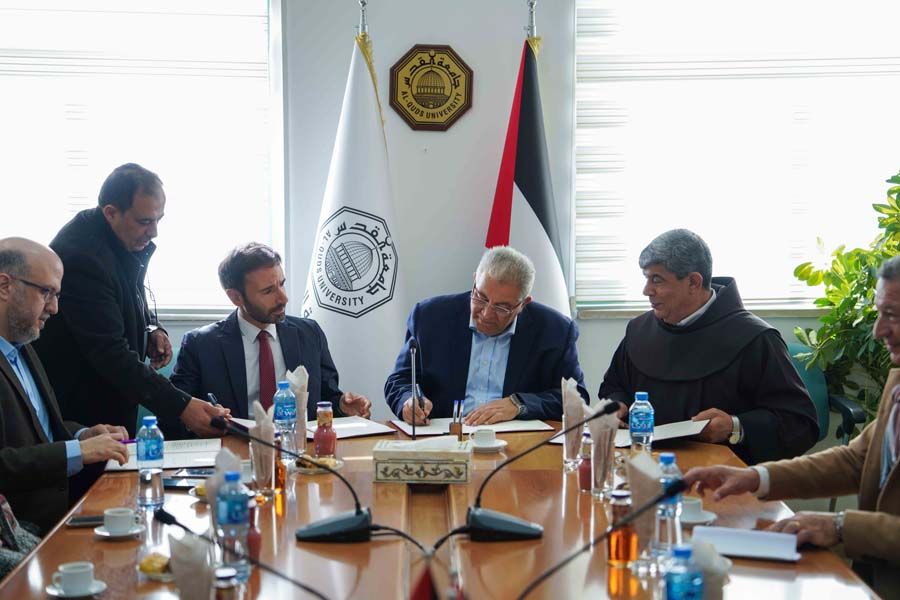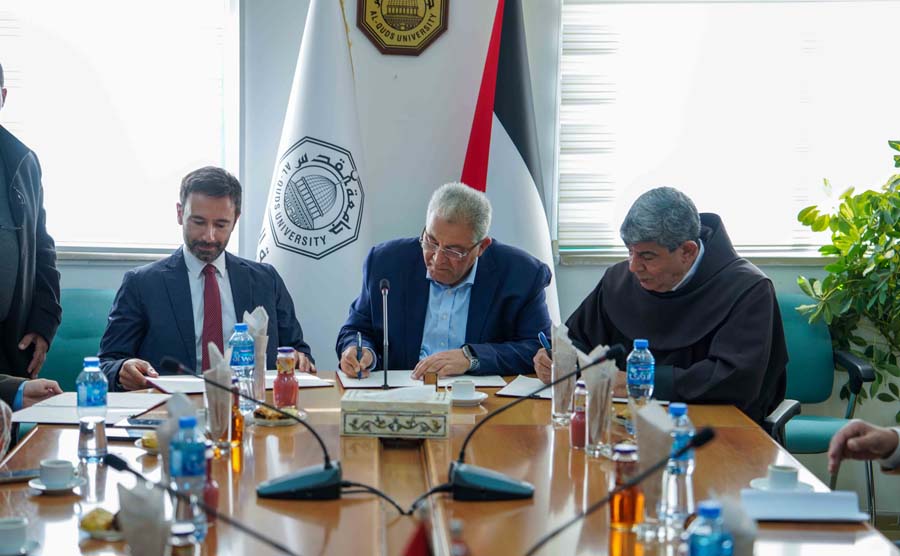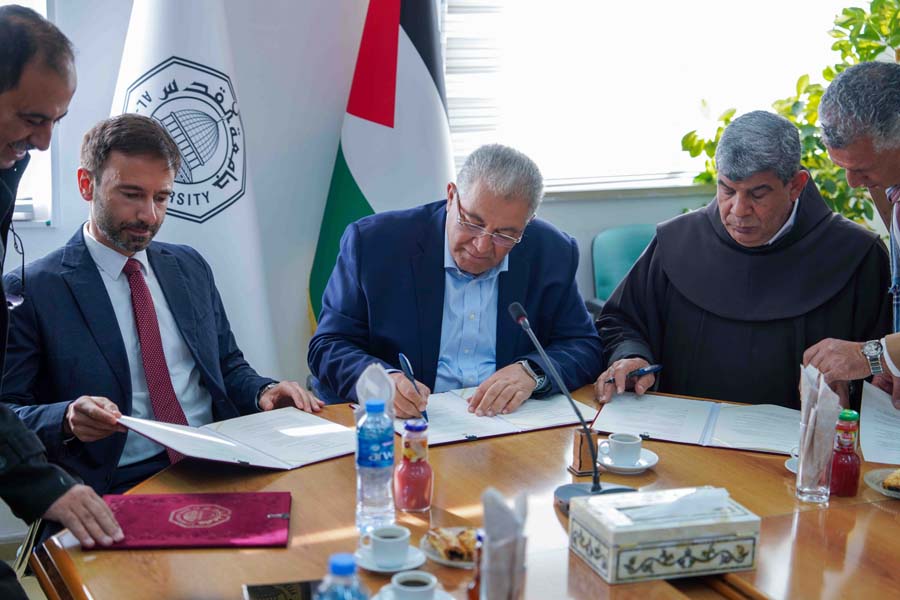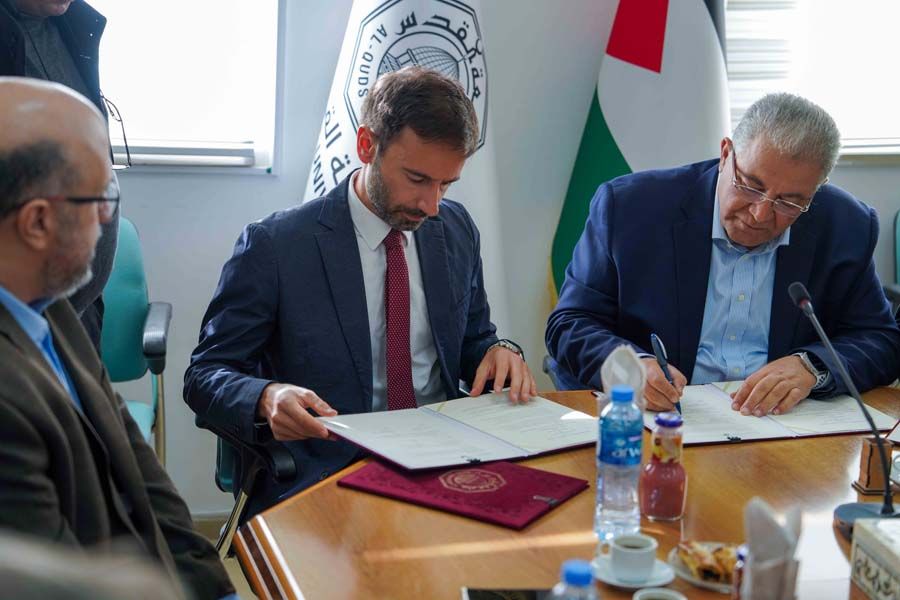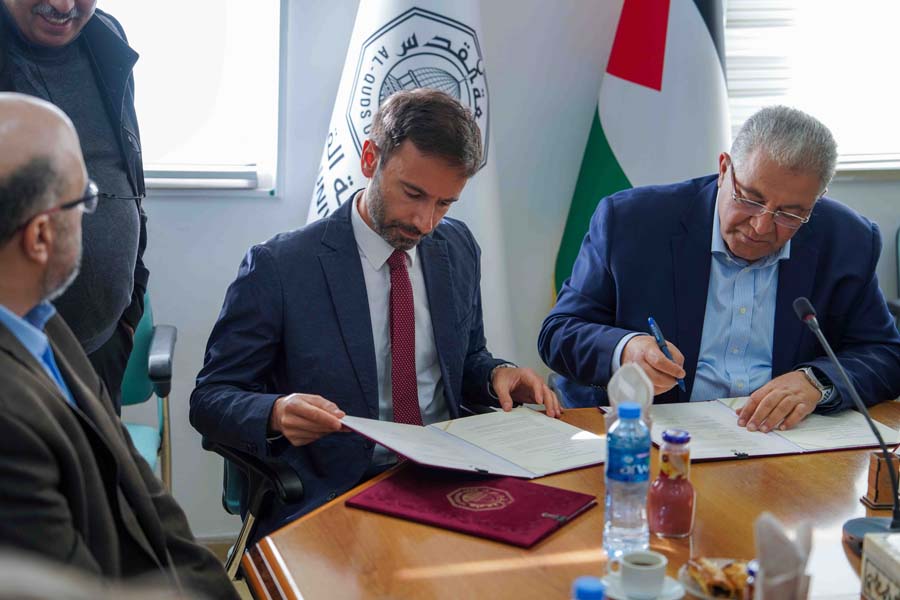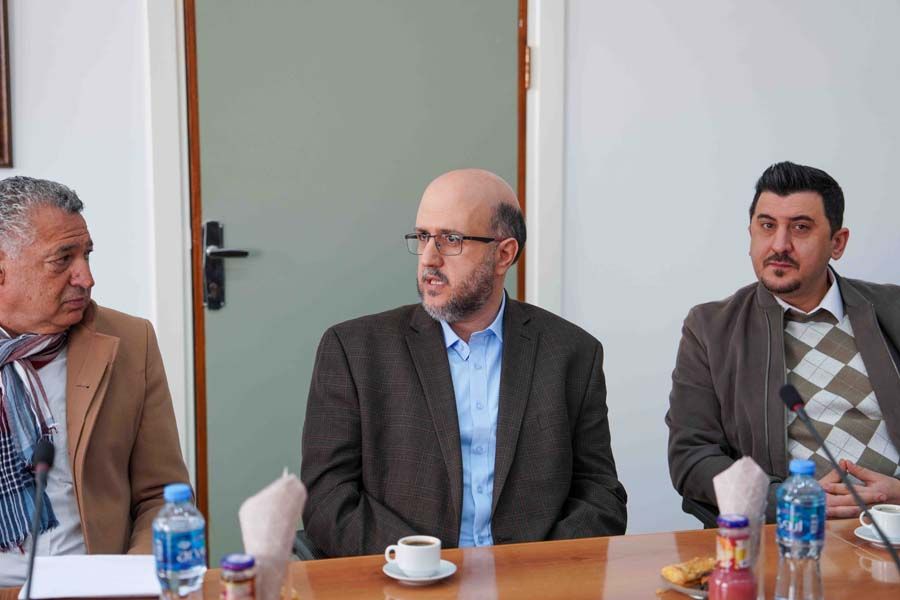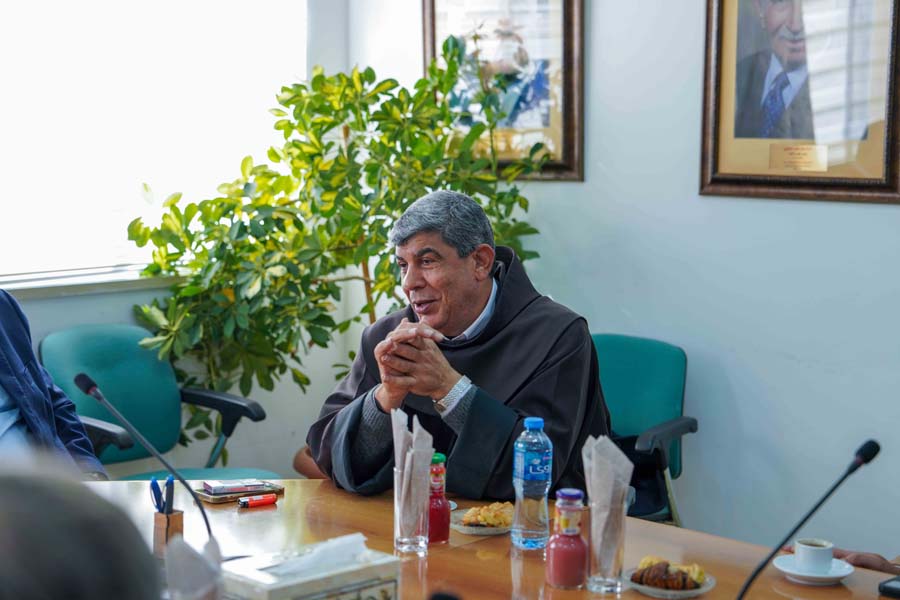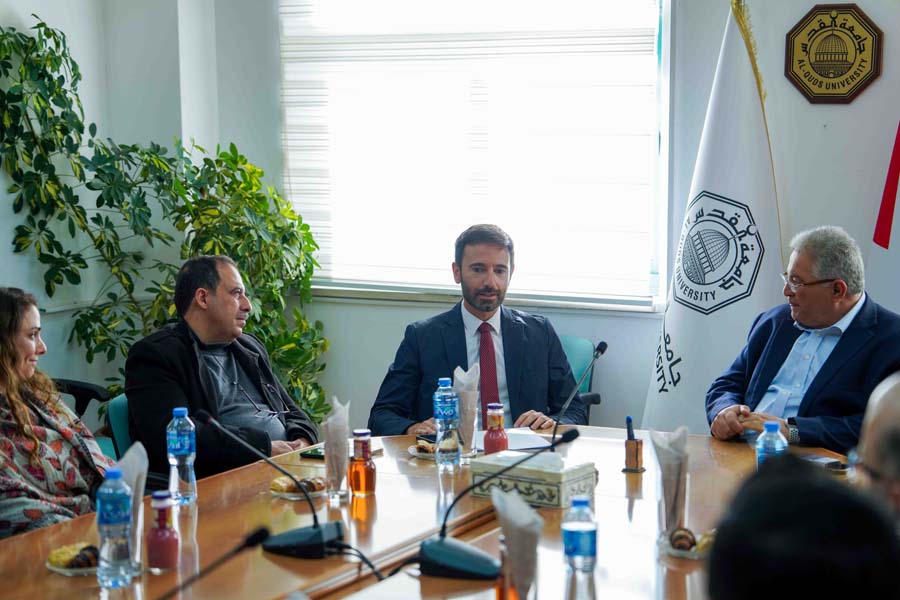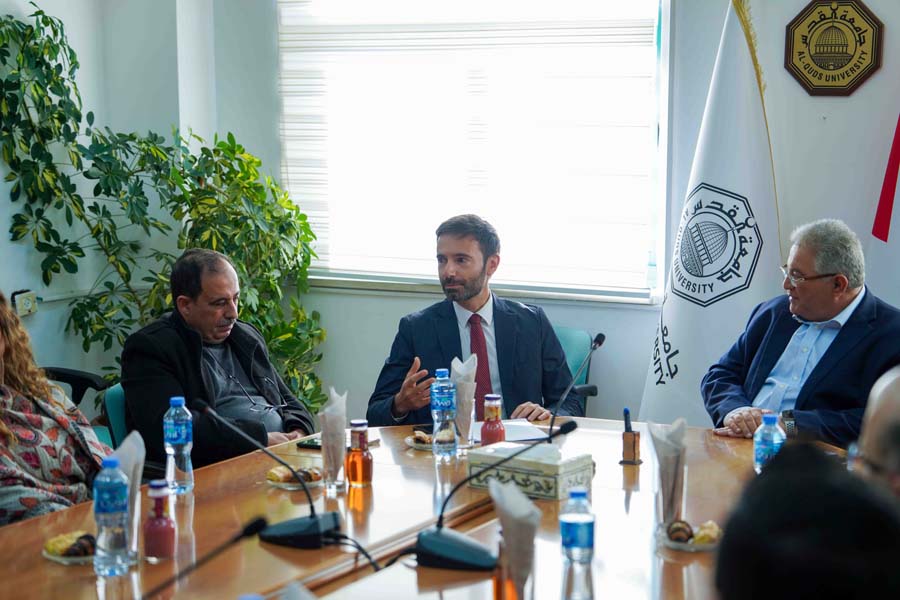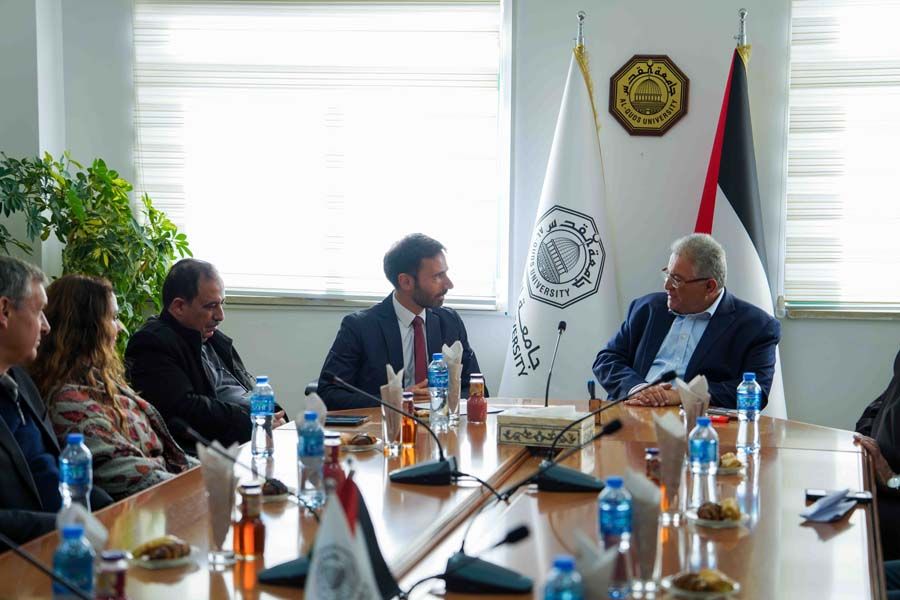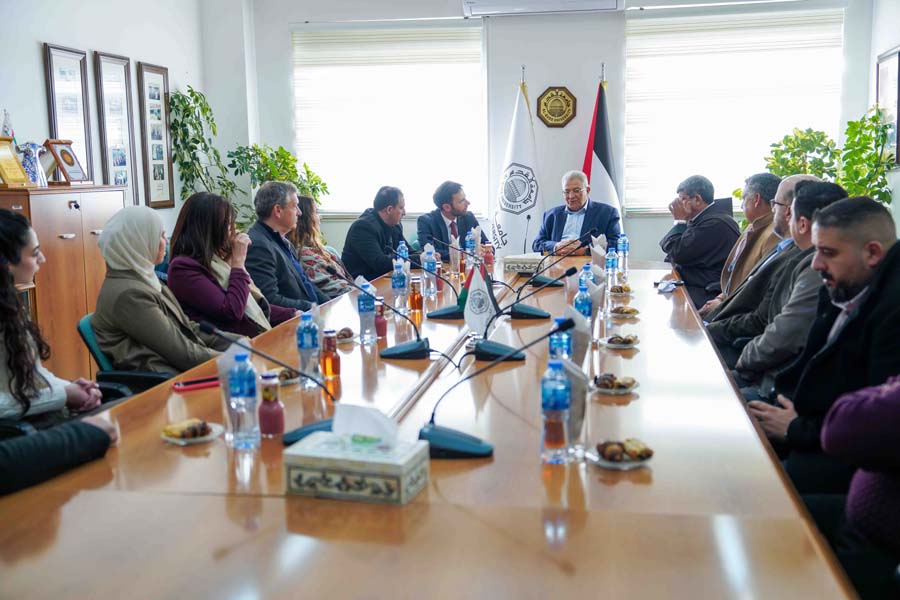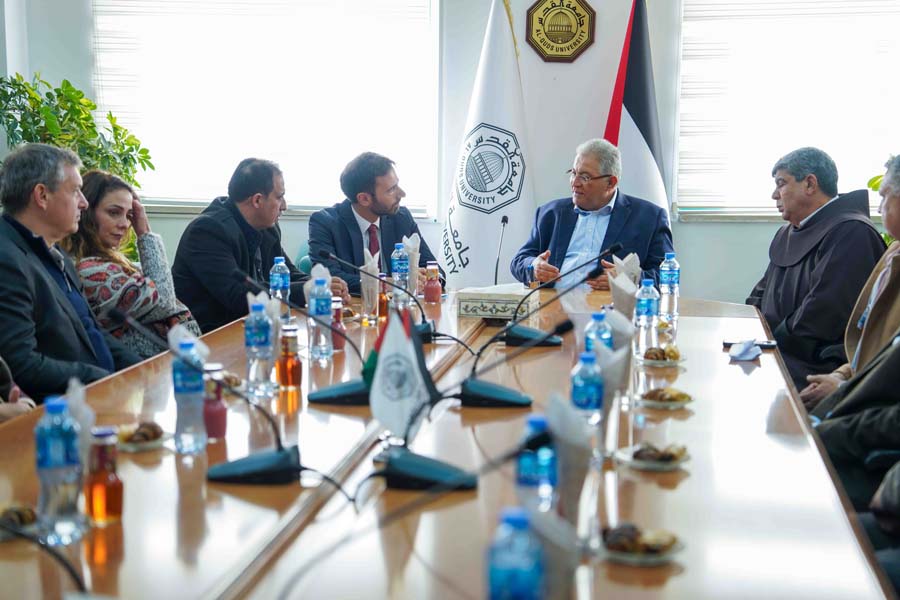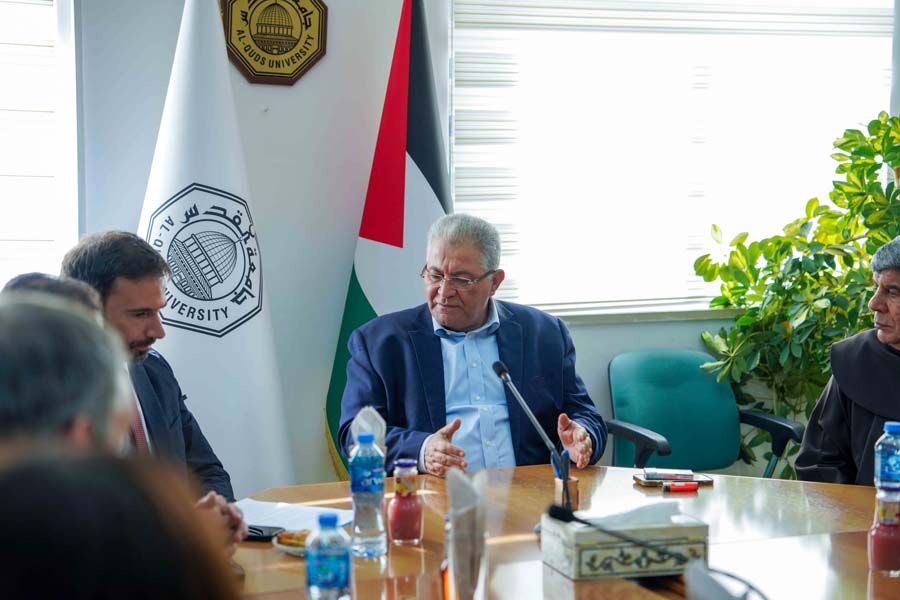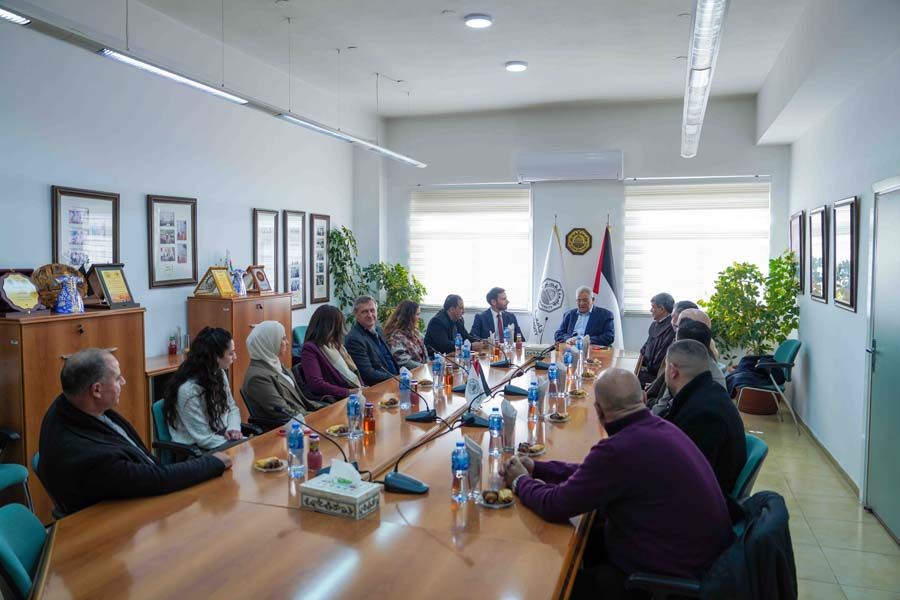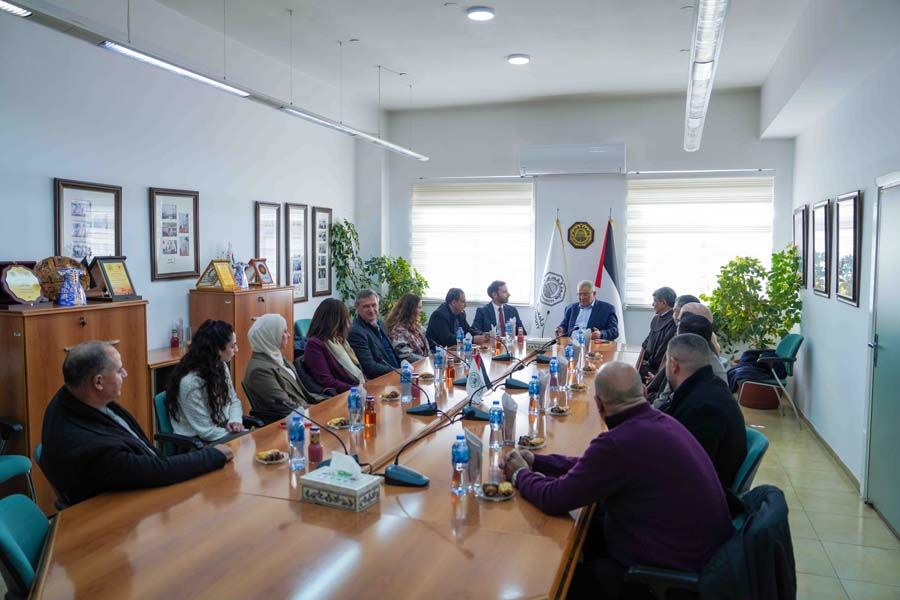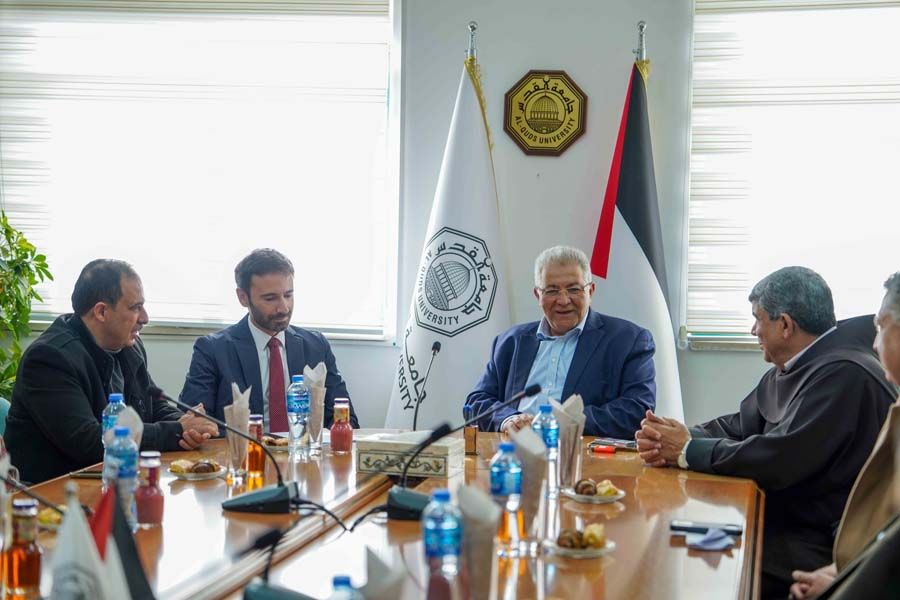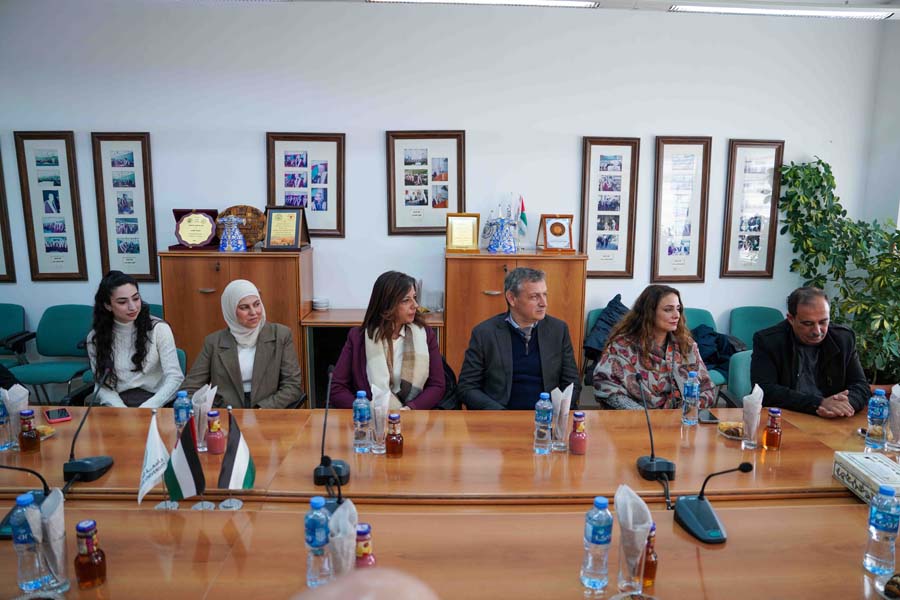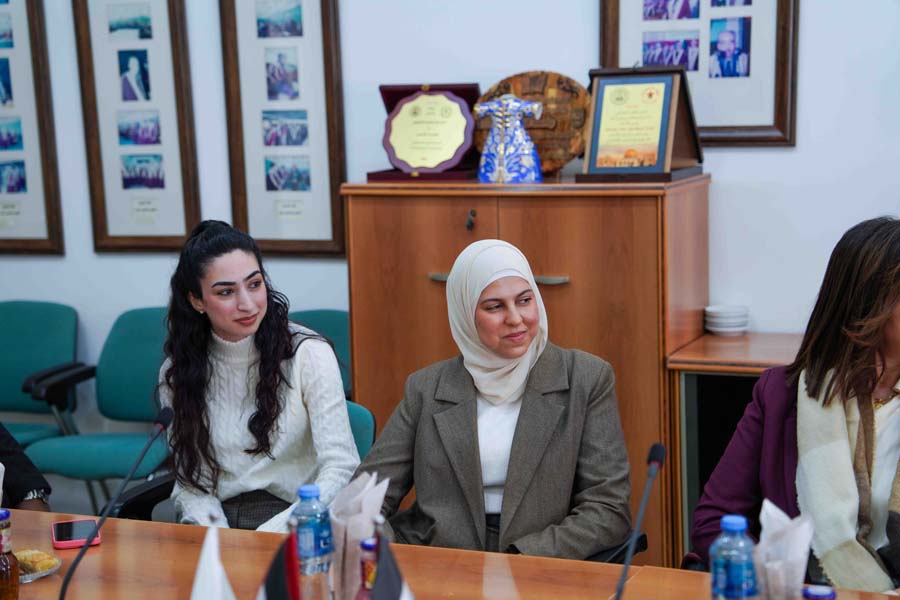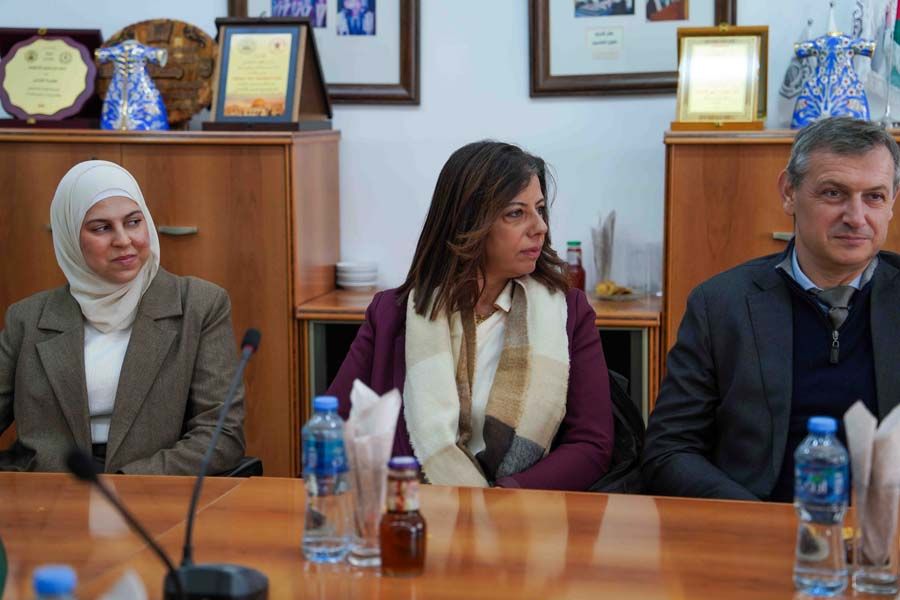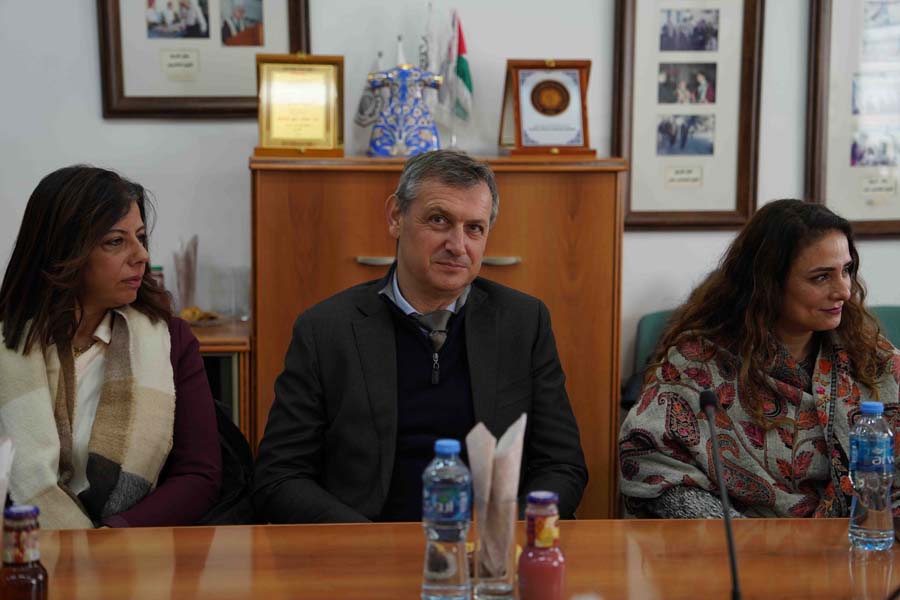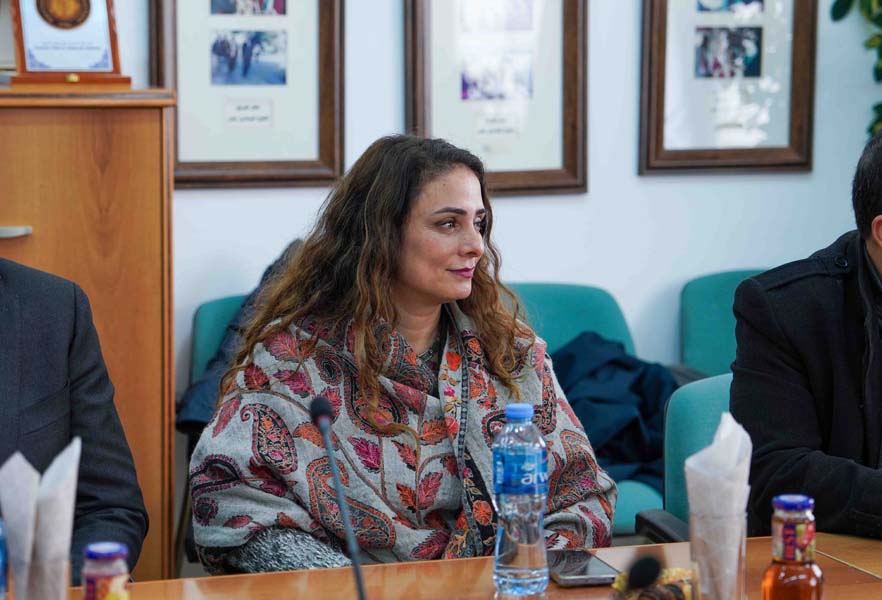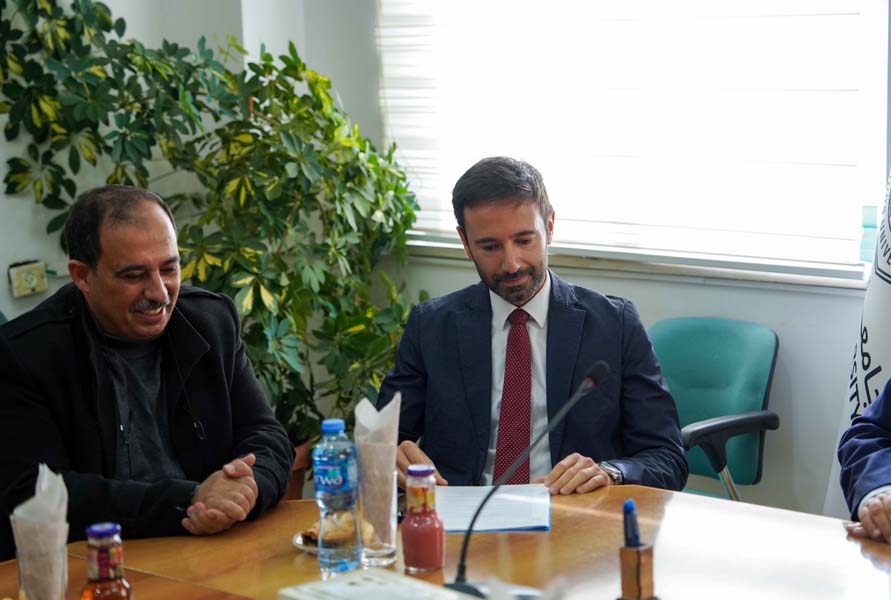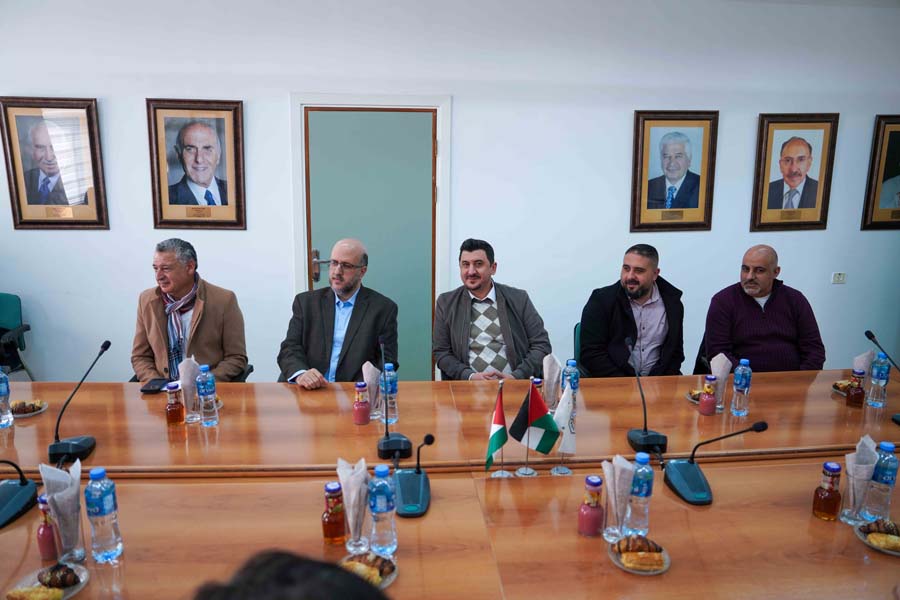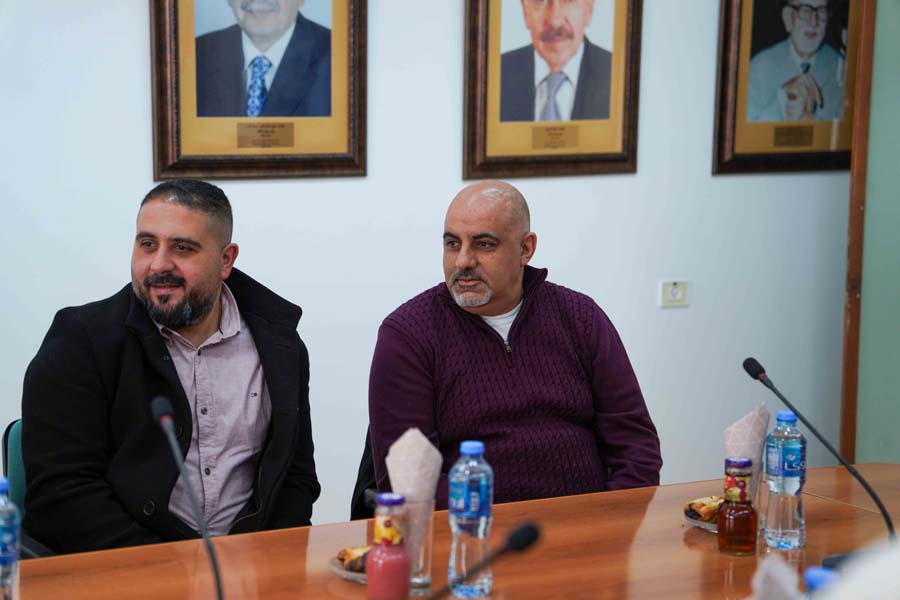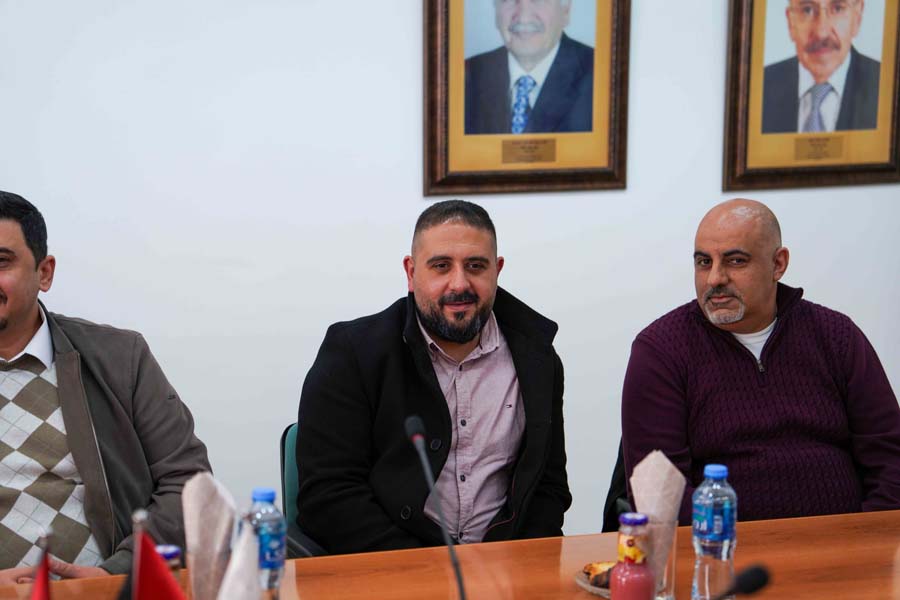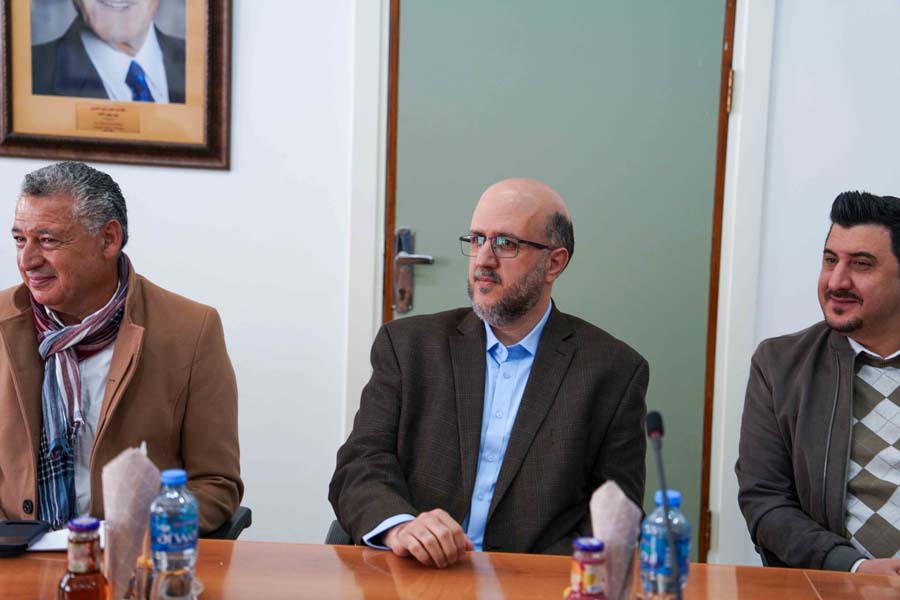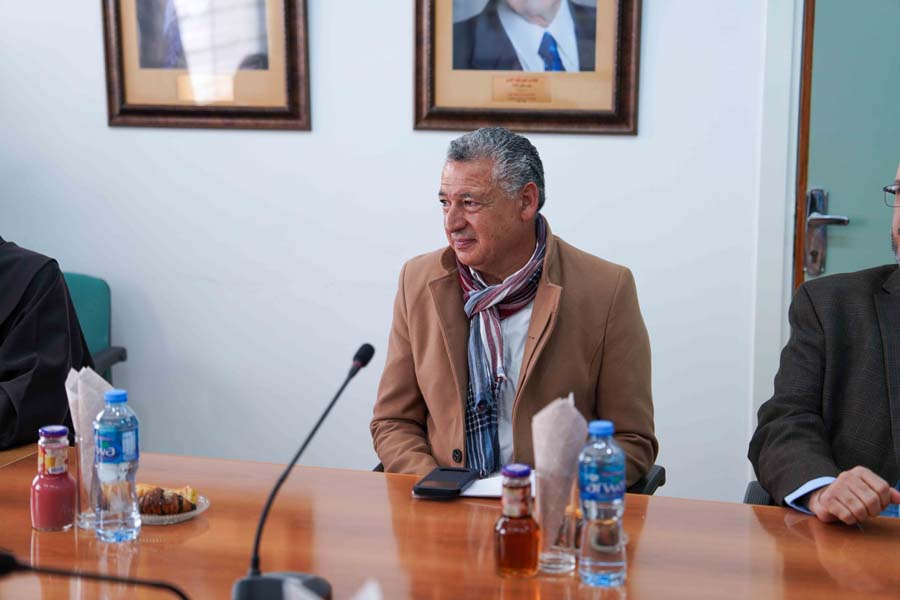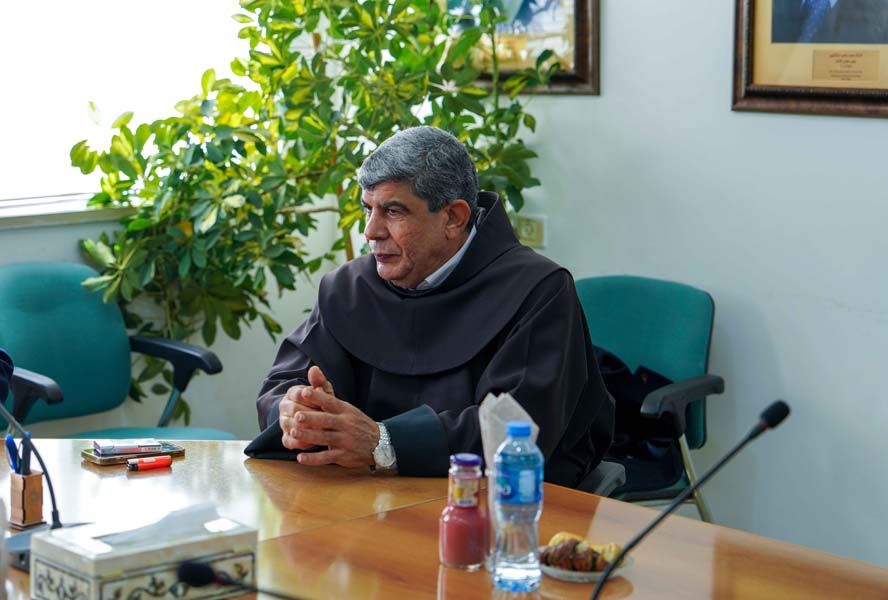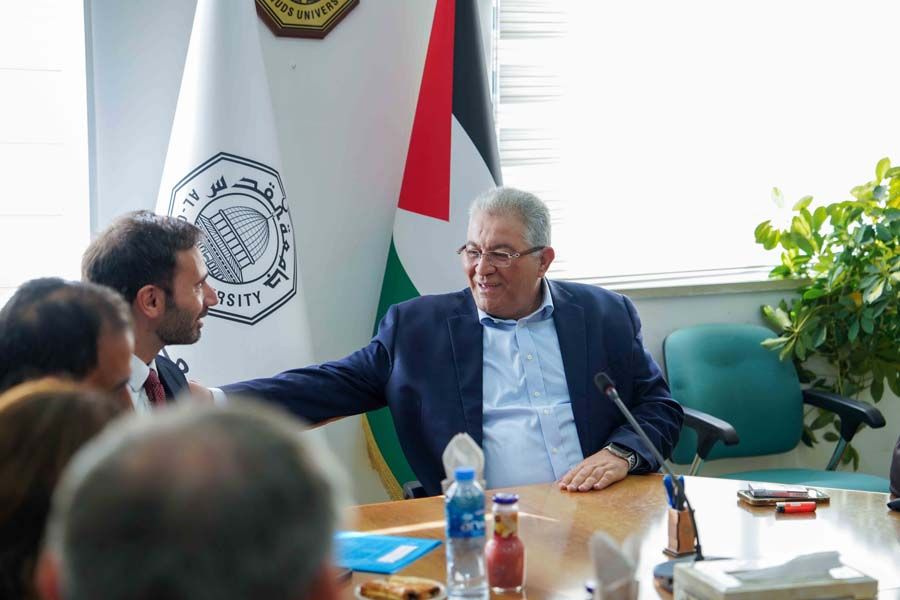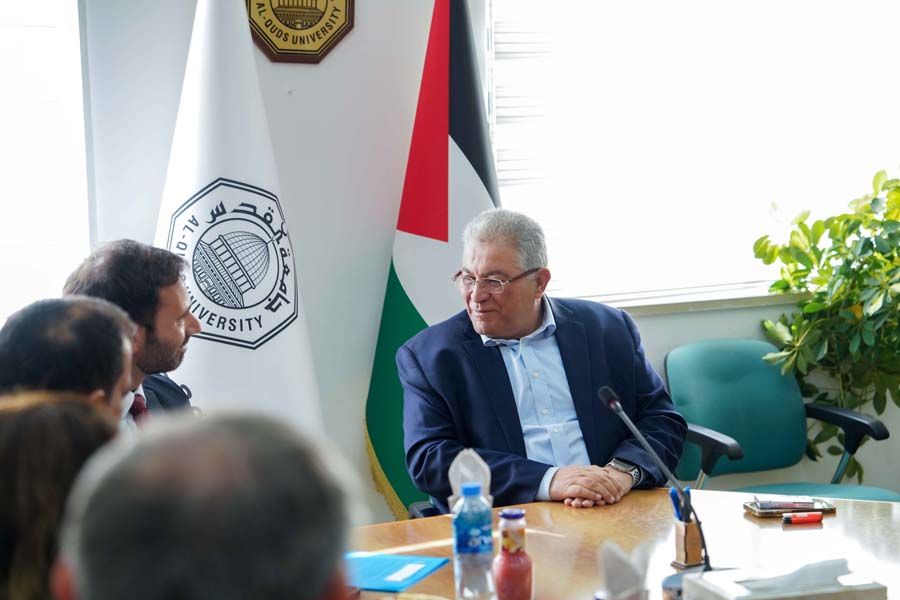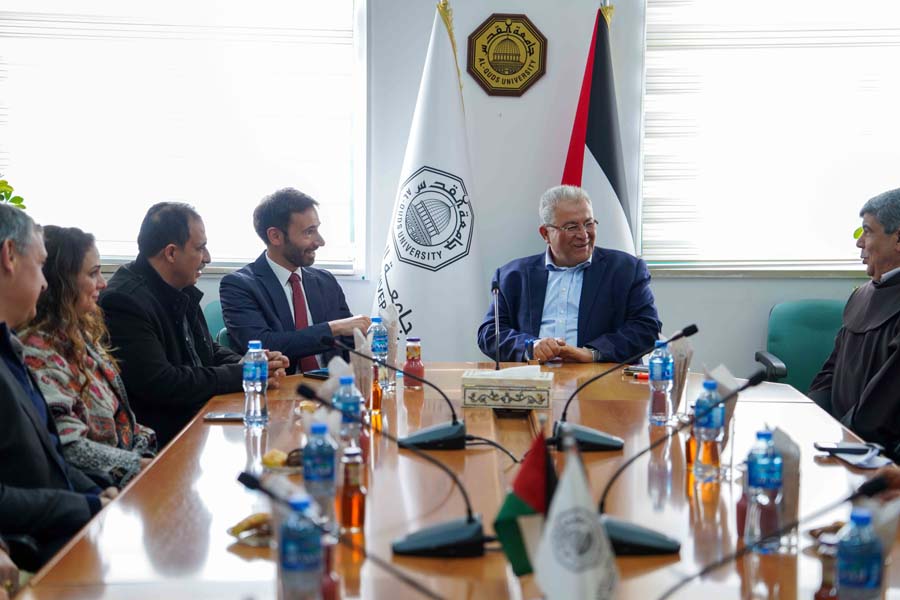
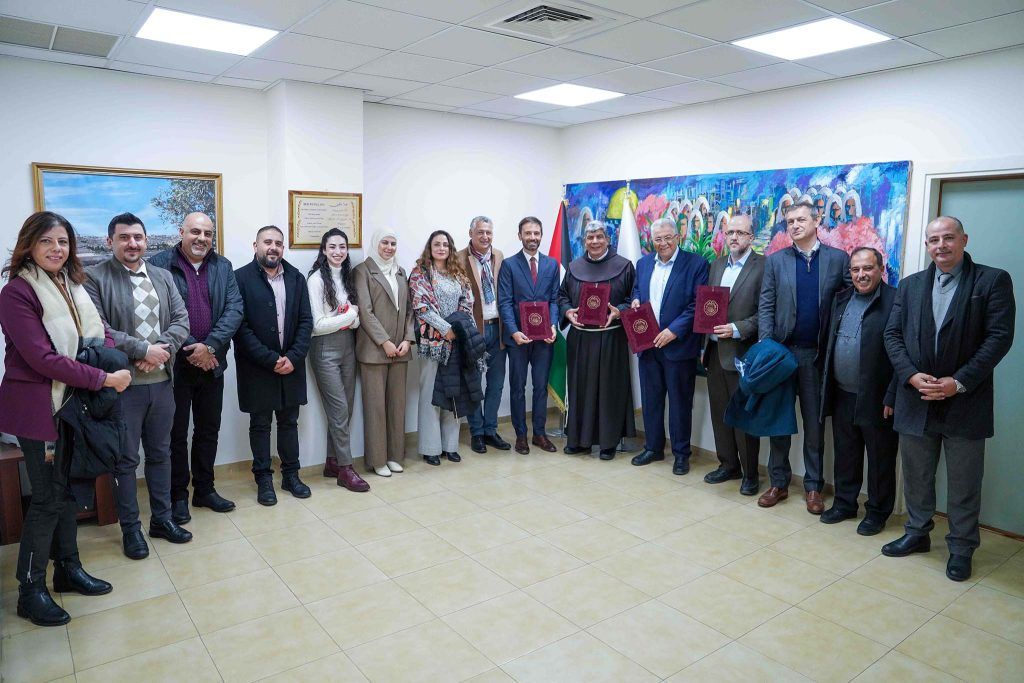
Al-Quds University and the Custody of the Holy Land signed a strategic partnership agreement to manage the Dar Al-Consul Community and Tourism Center. The agreement was signed at the university’s Abu Dis campus, in the presence of official representatives from the European Union and the United Nations Human Settlements Programme (UN-Habitat).
The agreement was signed by Prof. Dr. Imad Abu Kishk, the General Counsel of Al-Quds University, and Father Ibrahim Faltas, the Senior Director of Dar Al-Consul at the Custody of the Holy Land, with Mr. Mario Varenti from the European Union and Mr. Amjad Kanaan Al-Tawil from the United Nations Human Settlements Programme (UN-Habitat) also taking part, starting a new phase of teamwork focused on community and tourism development in the Old City of Jerusalem.
This partnership marks the culmination of a process spanning more than eleven years of European funding and technical support from the United Nations Human Settlements Programme, implemented through four integrated projects aimed at revitalizing the Dar Al-Consul complex. The work included the restoration of 1,200 square meters of community space, the renovation of 40 residential apartments, and the preparation of five community facilities within the complex, as well as furnishing, equipping, capacity building, and the initial activation of programs and activities.
Prof. Dr. Imad Abu Kishk affirmed that Al-Quds University’s entry as a strategic partner in the management of Dar Al-Consul is a natural extension of its role in supporting the Jerusalemite community. He added, “Through its faculties, centers, students, academics, and administrative staff, the university will contribute to the implementation of high-quality programs, activities, and projects—particularly in the Old City of Jerusalem—in ways that enhance Jerusalem-based services, research, and products, in line with the overarching Palestinian vision.”
Mr. Amjad Al-Tawil, Director of the “Qudsi” Project and representative of UN-Habitat, stated: “Today, as partners, we are reaping the results of 11 years of local and international networking aimed at advancing the Old City of Jerusalem. We focused on both stone and people to preserve the Palestinian identity—not only through the generous funding of the European Union, but also through the Custody’s qualitative contribution, and today through a distinctive investment by Al-Quds University. This opens the door to expanding this solid partnership, with all its tools and technical outputs, towards engaging new partners.”
The new agreement sets out key provisions shaping the future of the Dar Al-Consul Center, foremost among them the establishment of a community-based board of directors and a joint technical committee open to expansion with new partners, with the European Union and UN-Habitat participating as observers. It also lays the foundation for a sustainable action plan that, in the medium term, relies on self-financing across three main tracks: the structured rental of halls and services; the expansion and operation of the digital museum and extended reality (XR) products; and the development of digital and in-person edutainment programs.
The agreement also includes the training and recruitment of an expanded staff to manage the center, including the appointment of a specialized director, the promotion of domestic and international tourism through targeted professional programs, and joint primary funding to support and develop the Dar Al-Consul Fund.
In his speech, Father Ibrahim Faltas expressed his gratitude to all partners, saying, “We thank all the engineering, economic, community, and administrative teams that have brought Dar Al-Consul to this stage. What is most important now is to prepare a bright future for the center through the implementation of the practical and integrated plan, which not only ensures self-sustained financial coverage but also offers distinctive programs and activities capable of elevating Dar Al-Consul as a leading community and tourism landmark.”
As for Mario Varenti, he emphasized in his speech the importance of fostering a spirit of volunteerism and developing sustainable programs within the center, affirming, “Commitment to the three tracks of the action plan represents a promising vision that meets the needs and aspirations of the various segments of the Palestinian community in Jerusalem. We see Dar Al-Consul as a model to be emulated for revitalizing community work and empowering people.”
This partnership reflects Al-Quds University’s vision of expanding its academic, community, and development collaborations, enhancing its role in serving the Holy City. It also represents a concrete step toward supporting sustainable projects that help revive the cultural, tourism, and community significance of Jerusalem’s Old City by integrating academic expertise with development needs in cooperation with local and international partners.