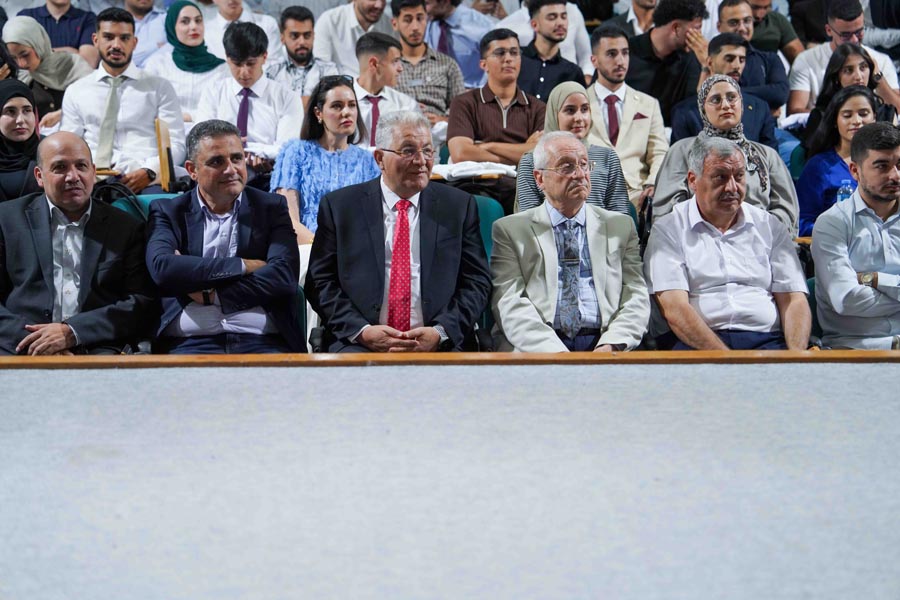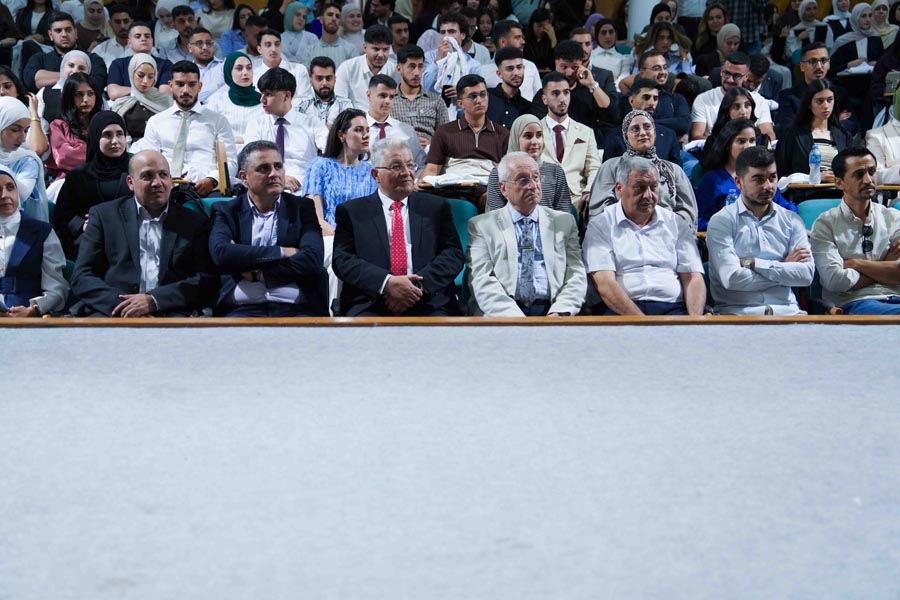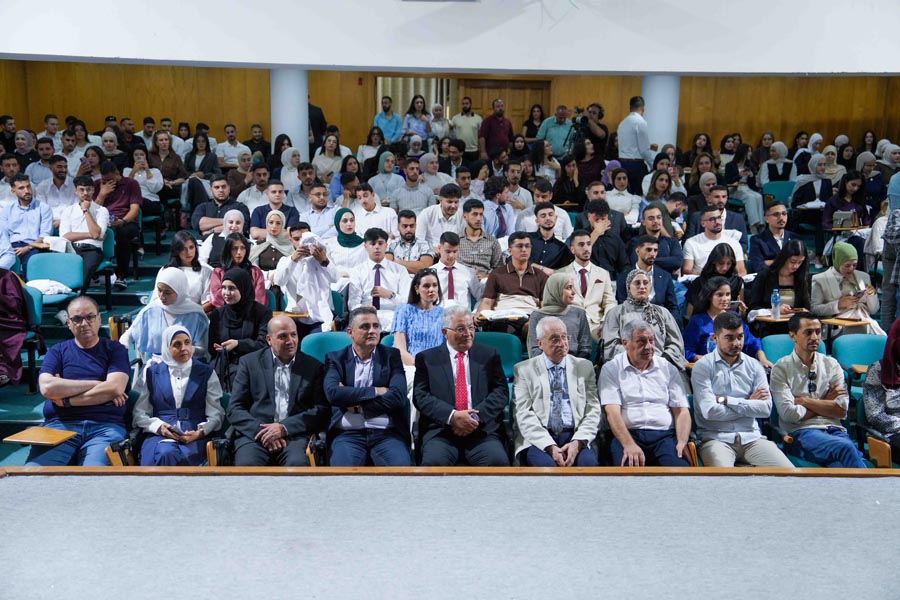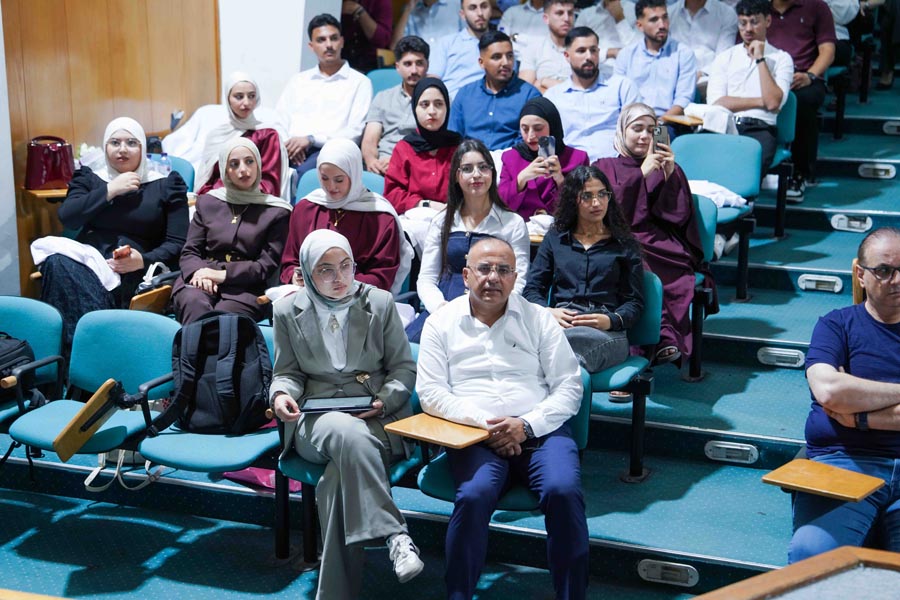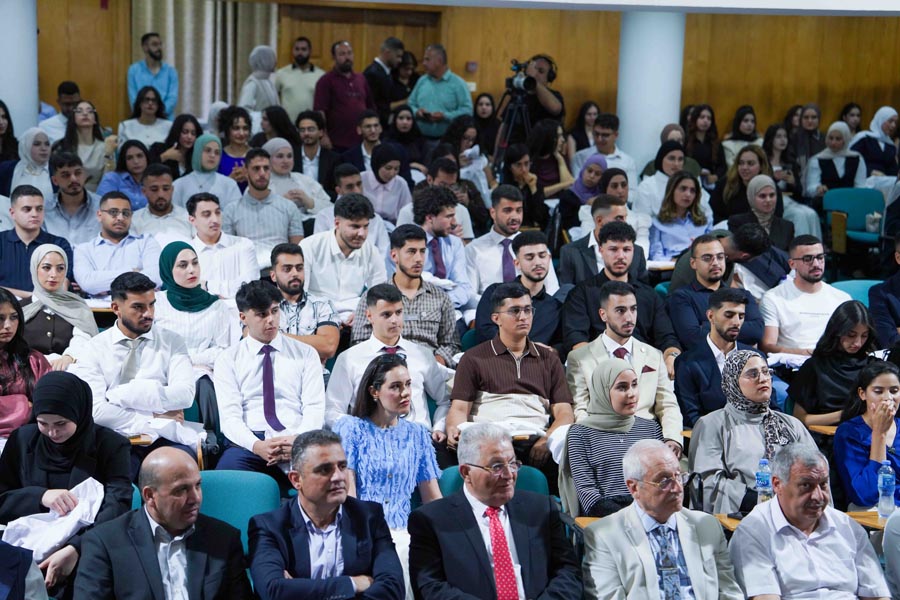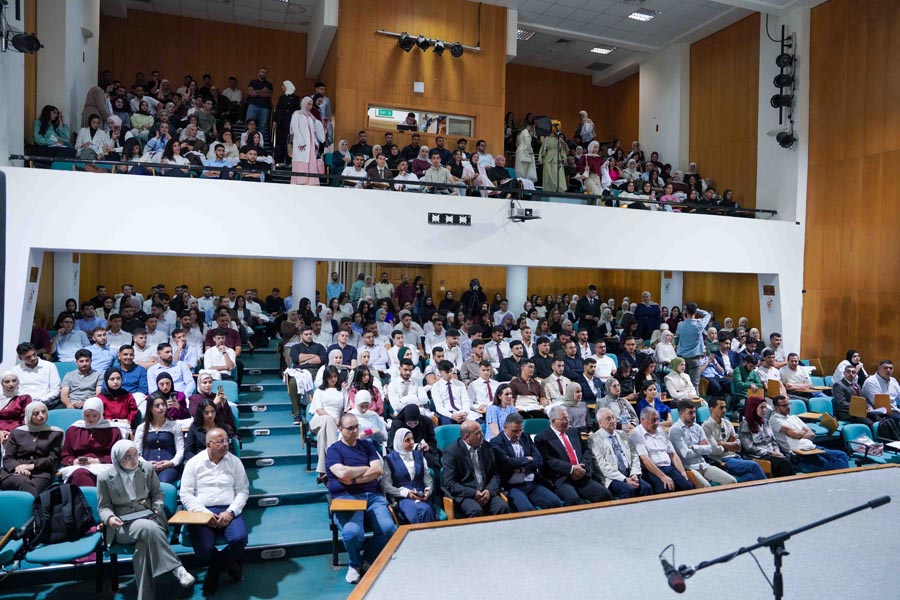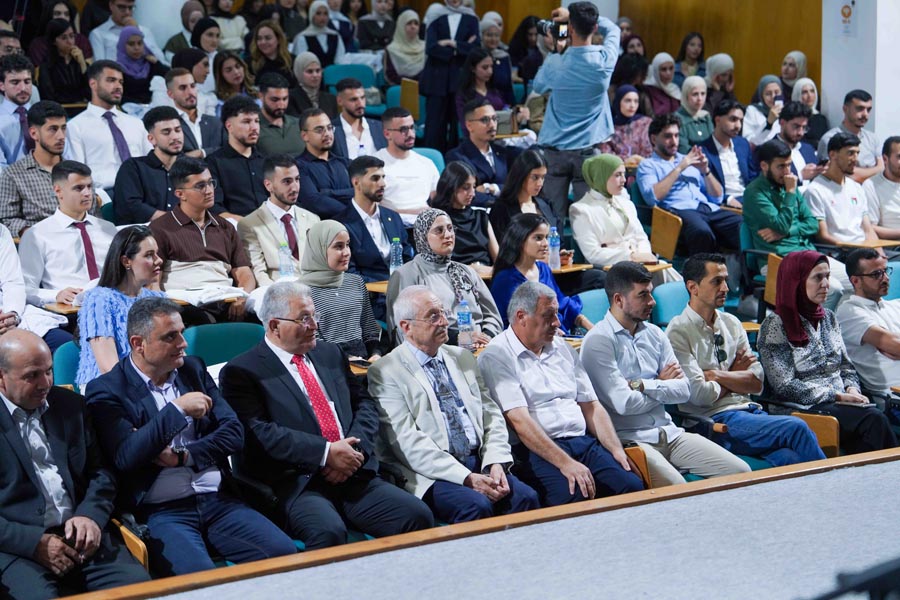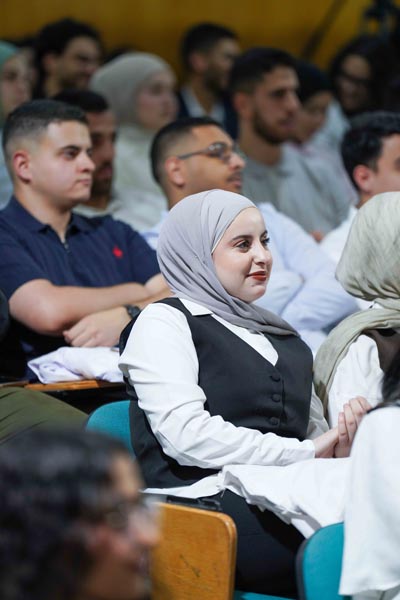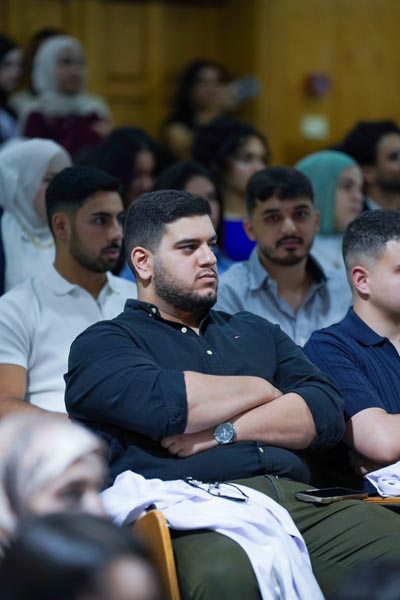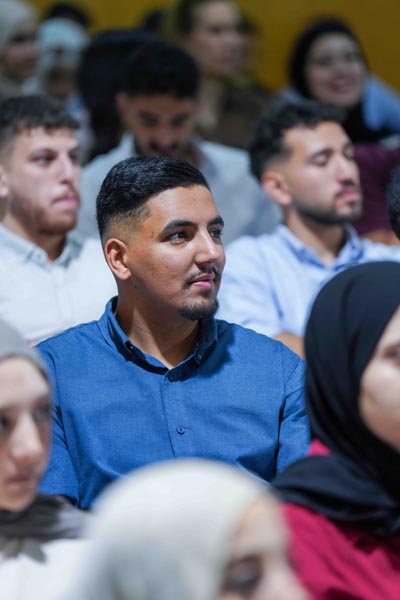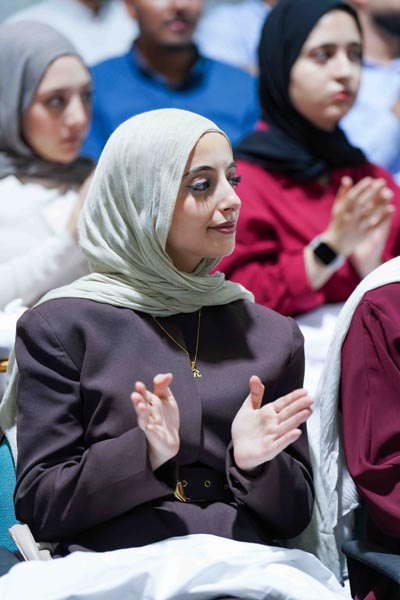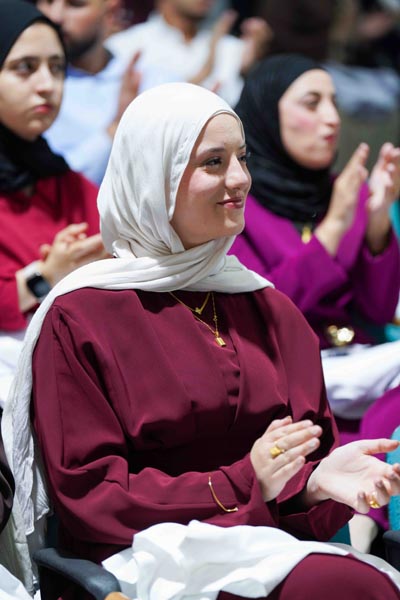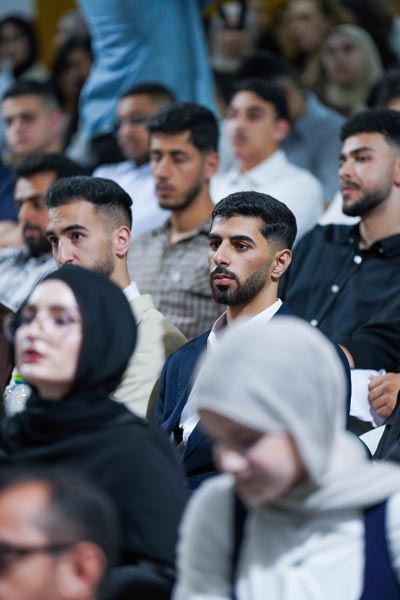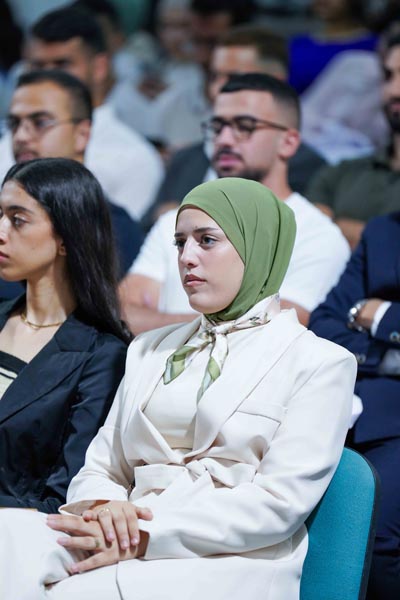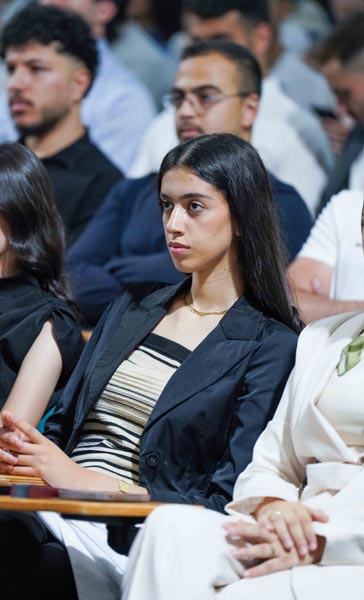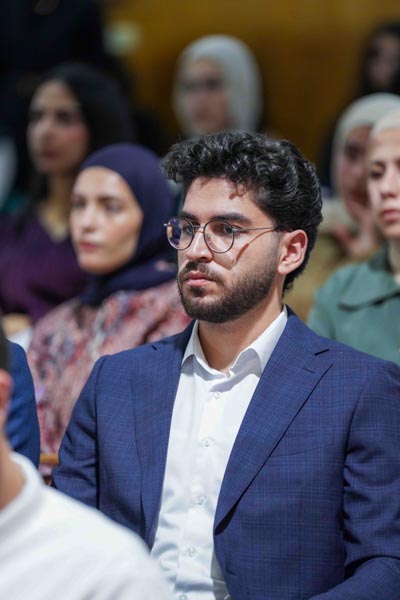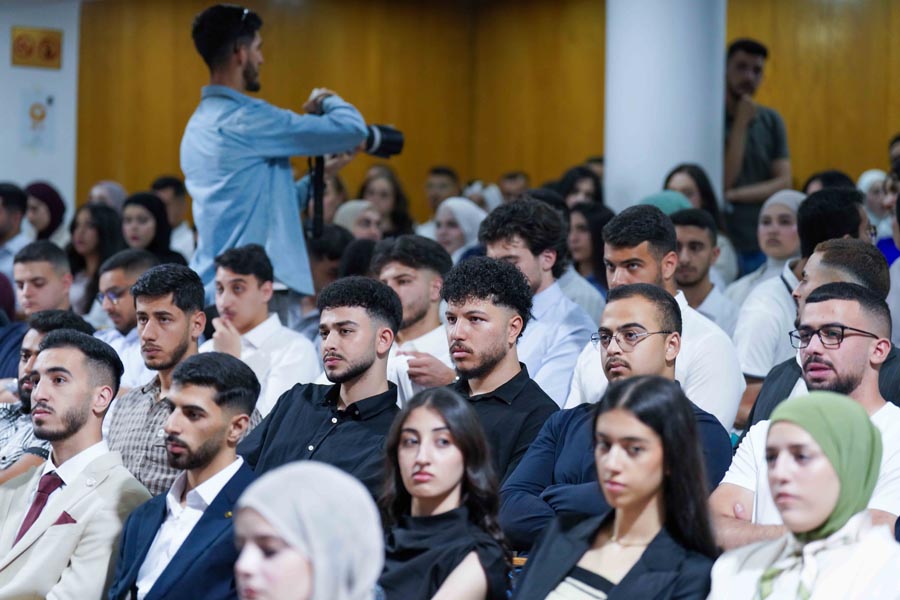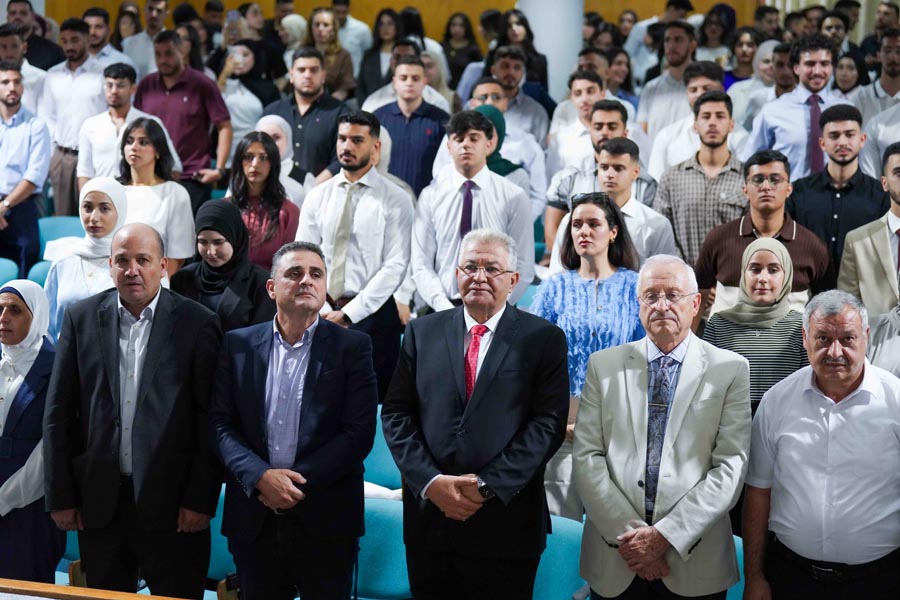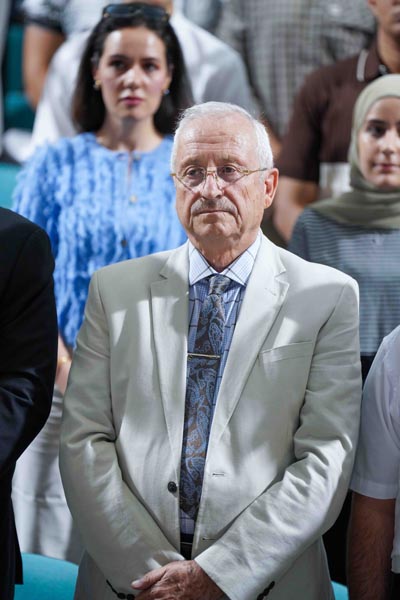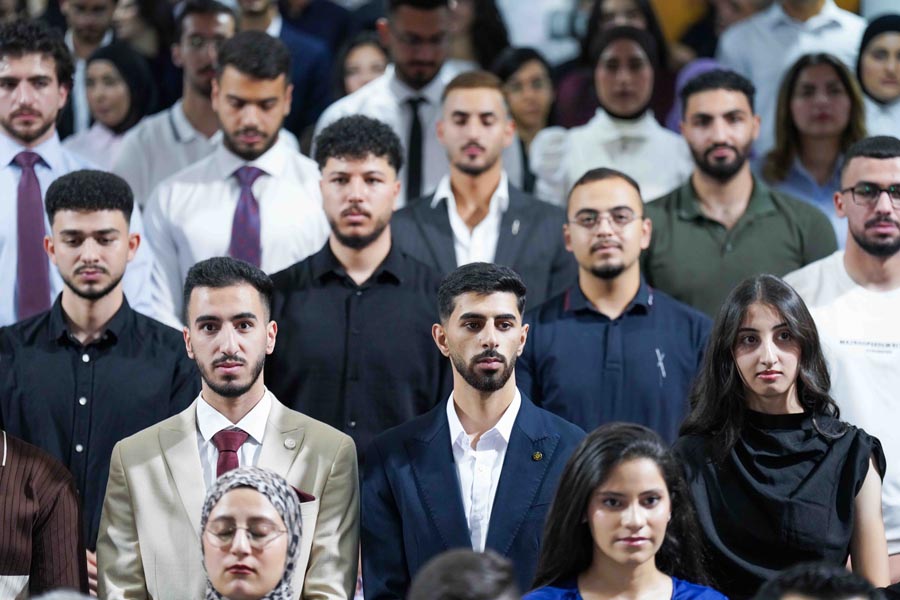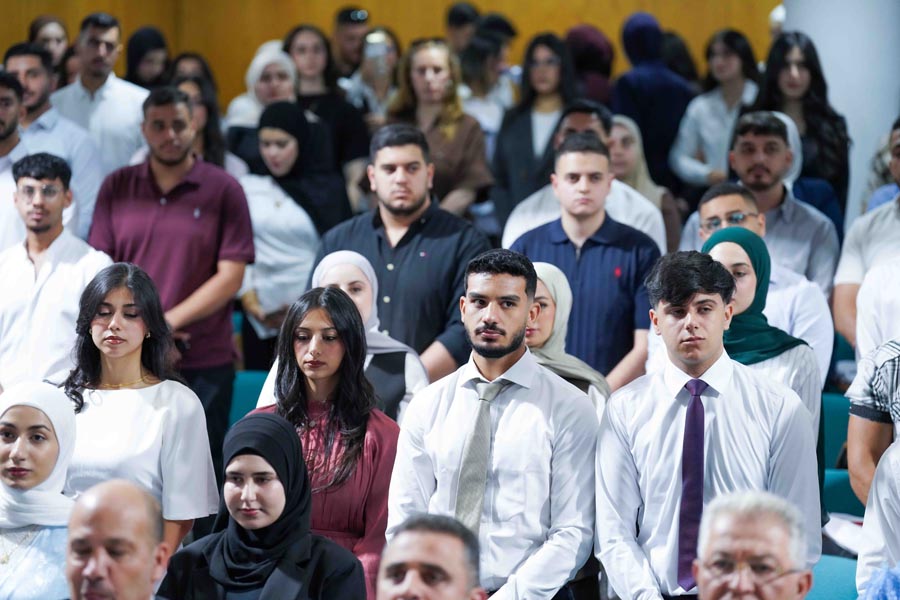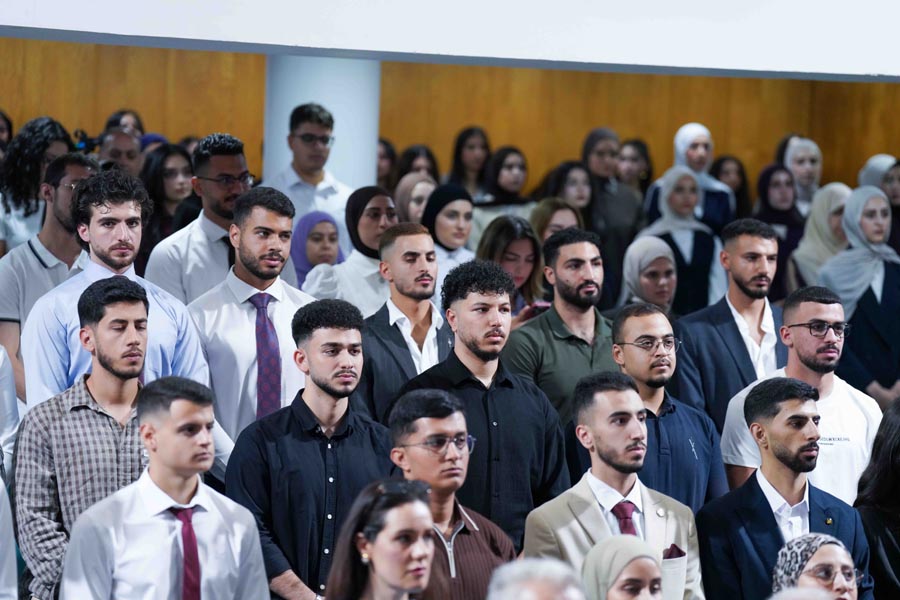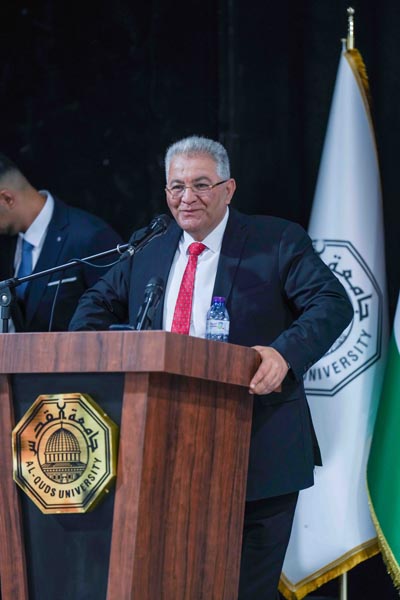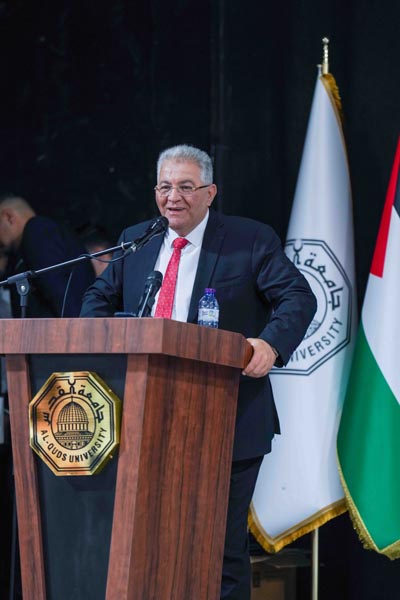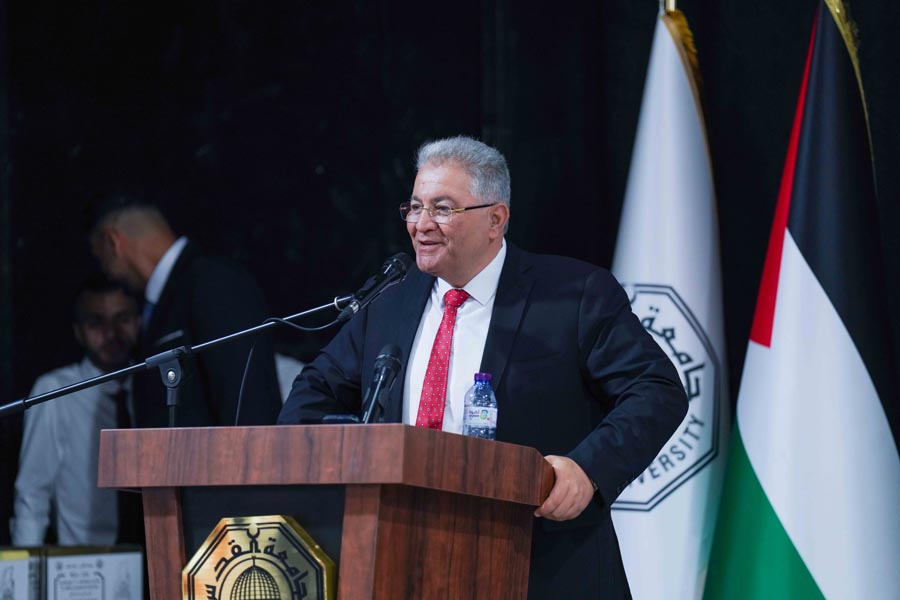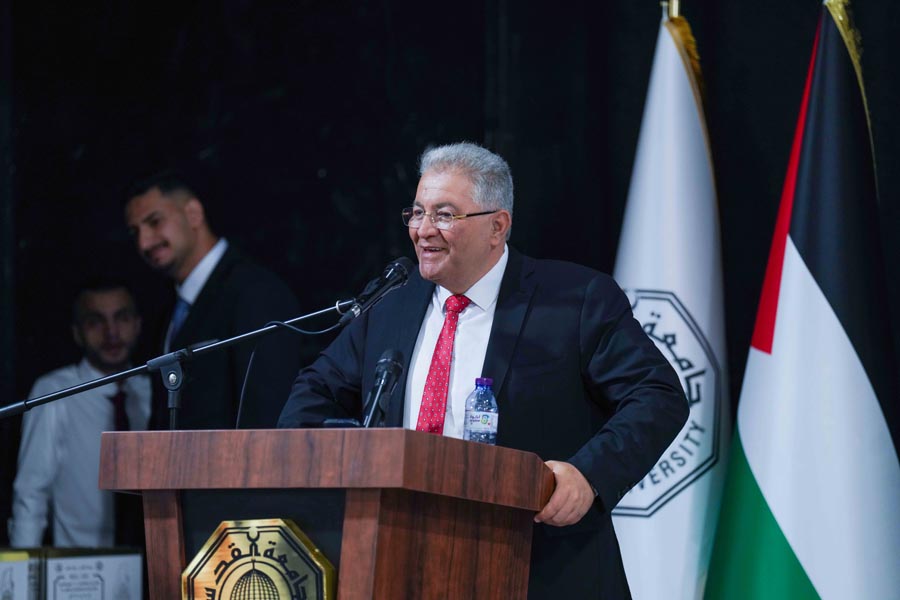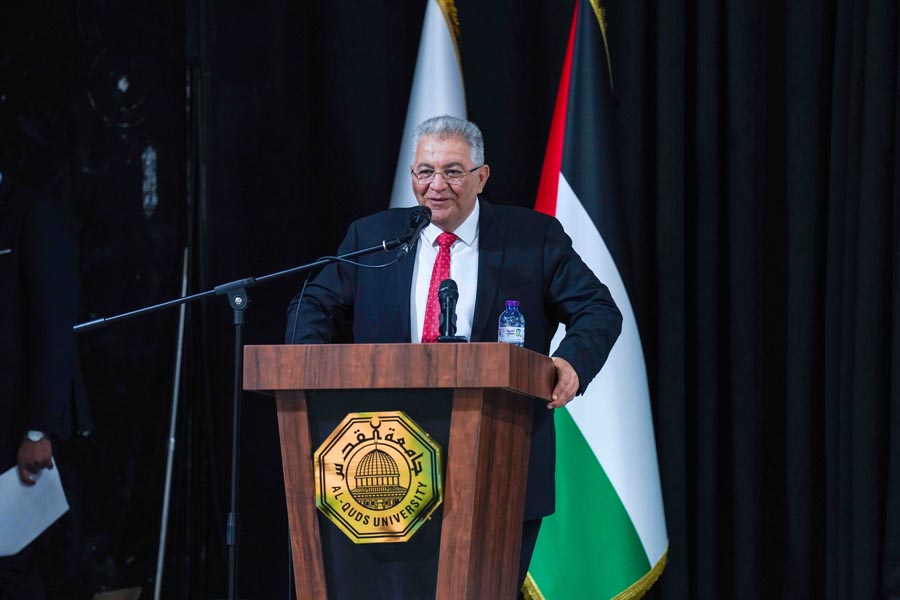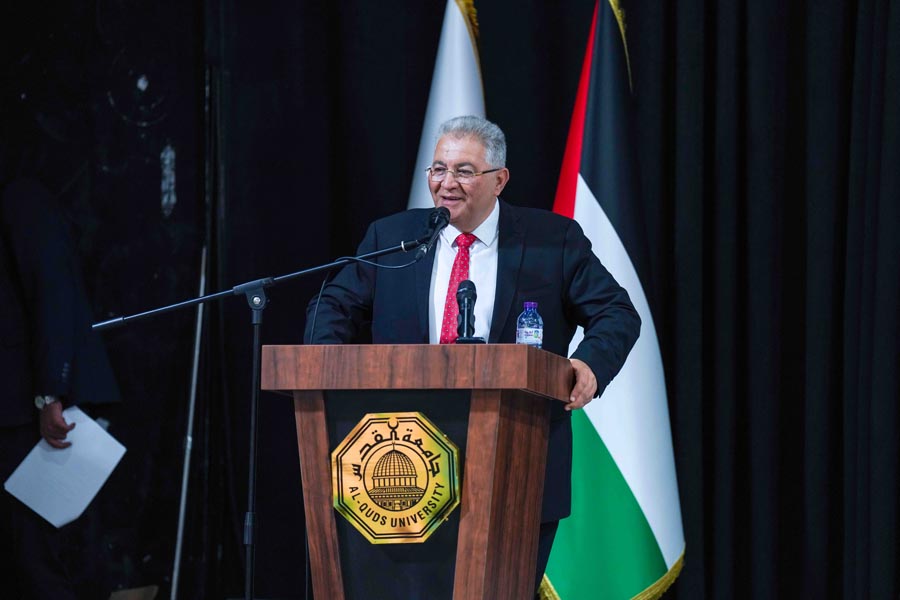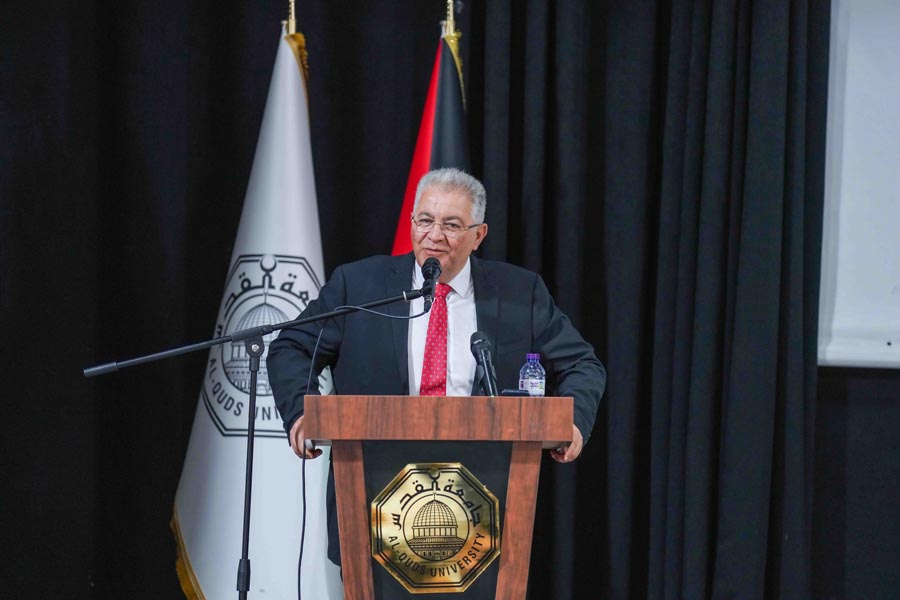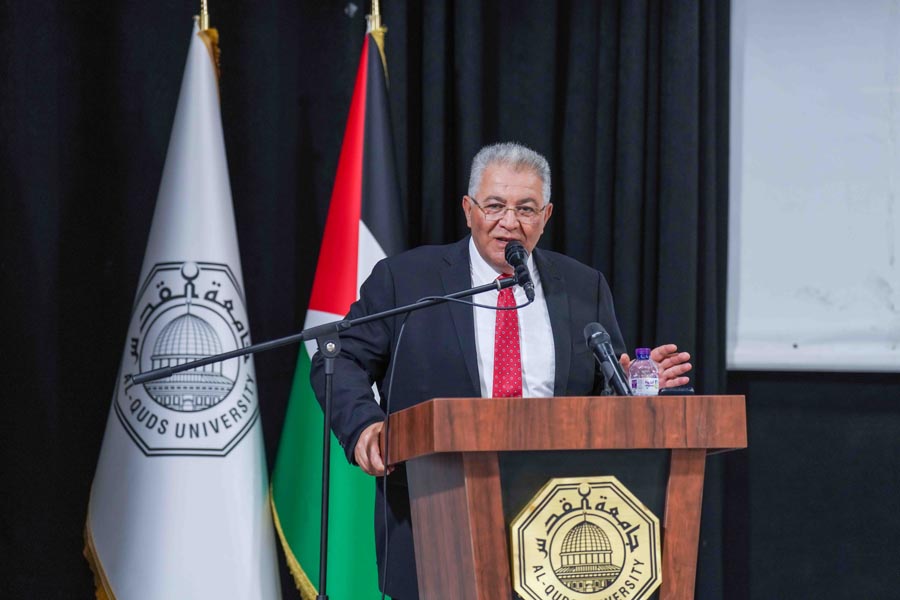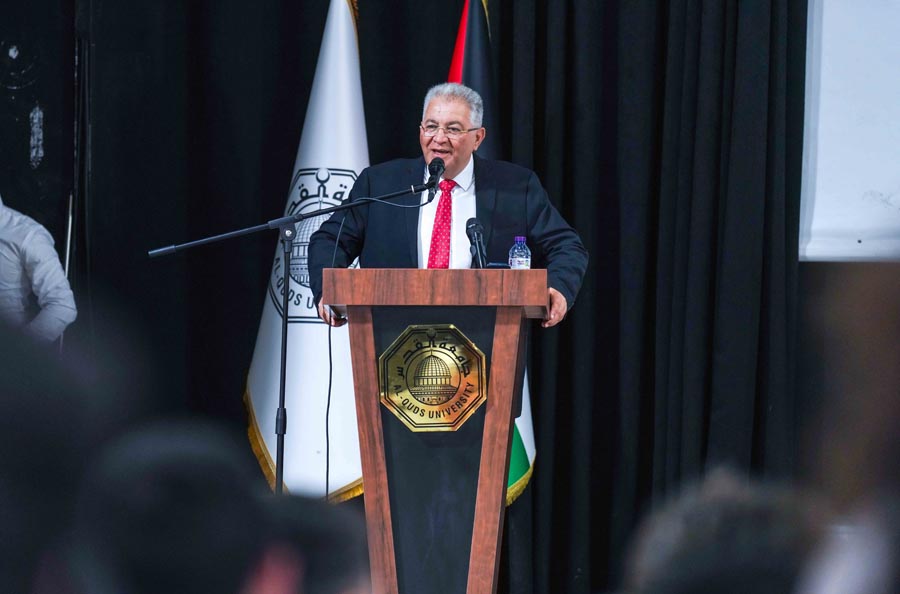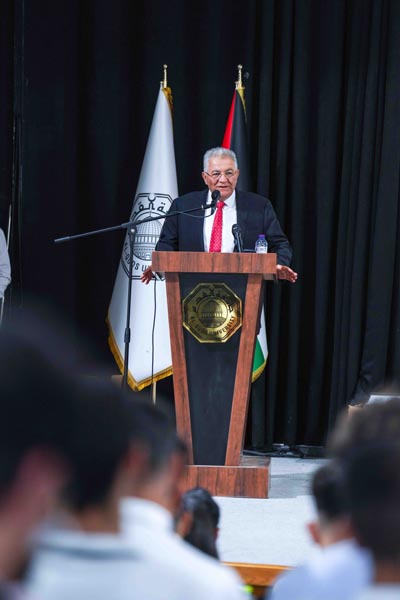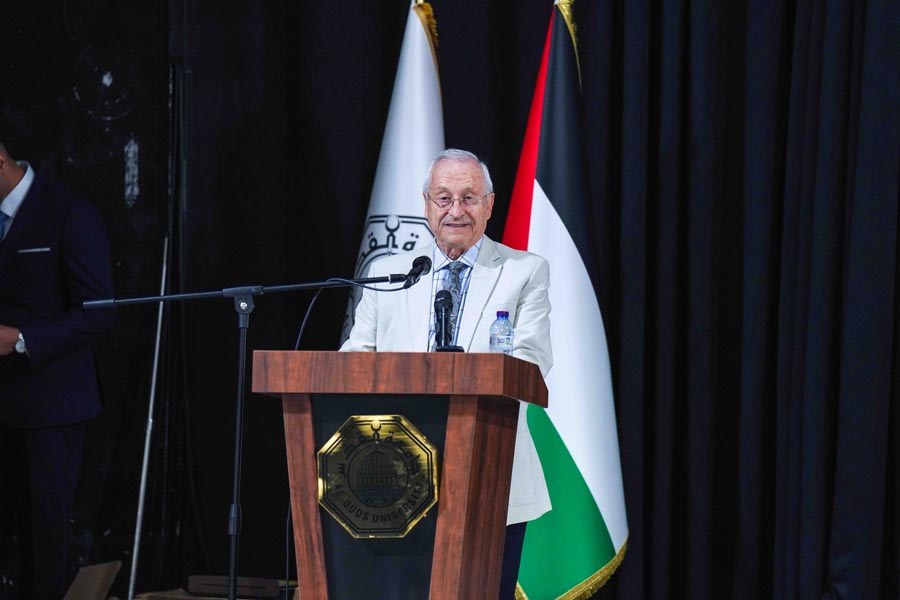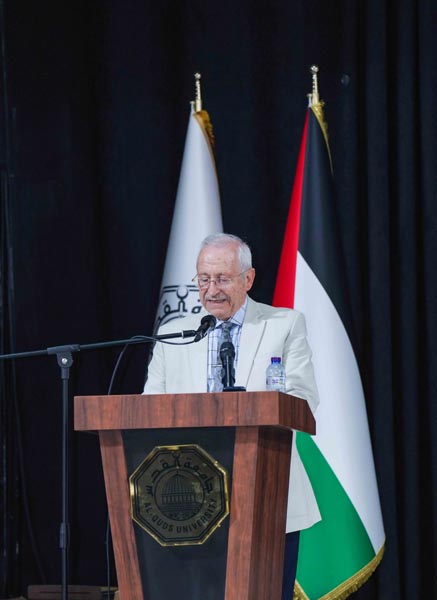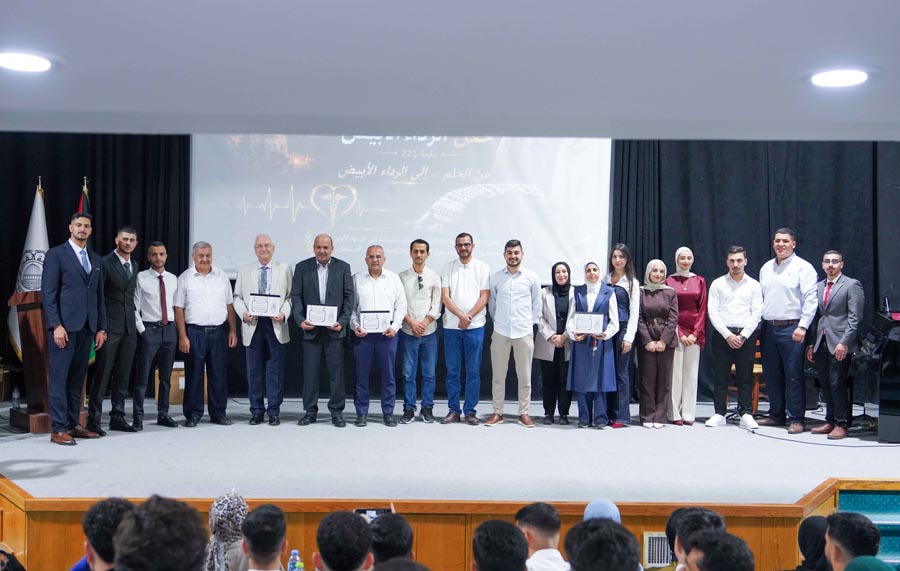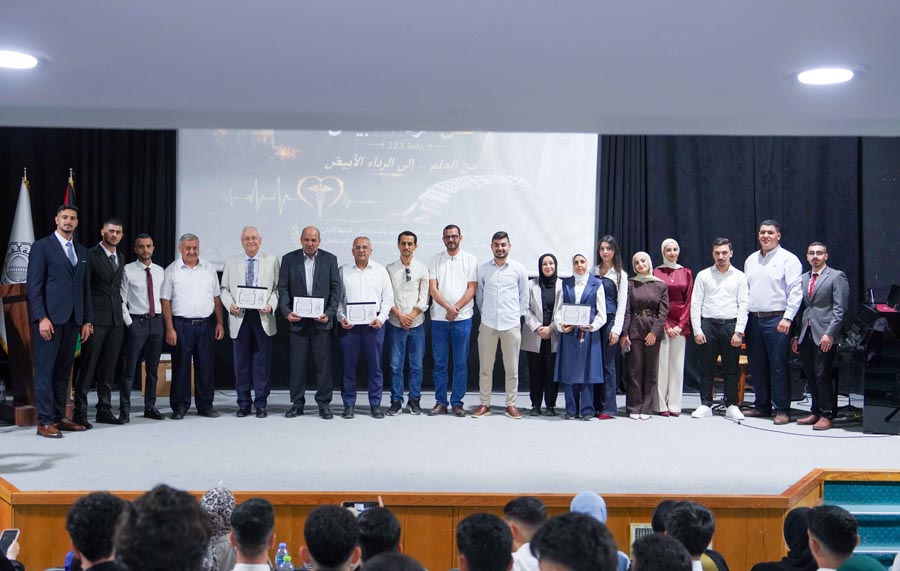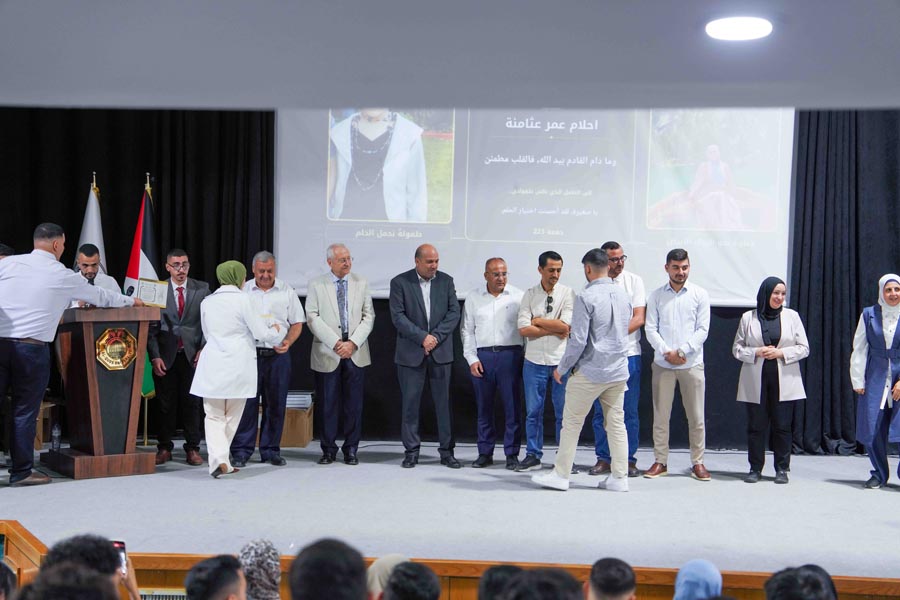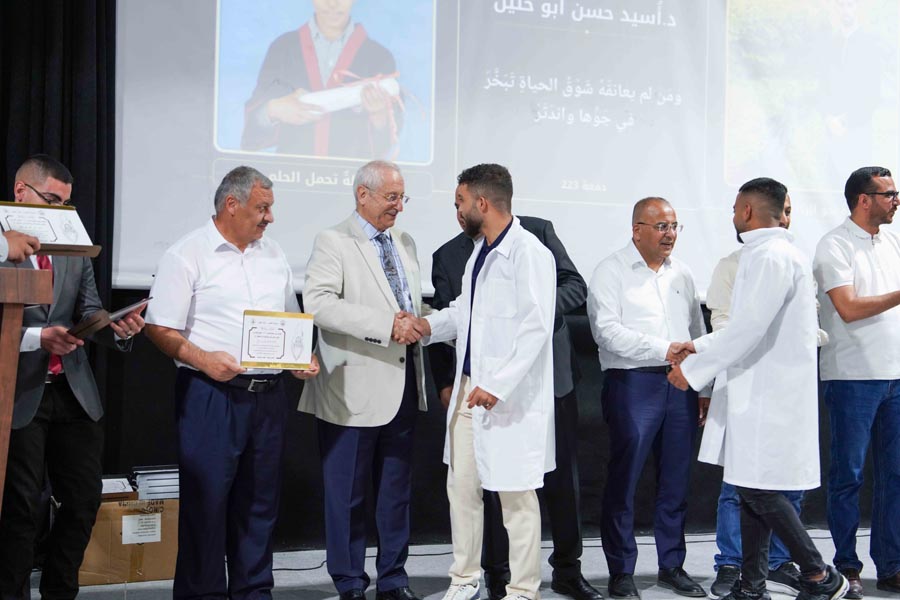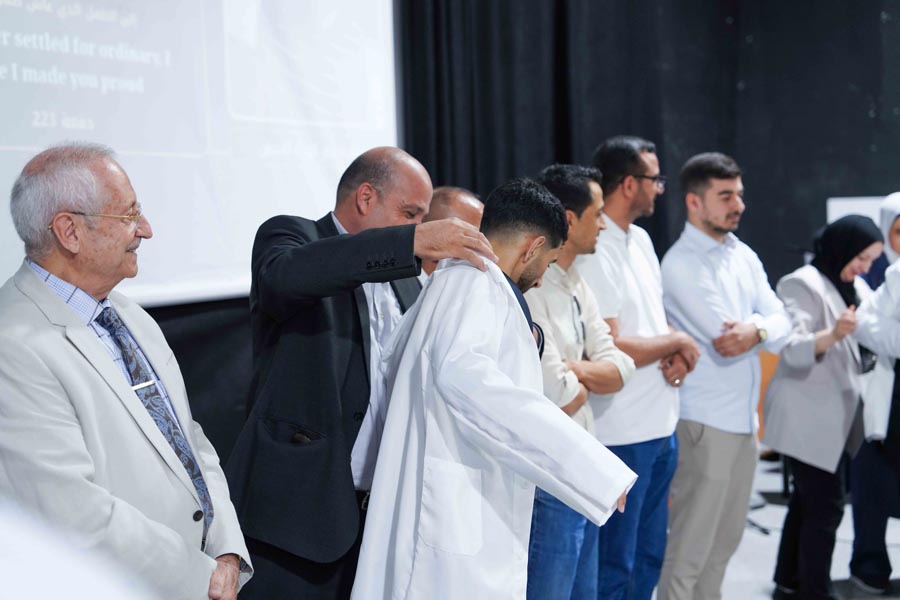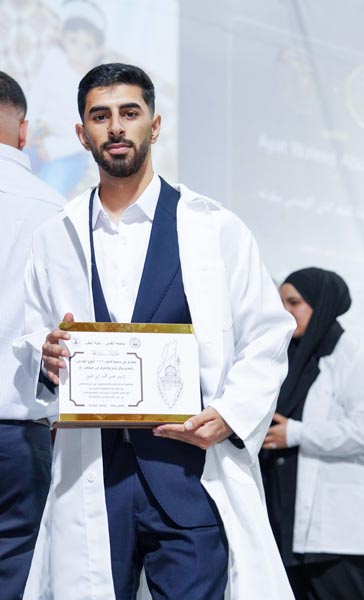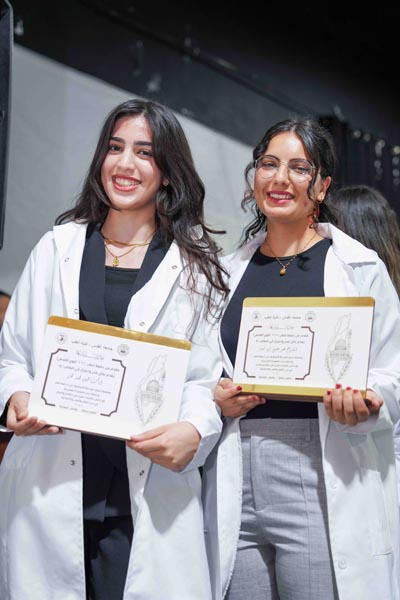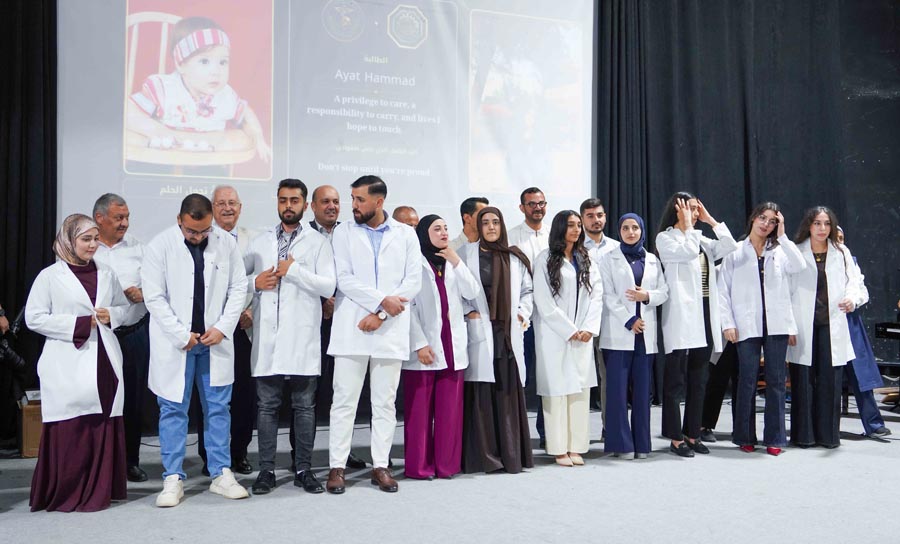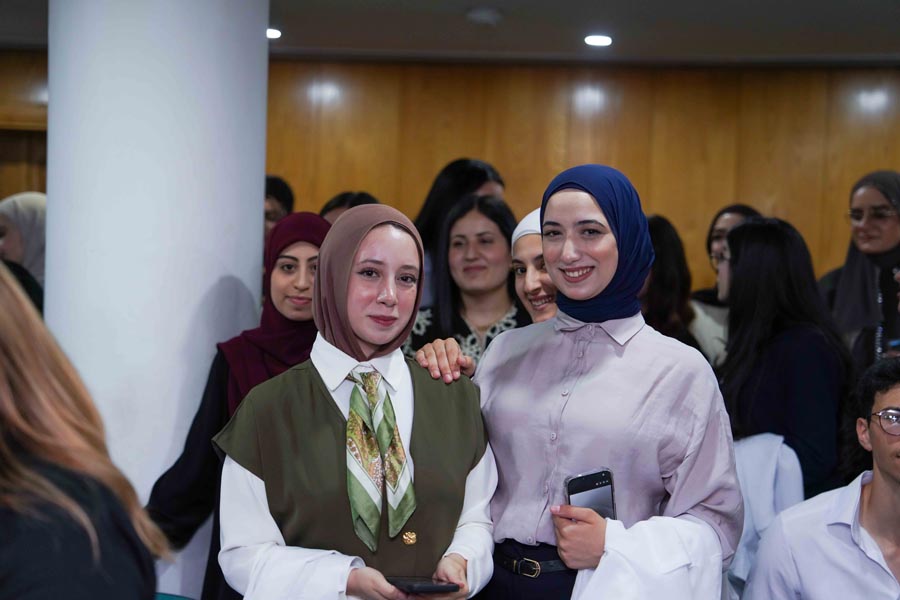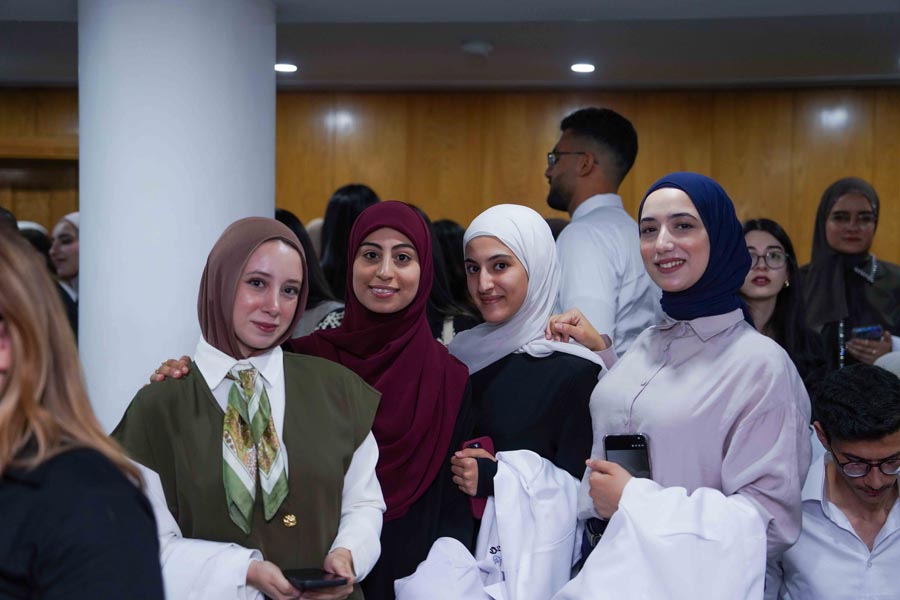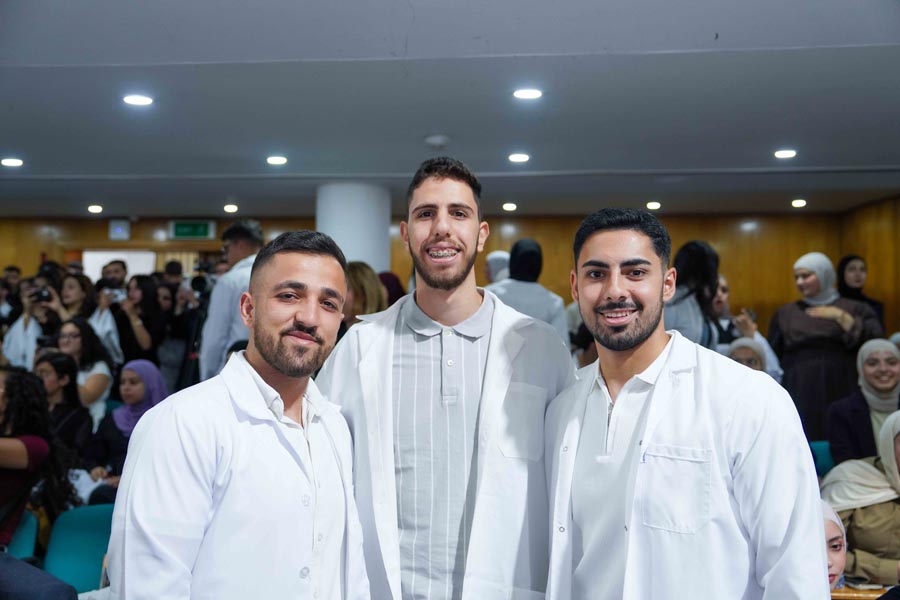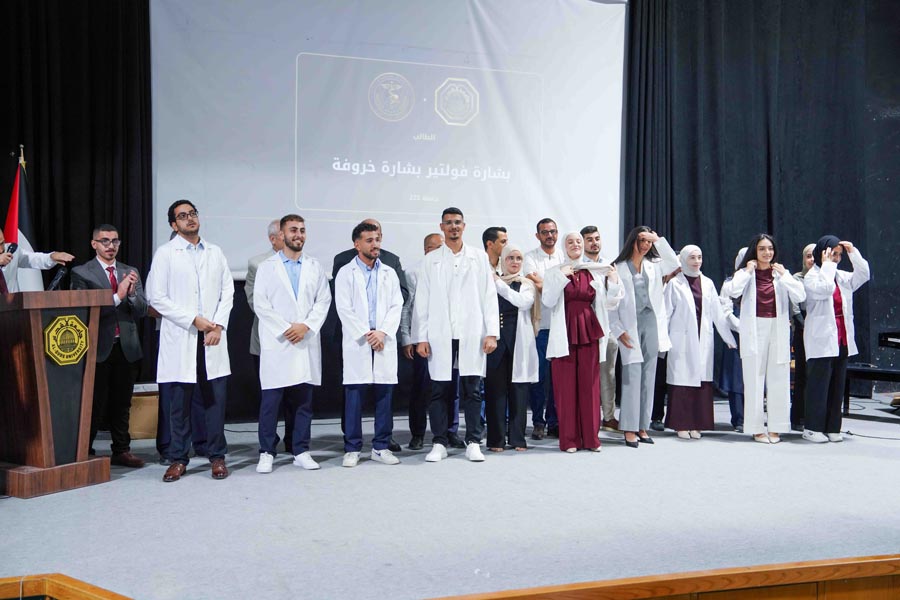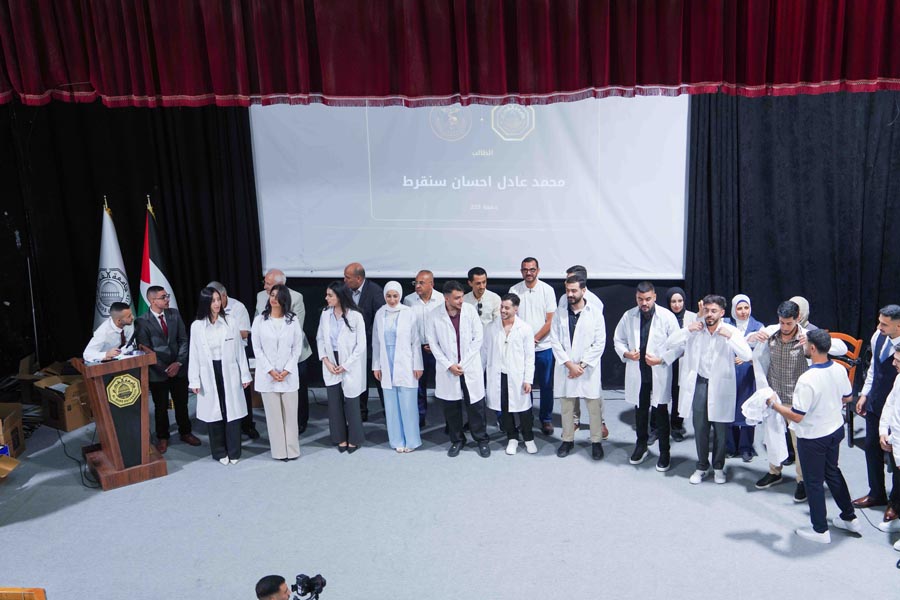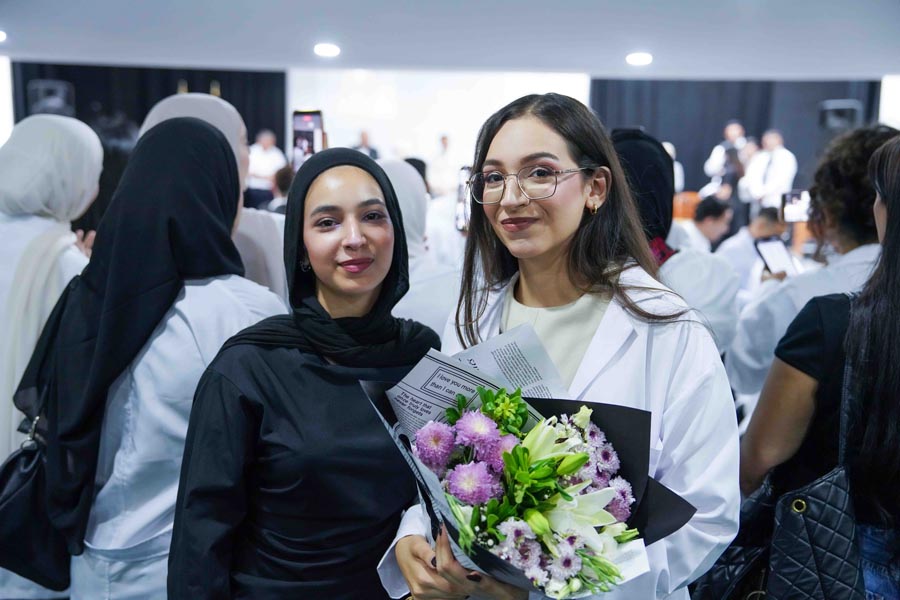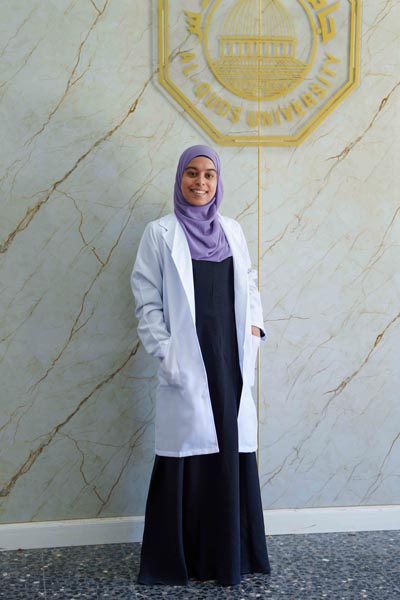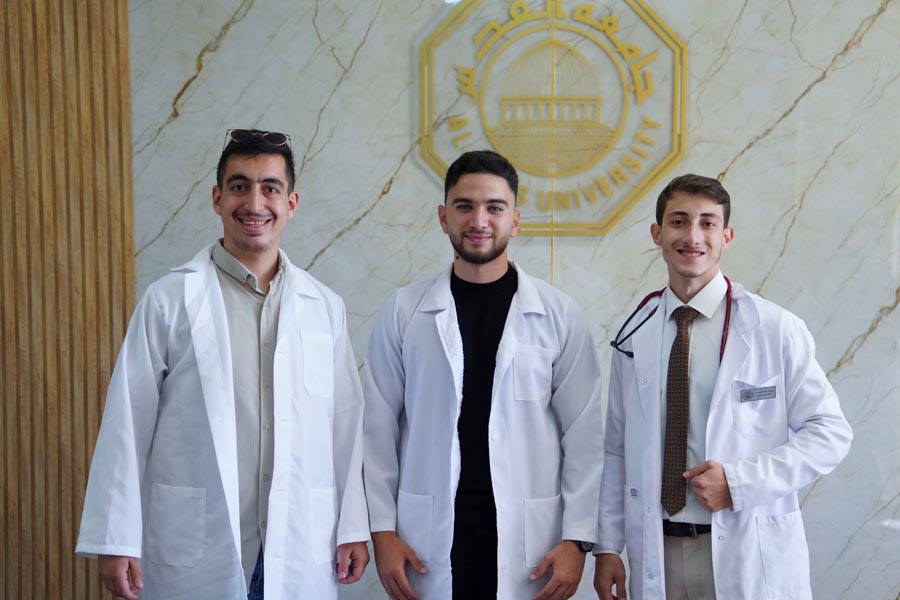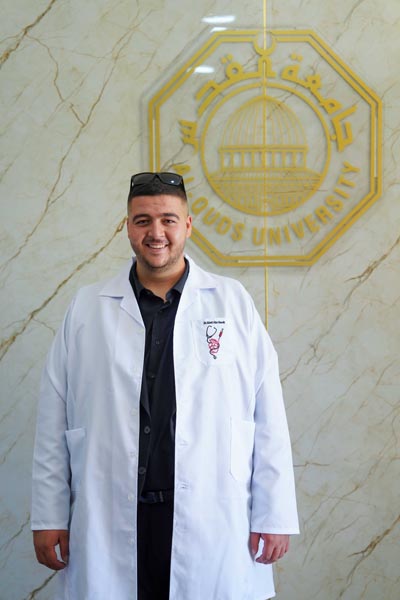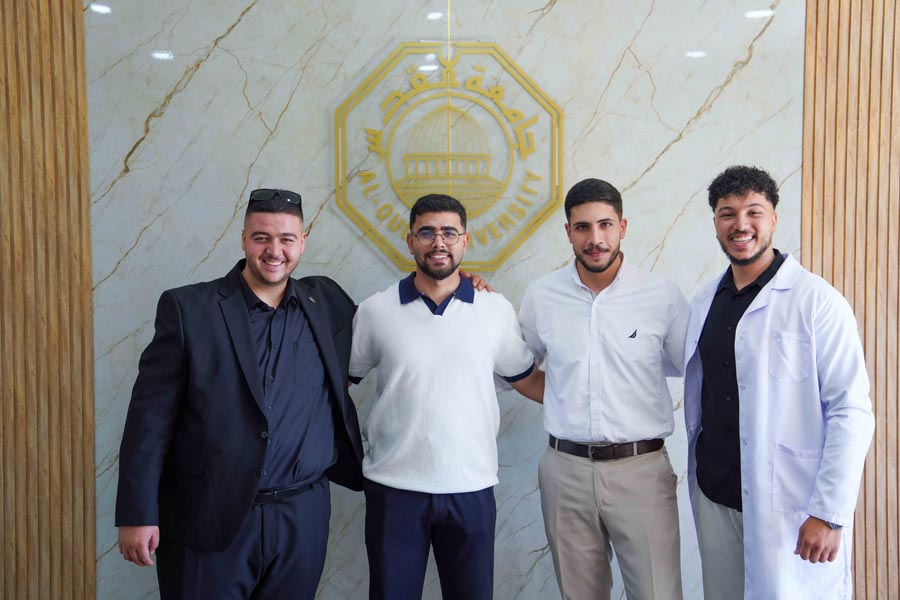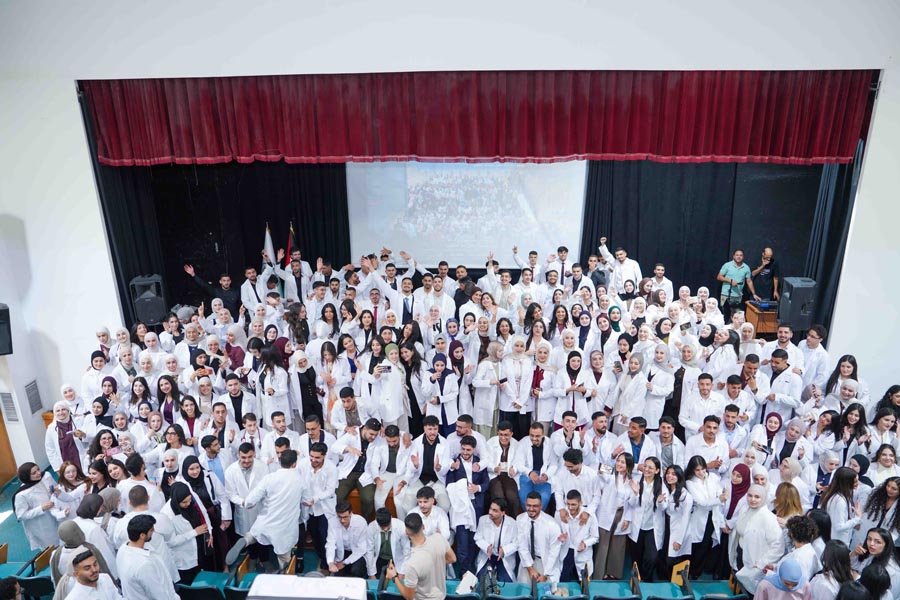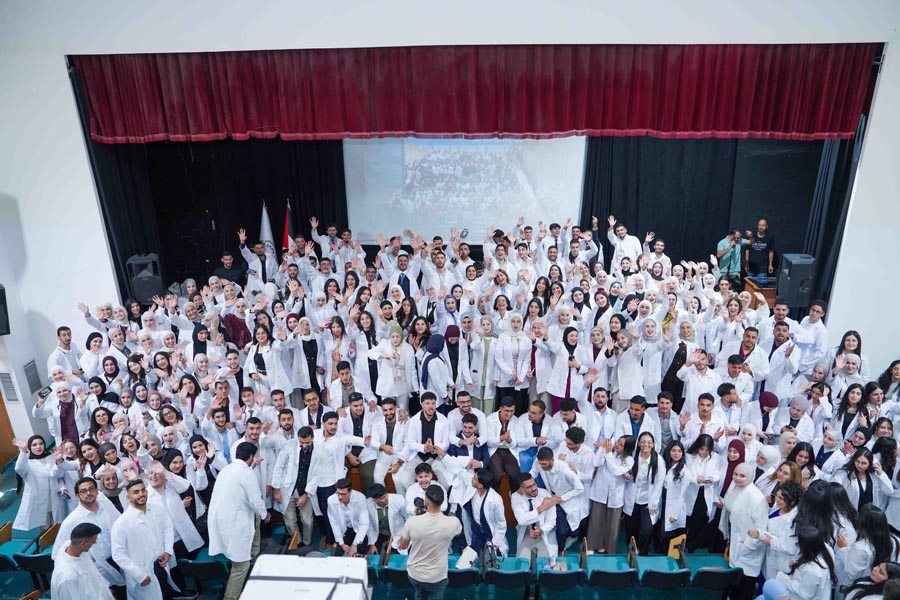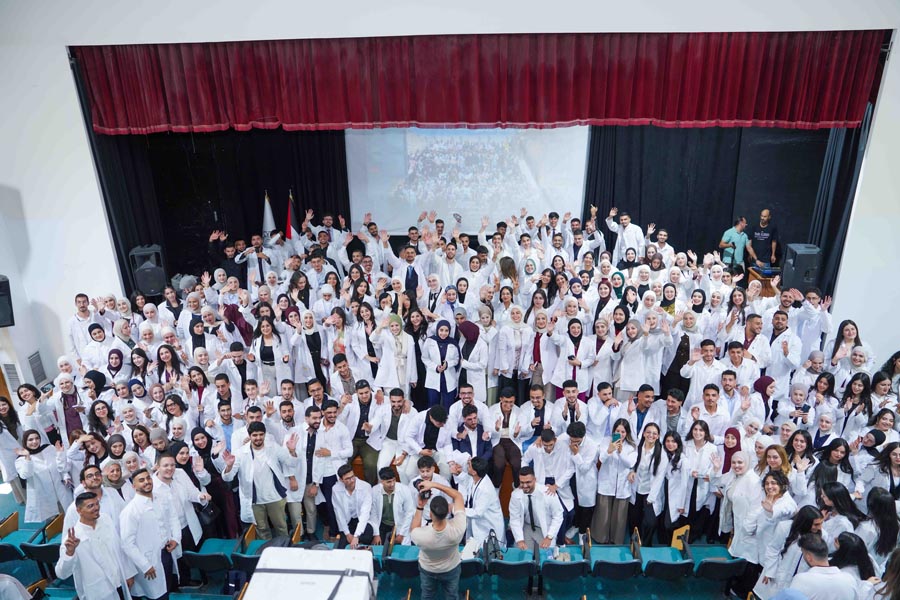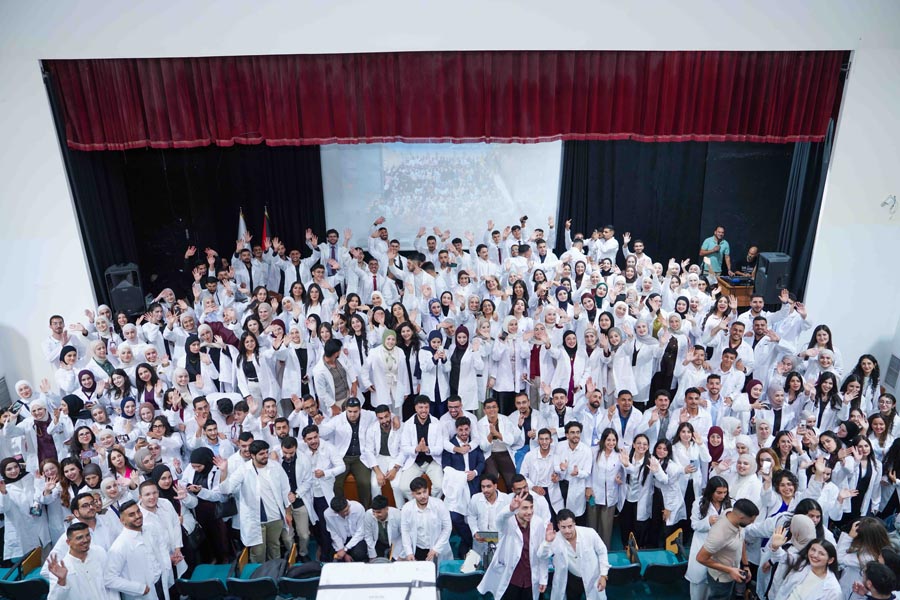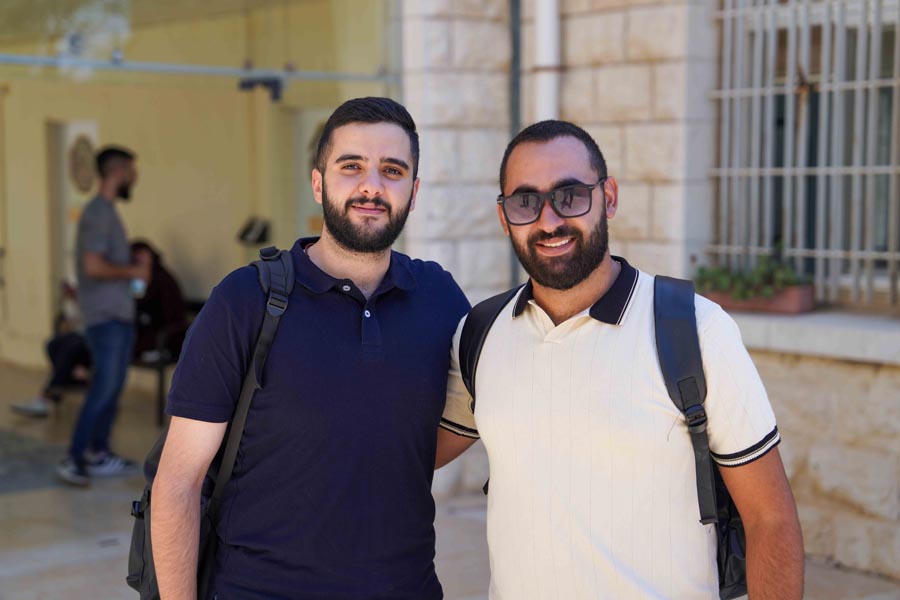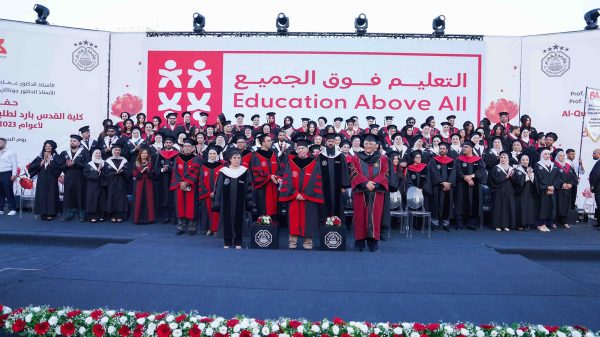

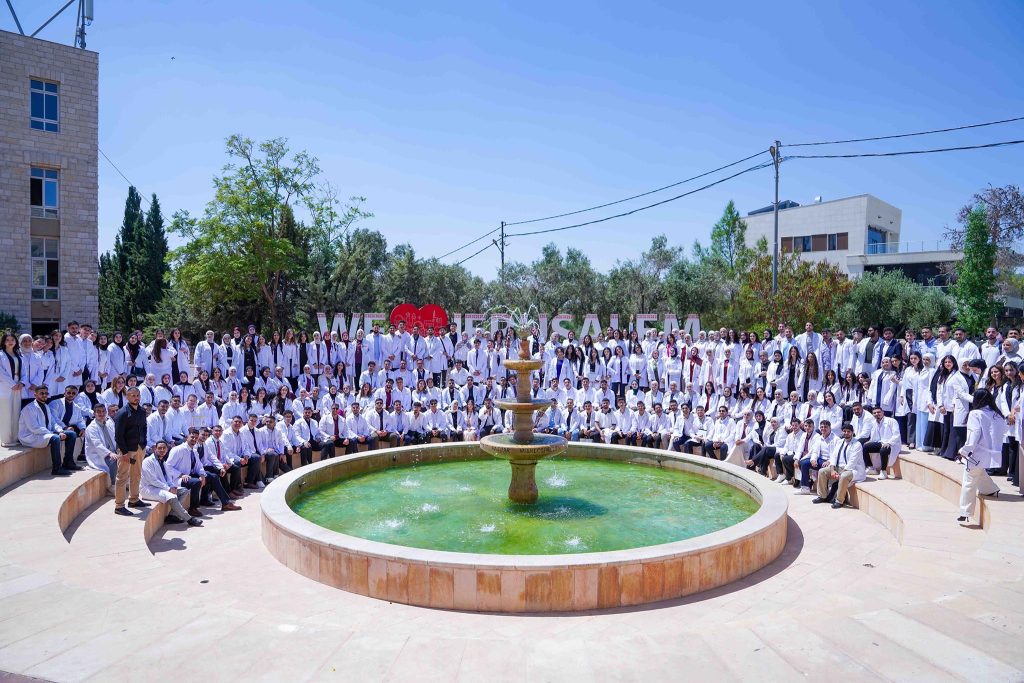
Al-Quds University held a White Coat Ceremony for fourth-year students in the Faculty of Medicine, marking their transition from the theoretical phase of their studies to clinical training in hospitals. The students are beginning a new stage of practical training during which they will apply their medical knowledge through direct interaction with patients and develop their professional and humanistic skills.
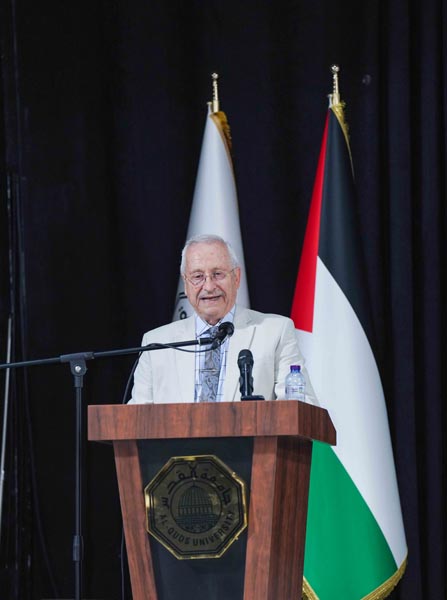
President of Al-Quds University, Prof. Dr. Imad Abu Kishek, emphasized that medical students are moving today from an academic stage to a new phase that is more closely connected to medical practice. He noted that the Faculty of Medicine brings together an outstanding group of students from Palestine, whose graduates have gone on to hold prominent positions both within Palestine and abroad and have competed at the international level. Abu Kishek called on the students to focus on scientific research and participate in extracurricular activities, affirming the University’s support for their research interests, given their essential role in shaping their personalities and advancing medical practice.
For his part, Dean of the Faculty of Medicine, Dr. Hani Abdeen, explained that this stage requires greater discipline, responsibility, and preparation for a professional life that carries significant human dimensions. He stressed that the medical profession is built not only on knowledge, but also on commitment and care. Abdeen urged the students to make excellence a constant hallmark of their professional journey and to provide healthcare that upholds the standards and mission of the profession.
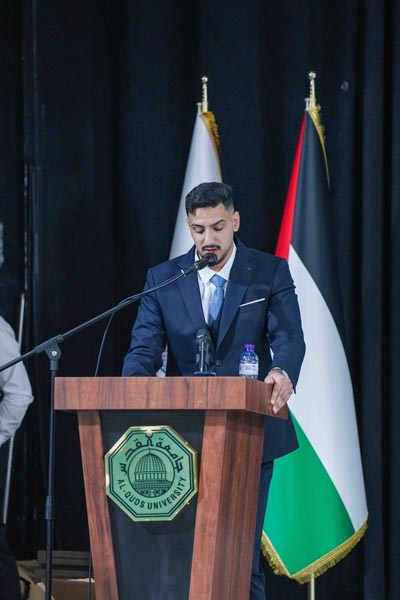
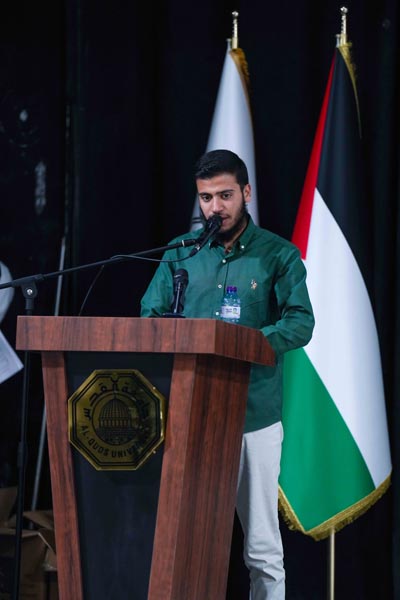
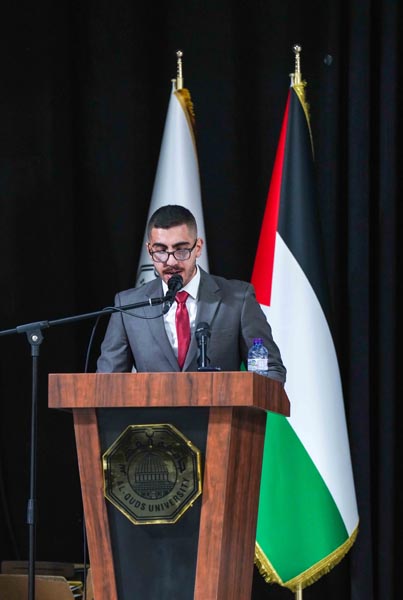
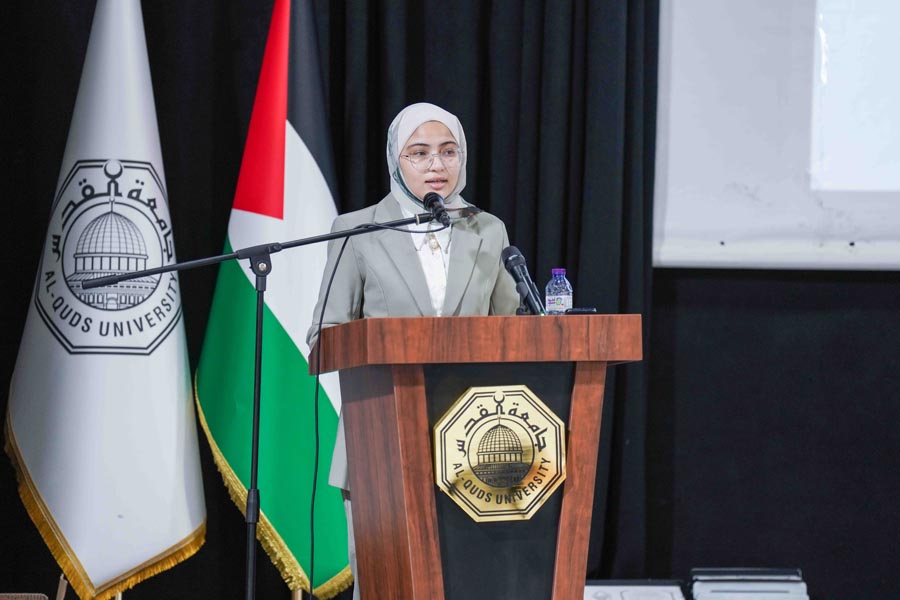
In a speech delivered on behalf of the Faculty’s students, student Nidal Amaireh expressed the students’ pride in this defining moment, affirming that “the white coat is not merely a garment; it is a pledge, a trust, a responsibility, and a commitment to humanity. It bears witness to years of patience, sleepless nights, and hard work.”
Amaireh added that the white coat represents the beginning of a new stage in carrying the mission of knowledge and healing in service to society. He called on his colleagues in the “223 Cohort” to remain committed to their pledge and to live up to the aspirations of their homeland and university, so that they may become distinguished physicians who shape the future and leave a meaningful and lasting impact in the field of medical and humanitarian care.