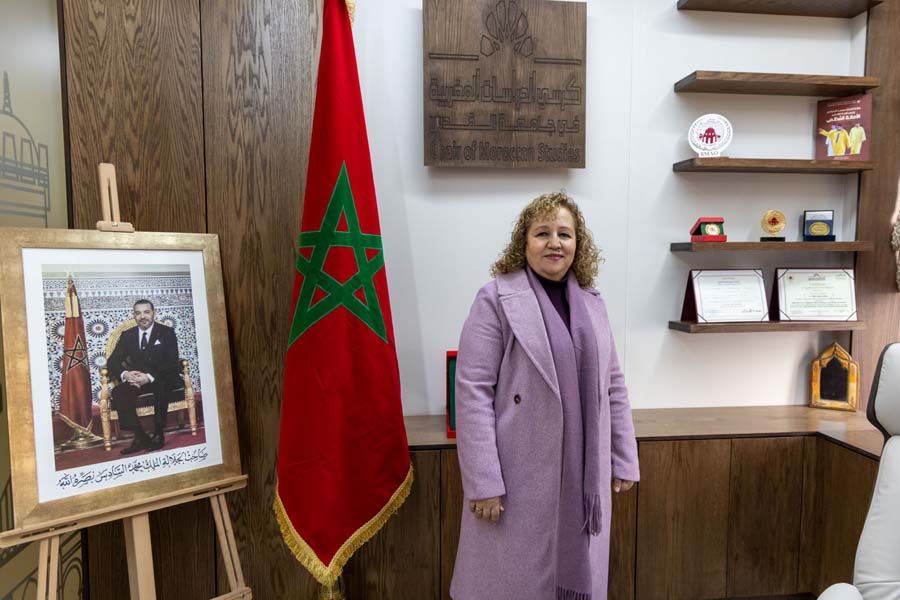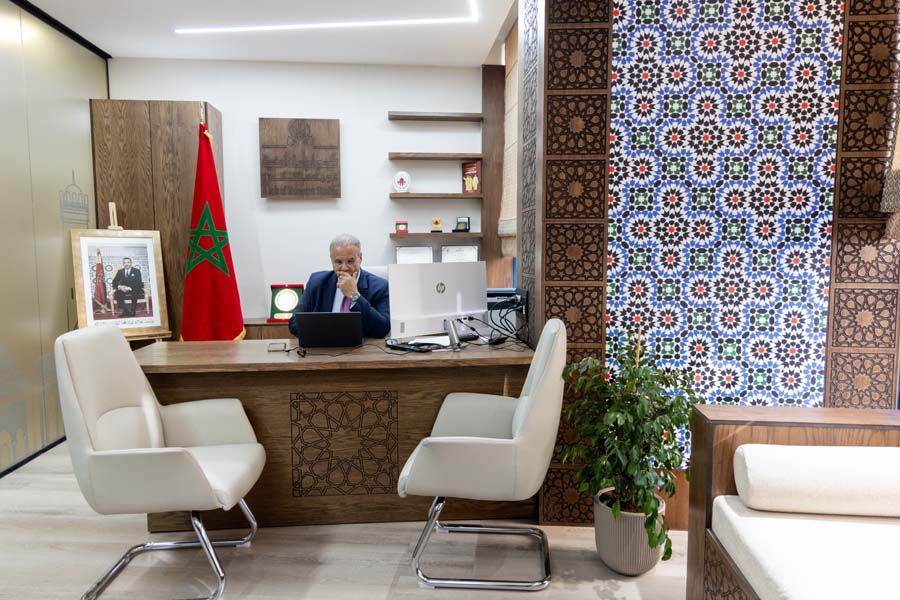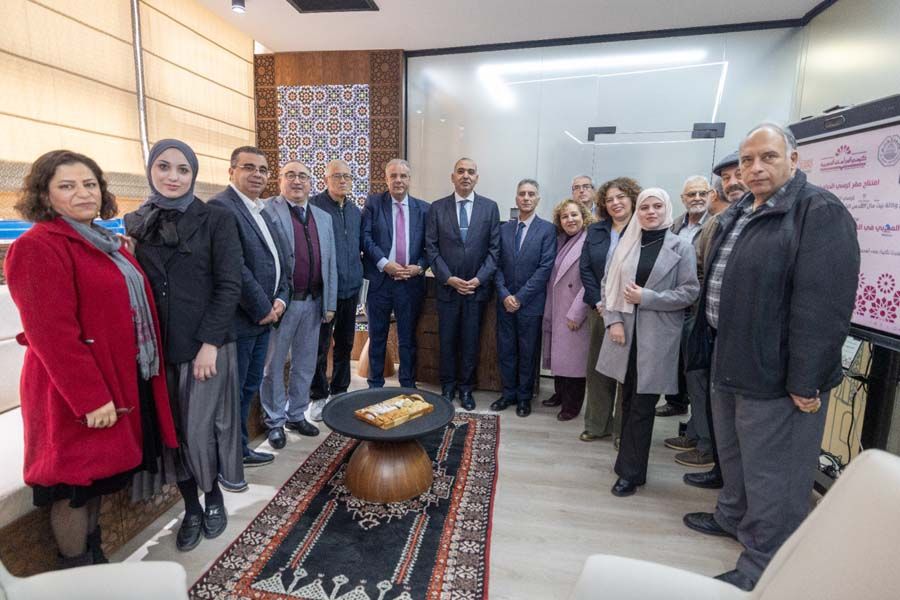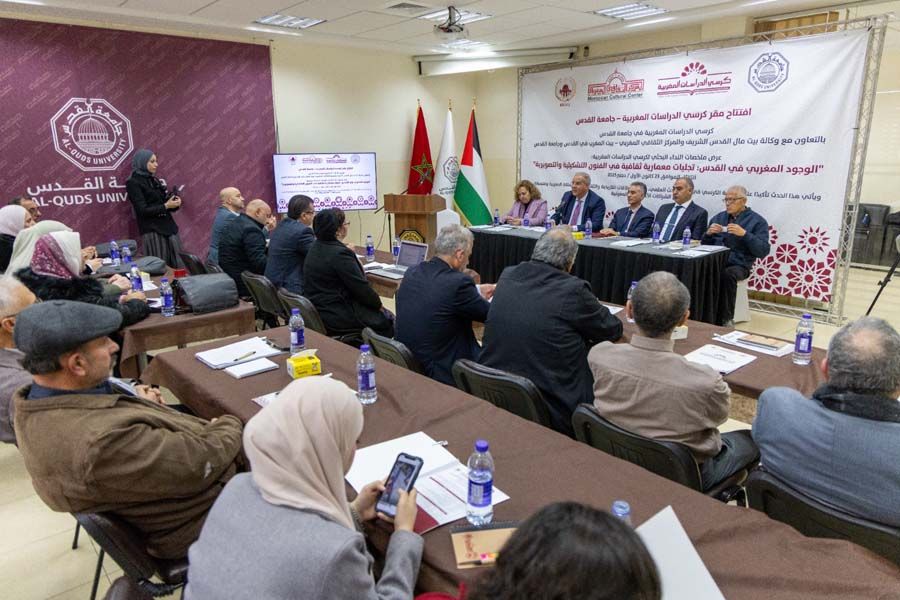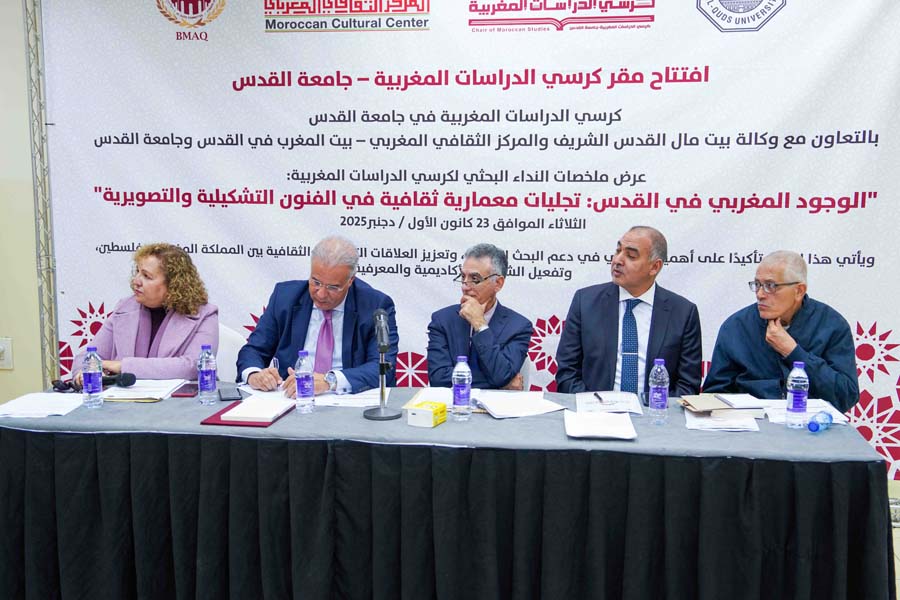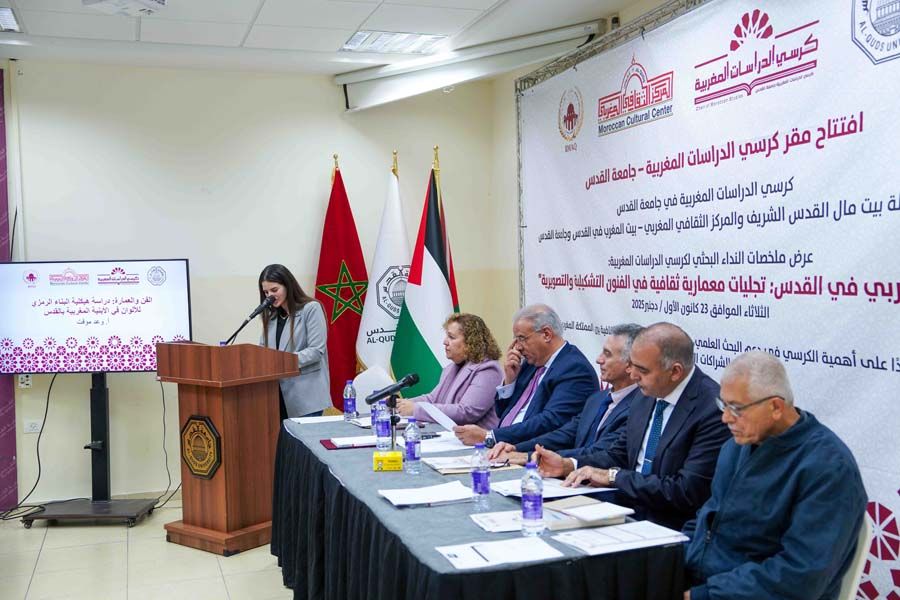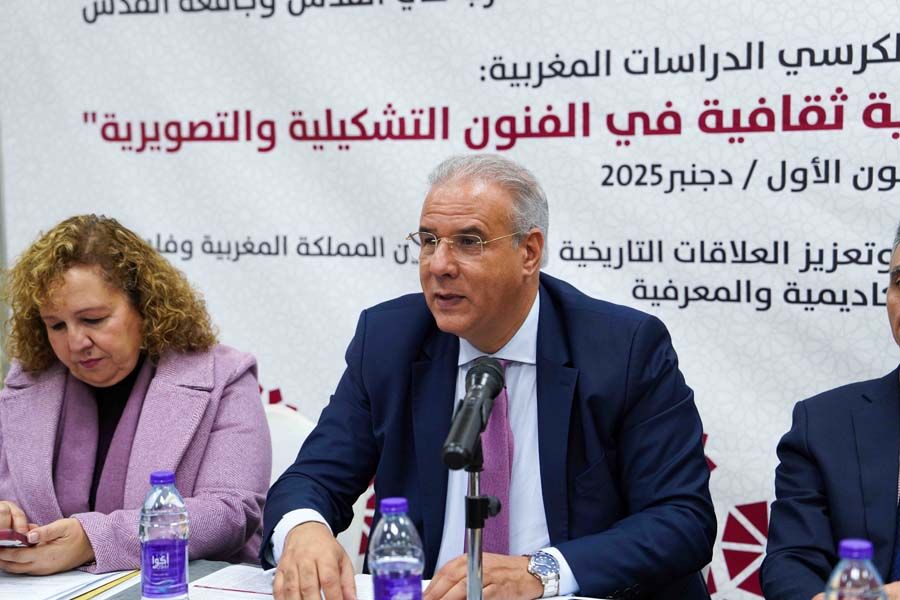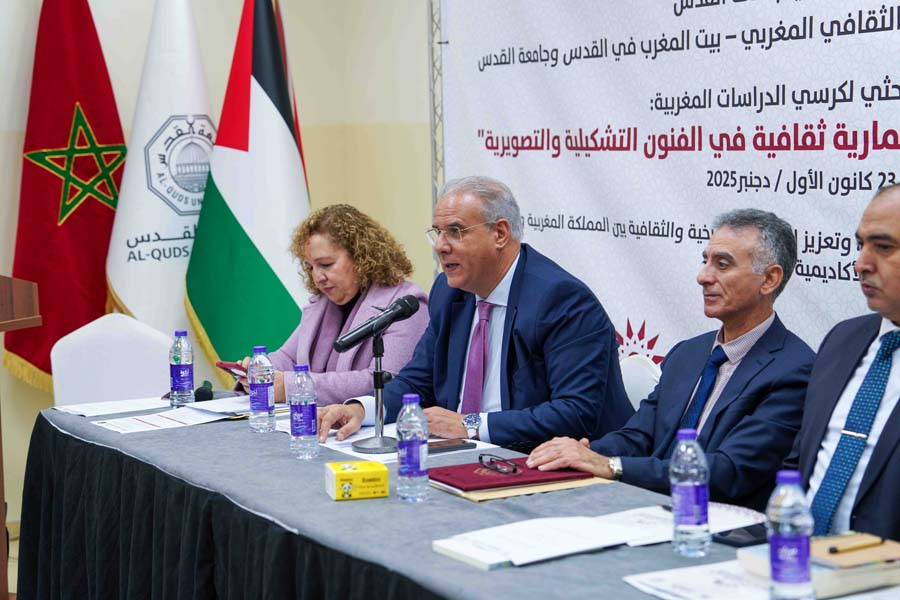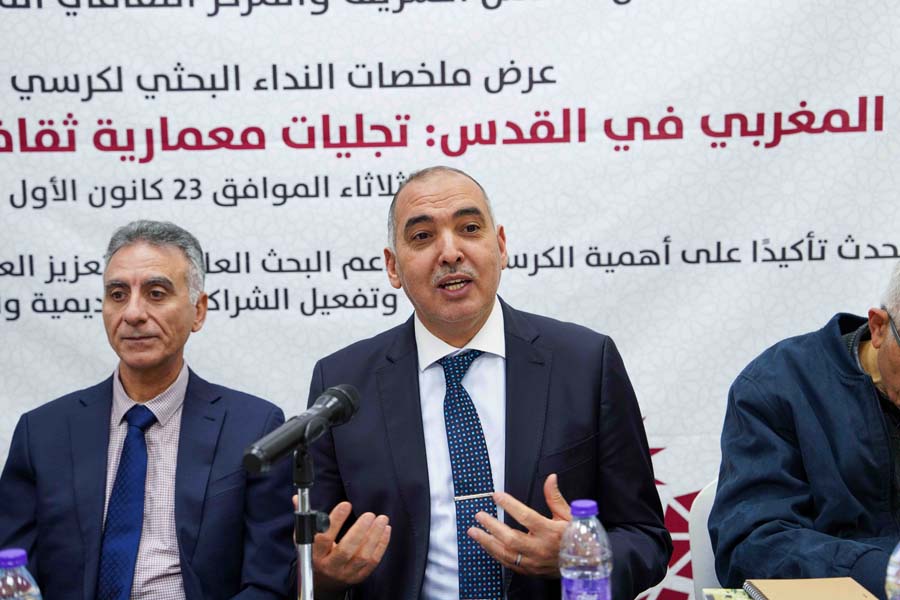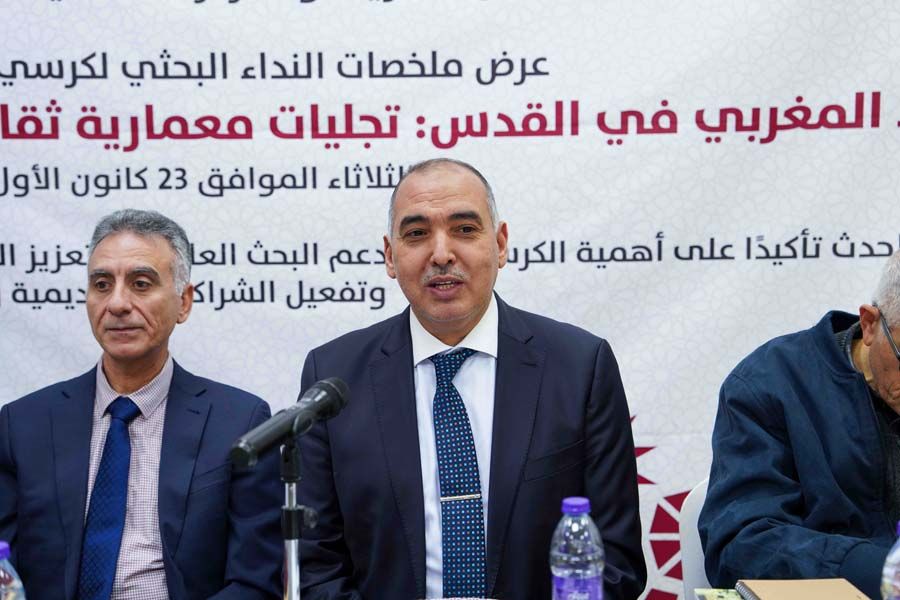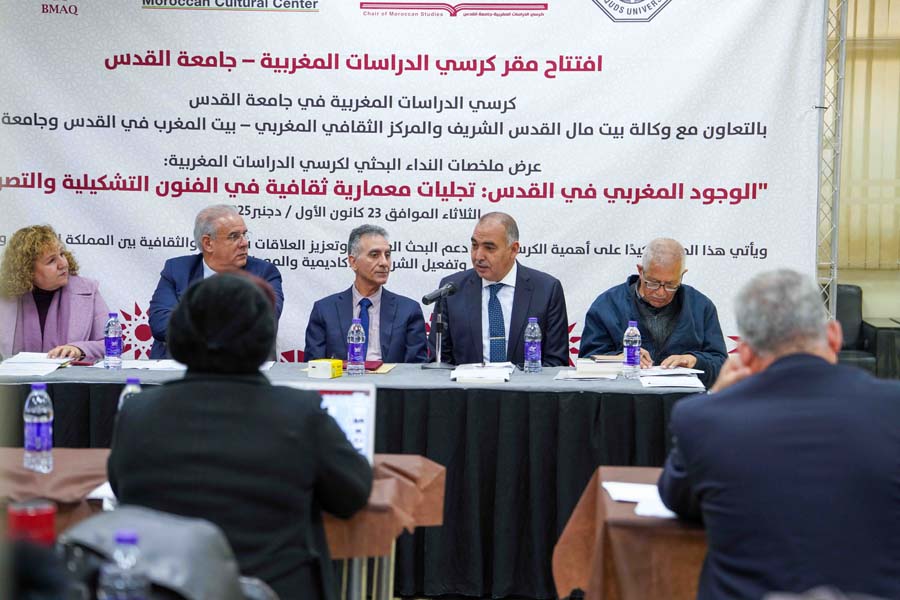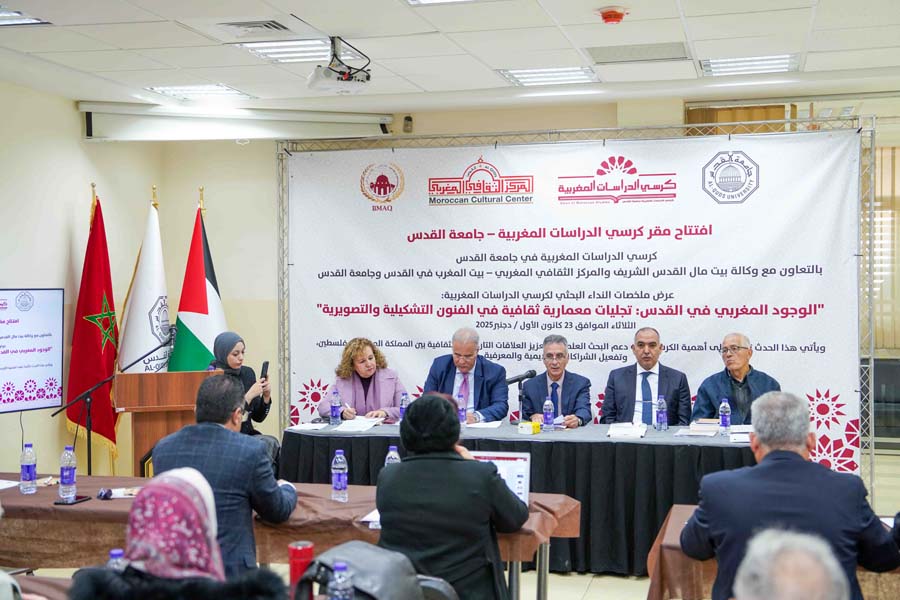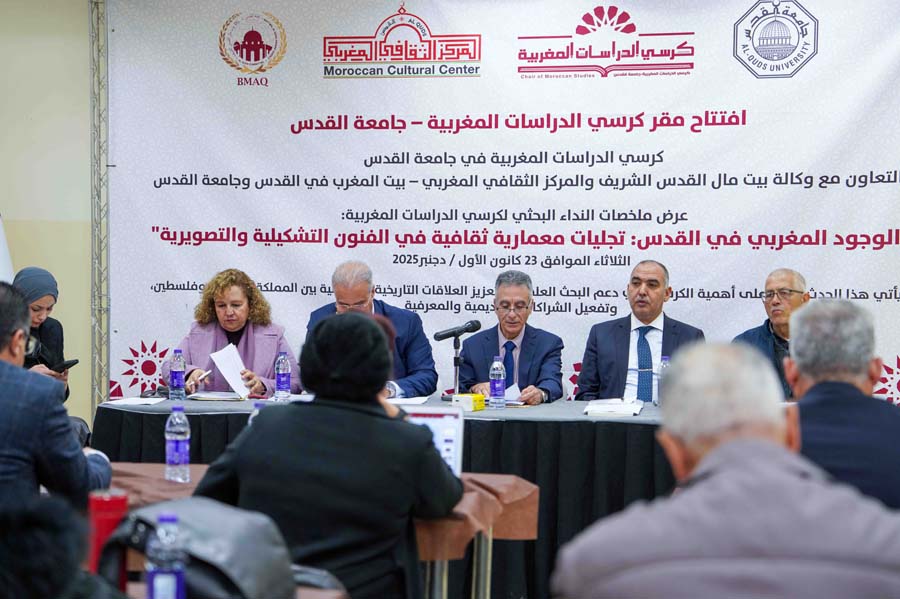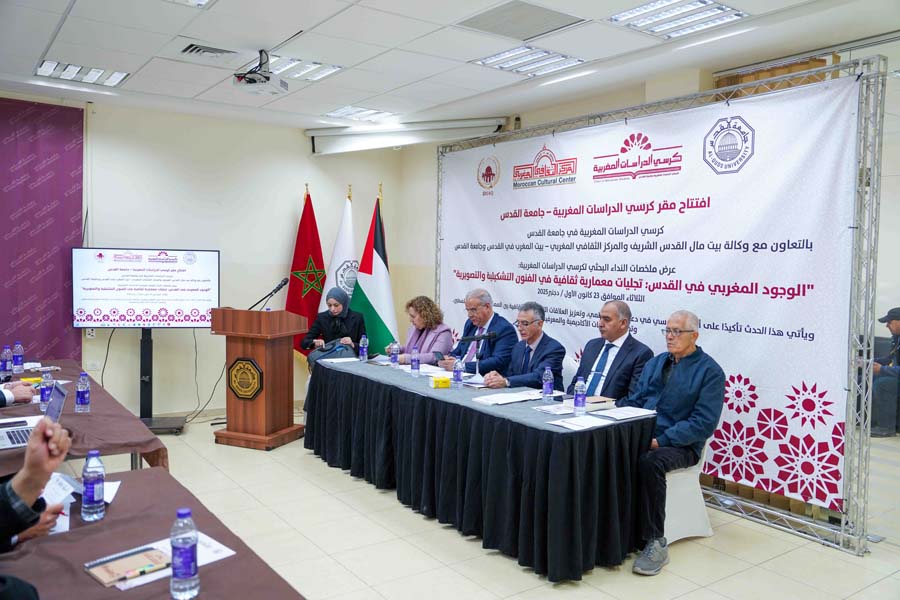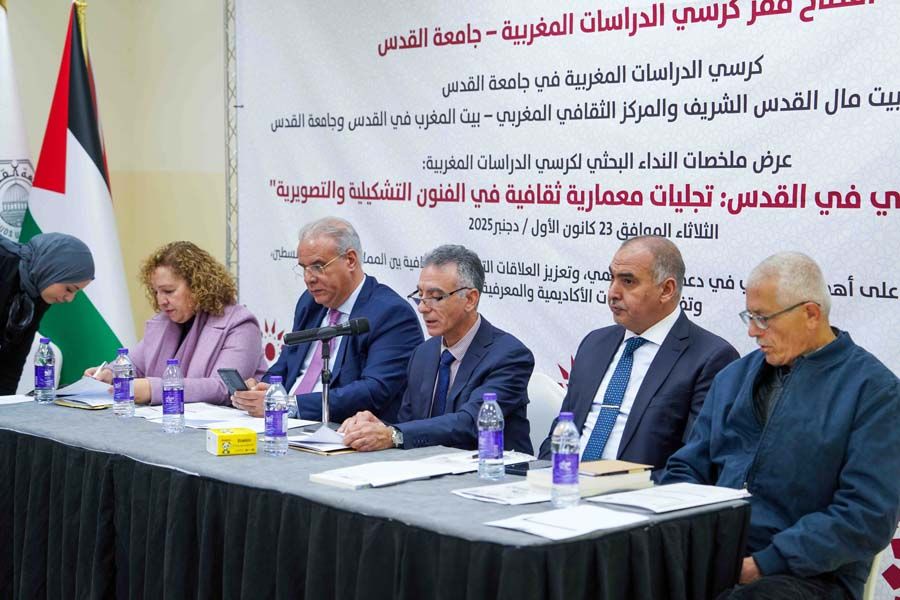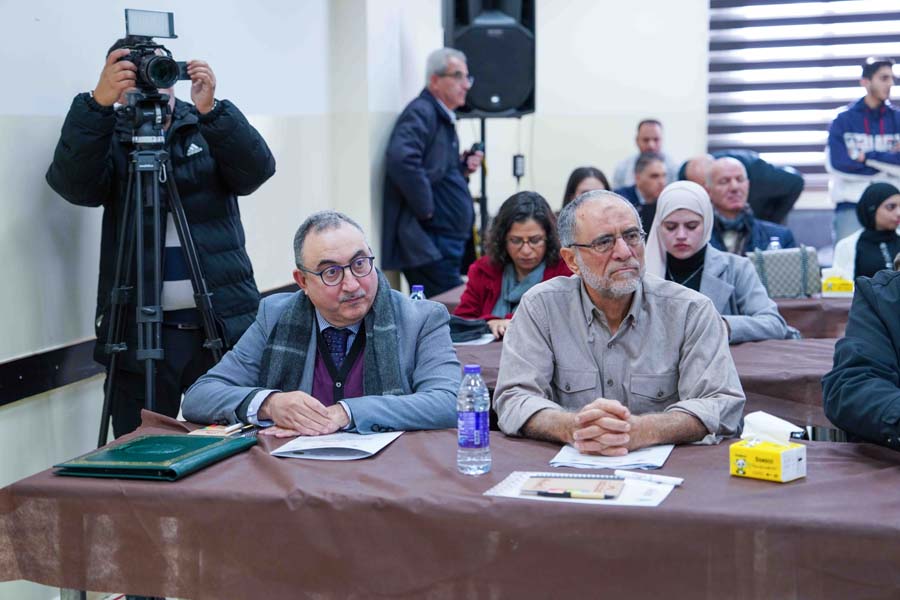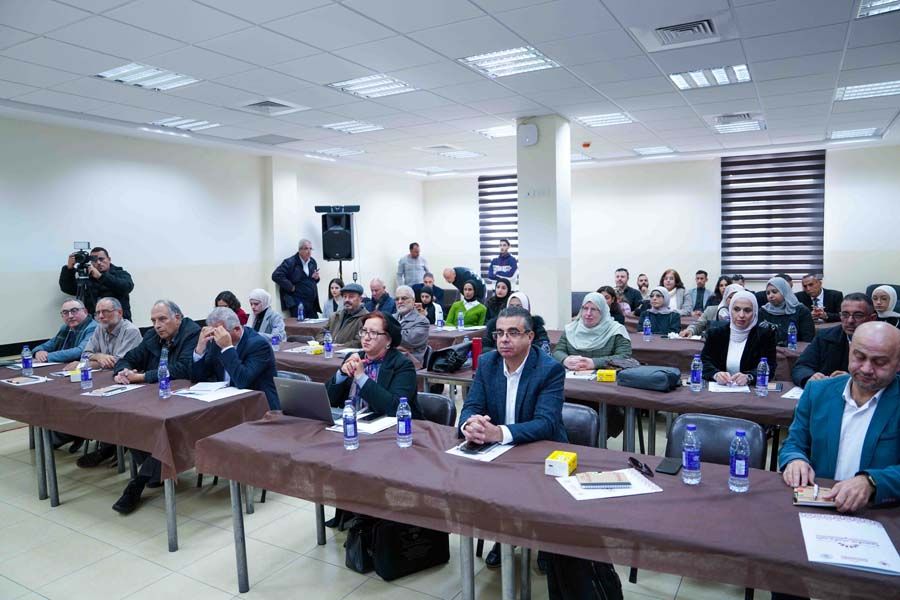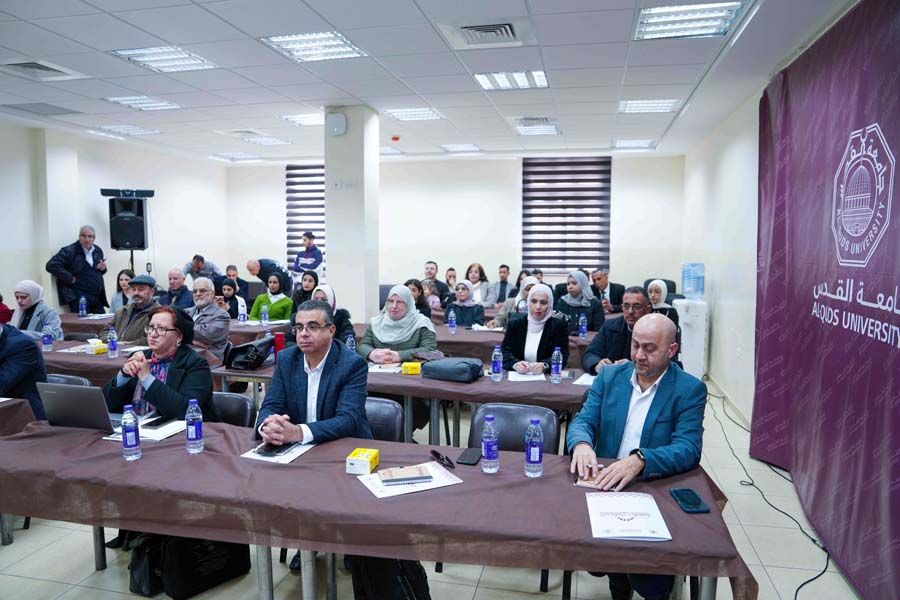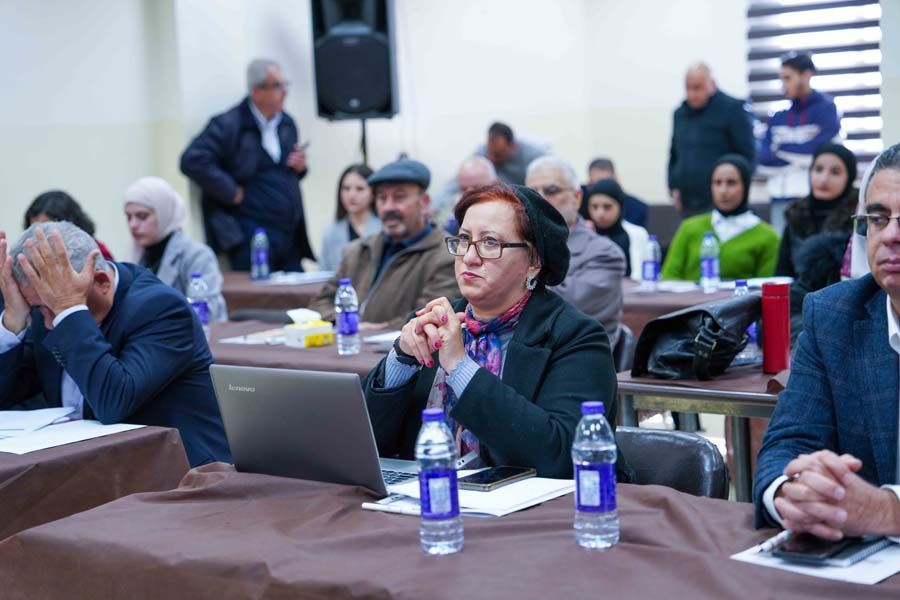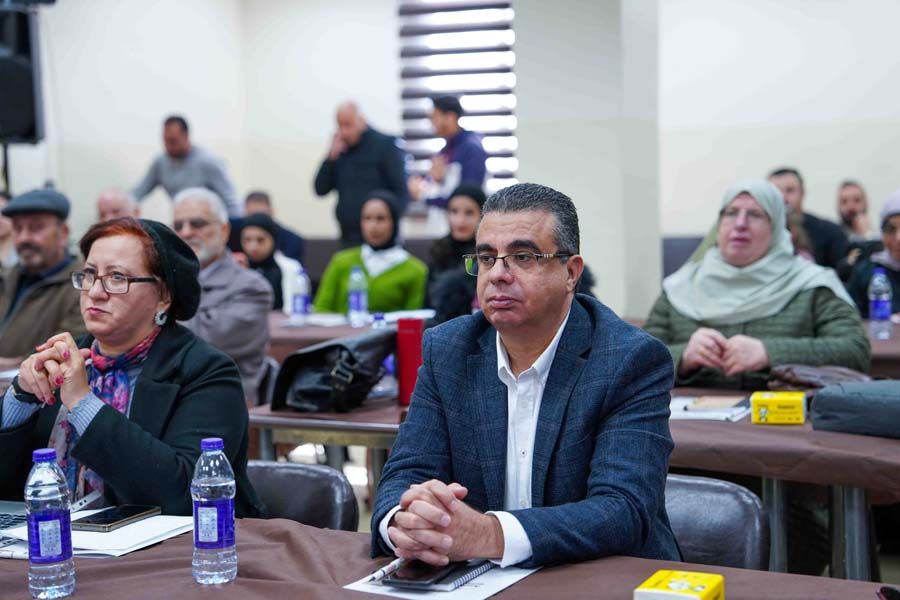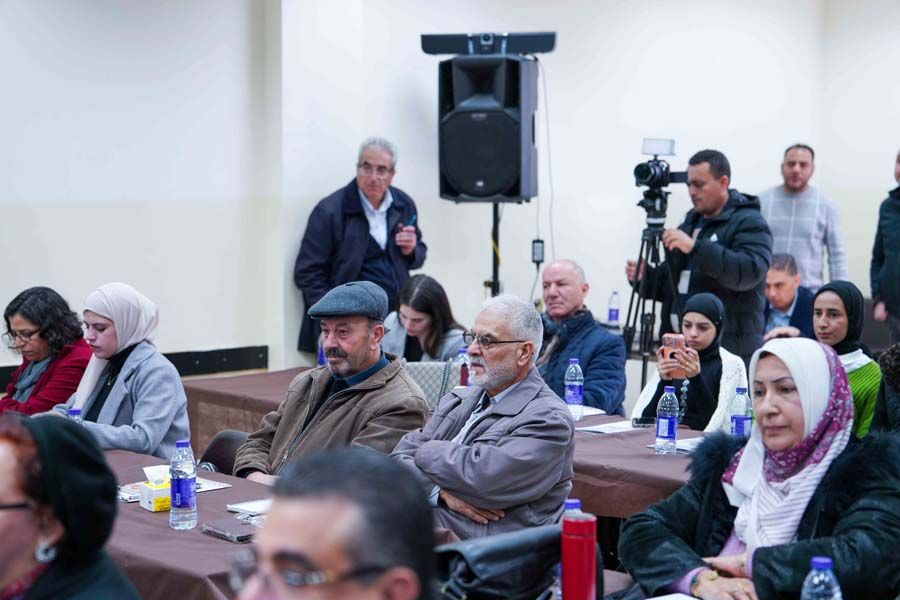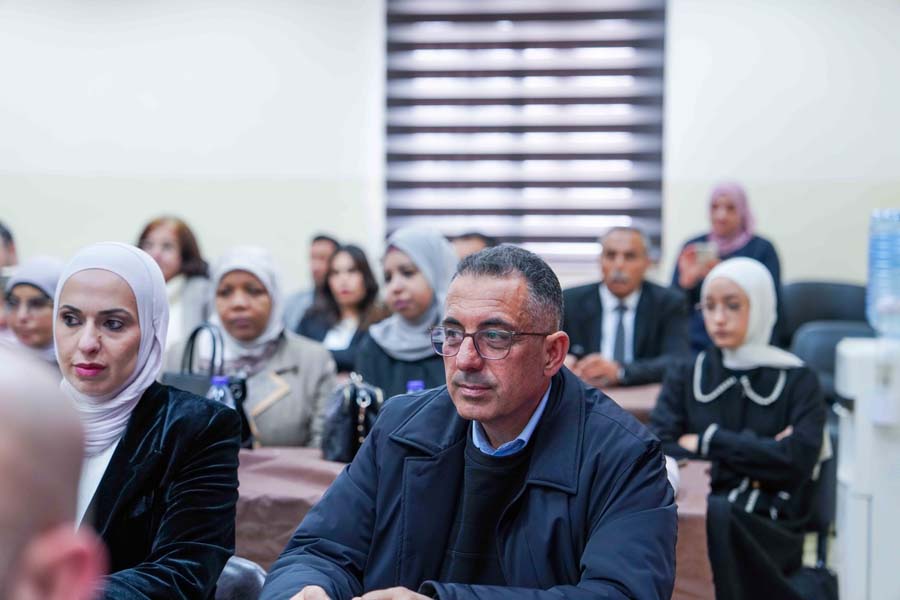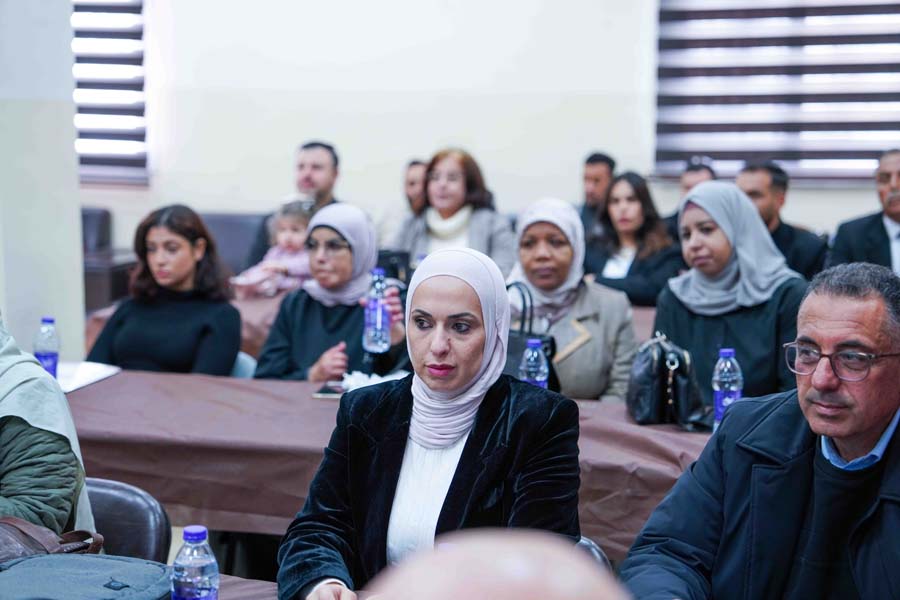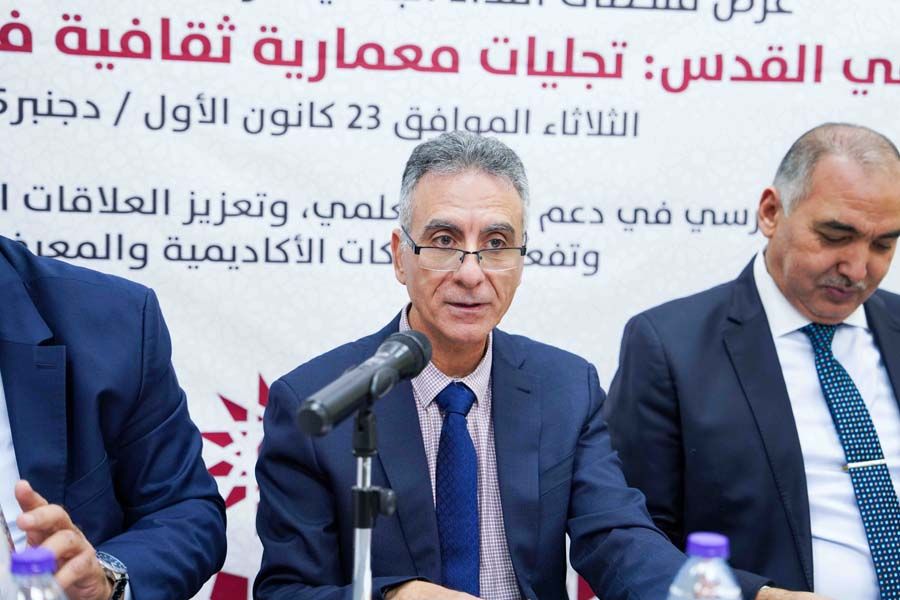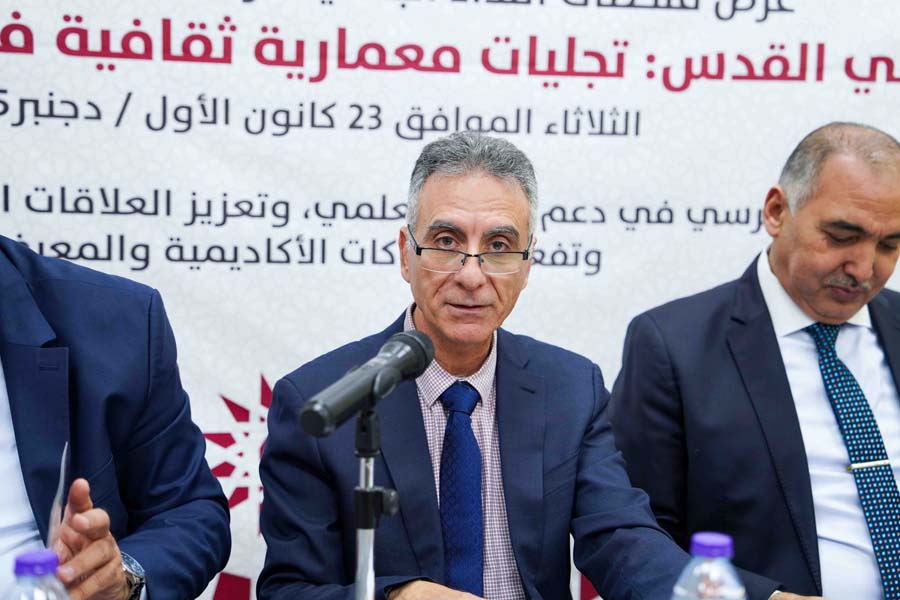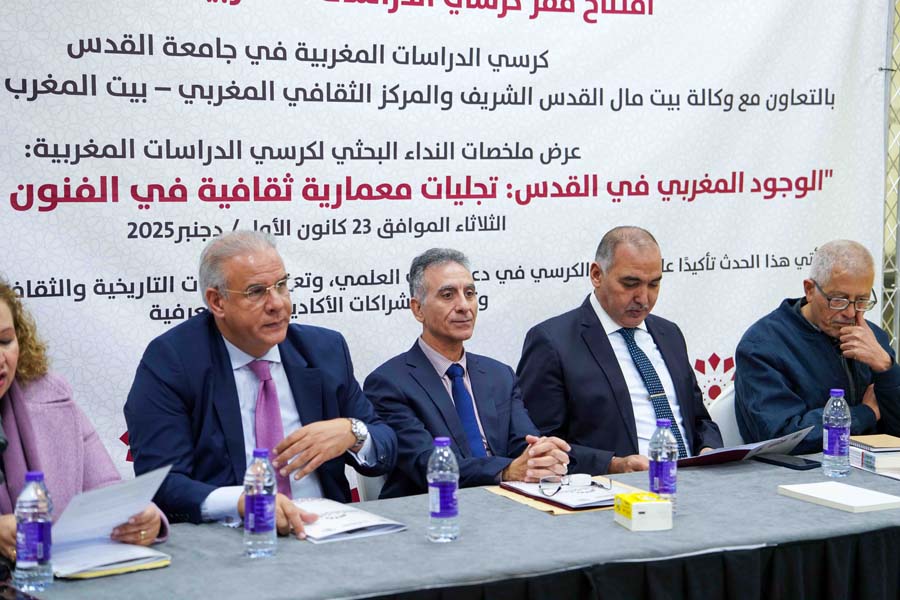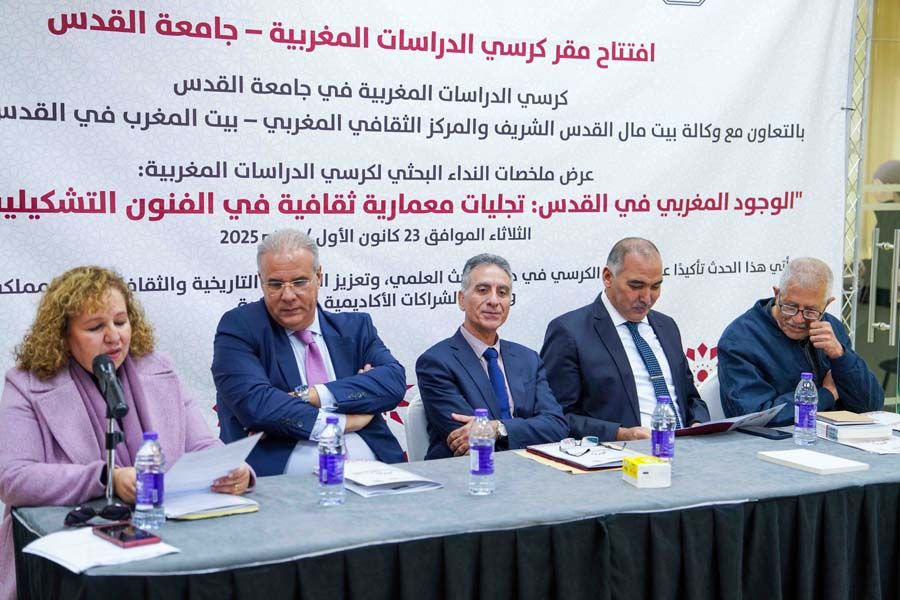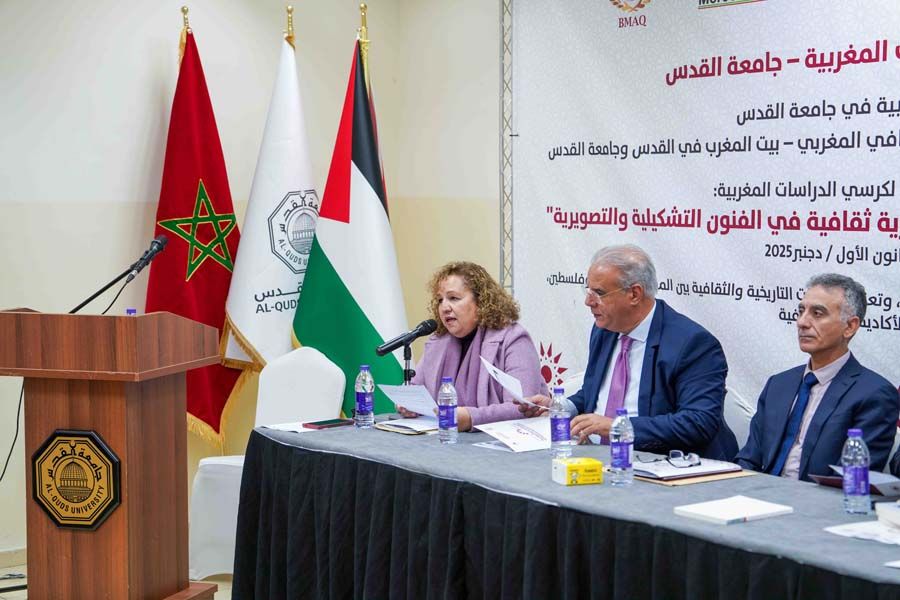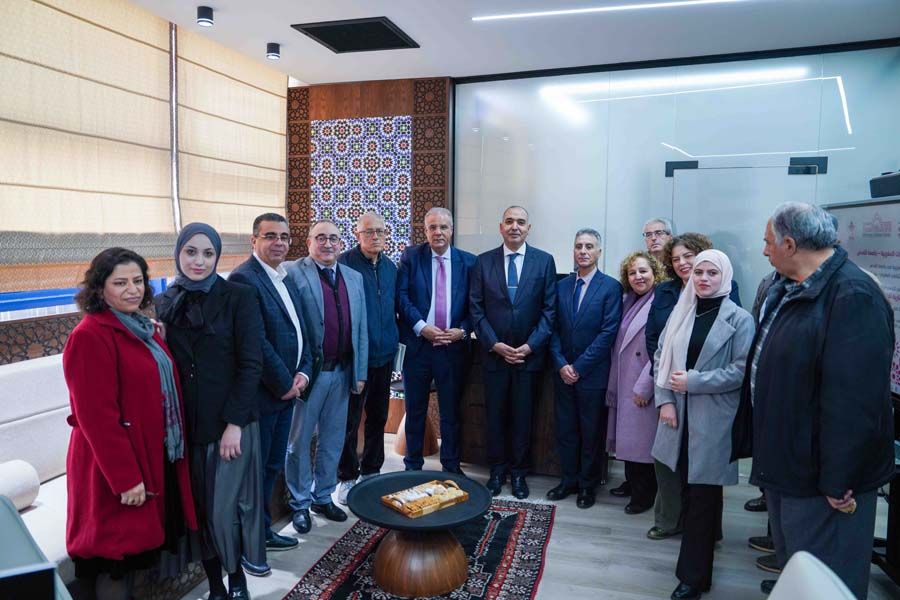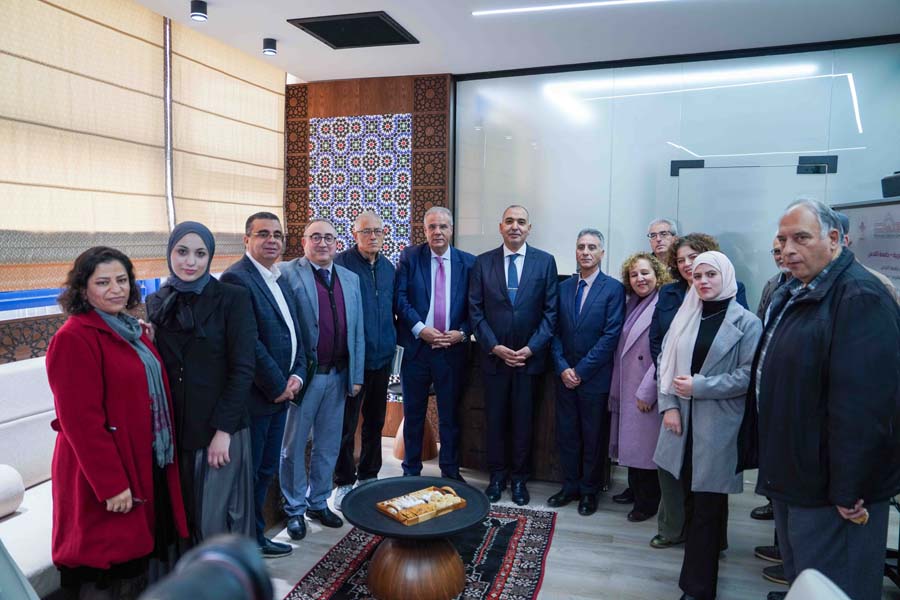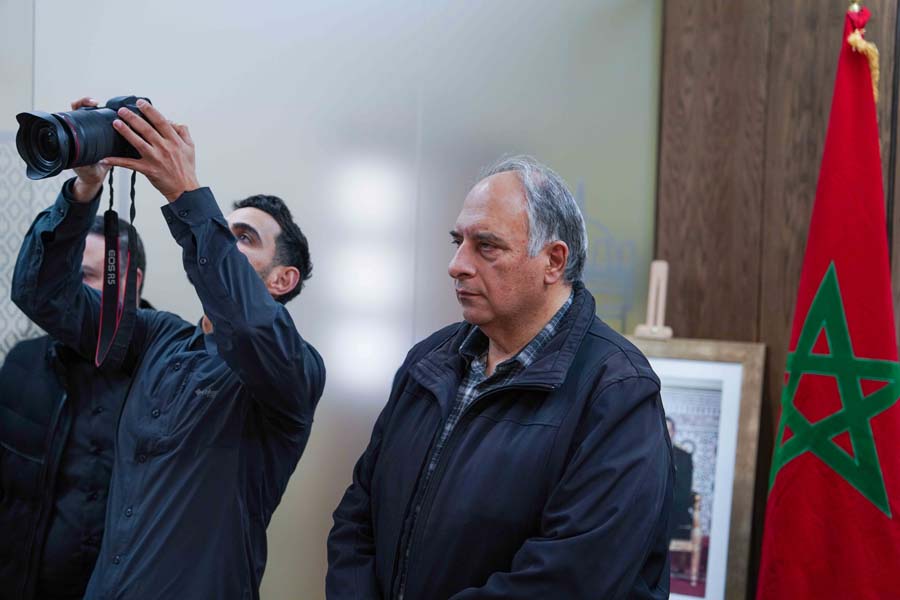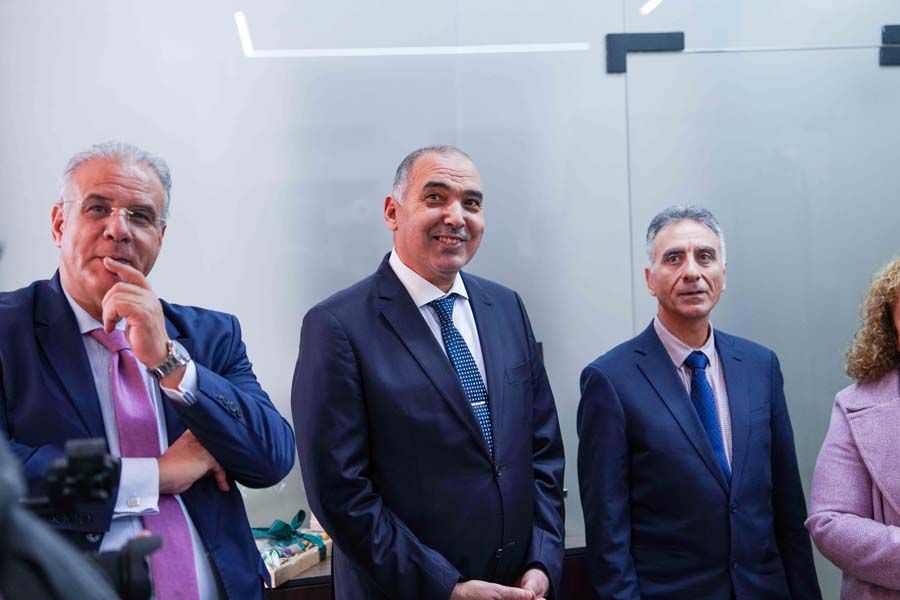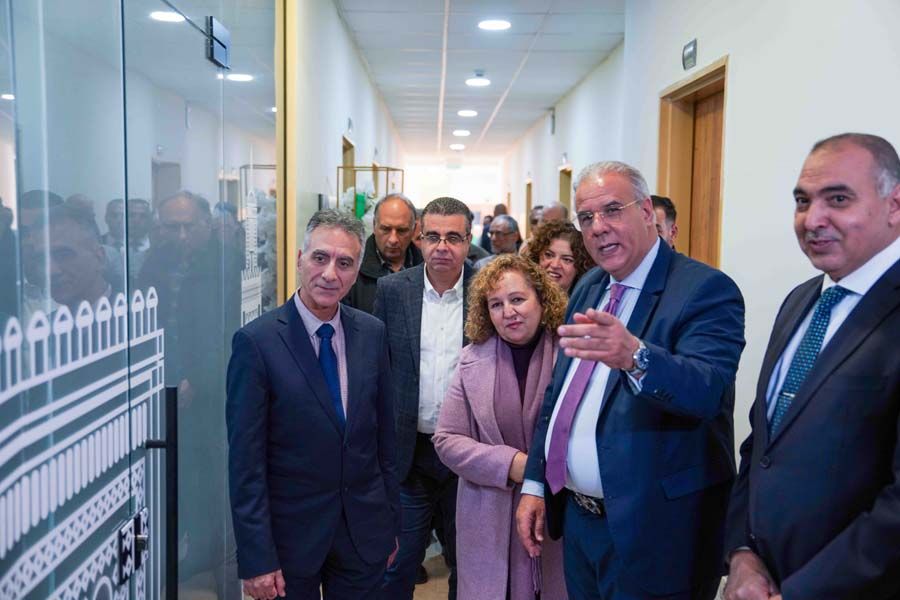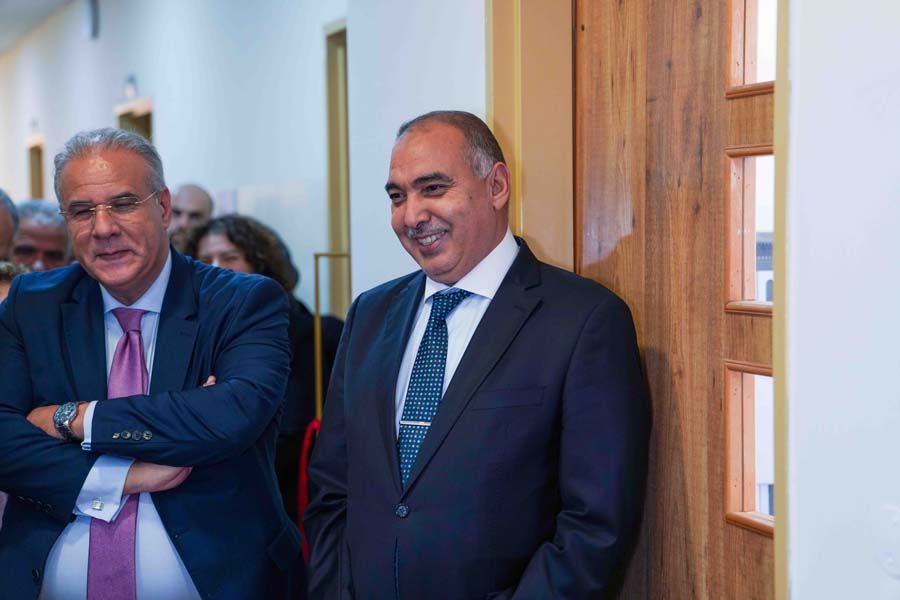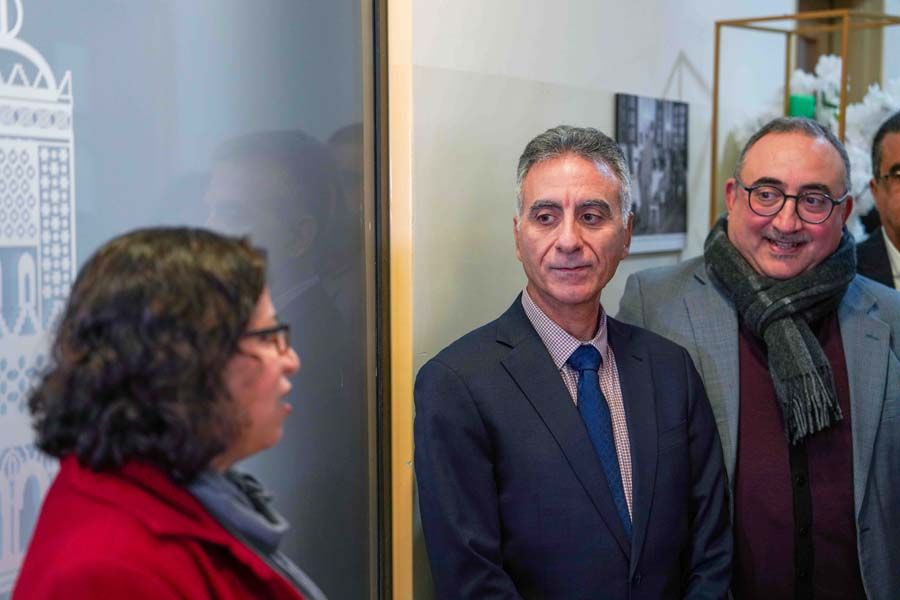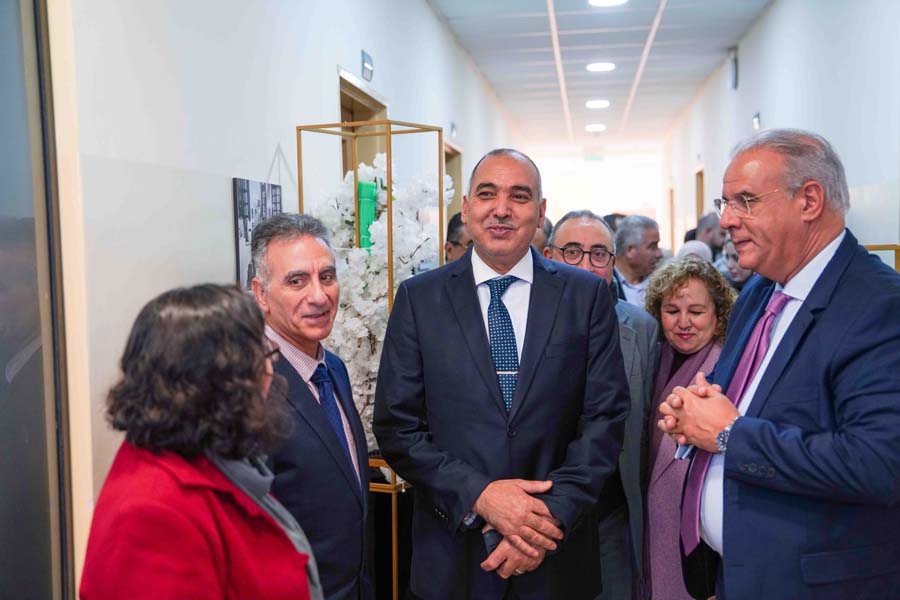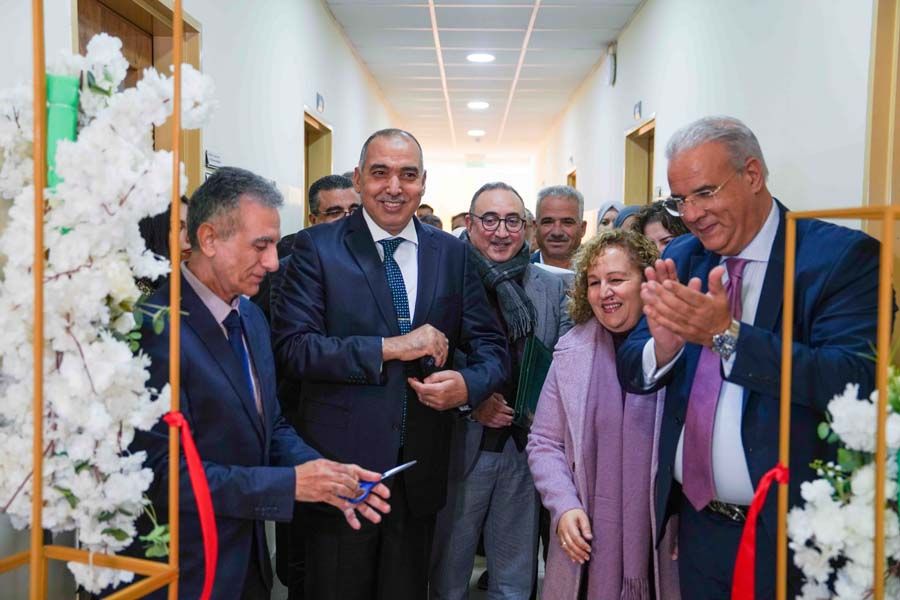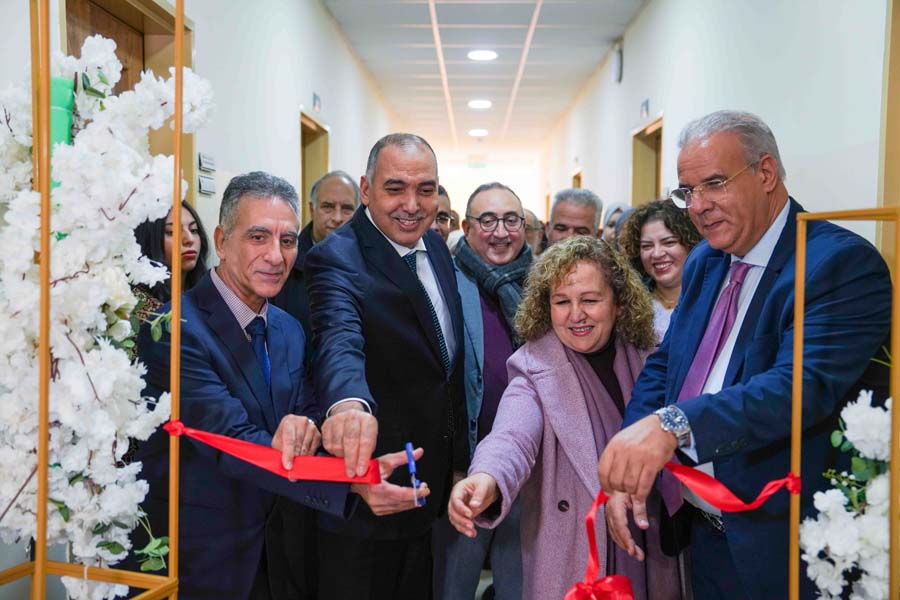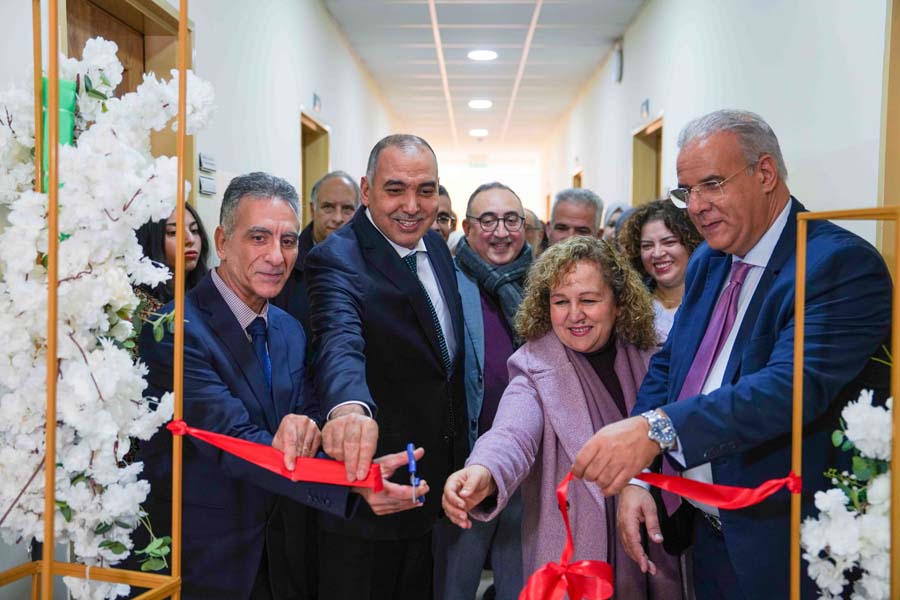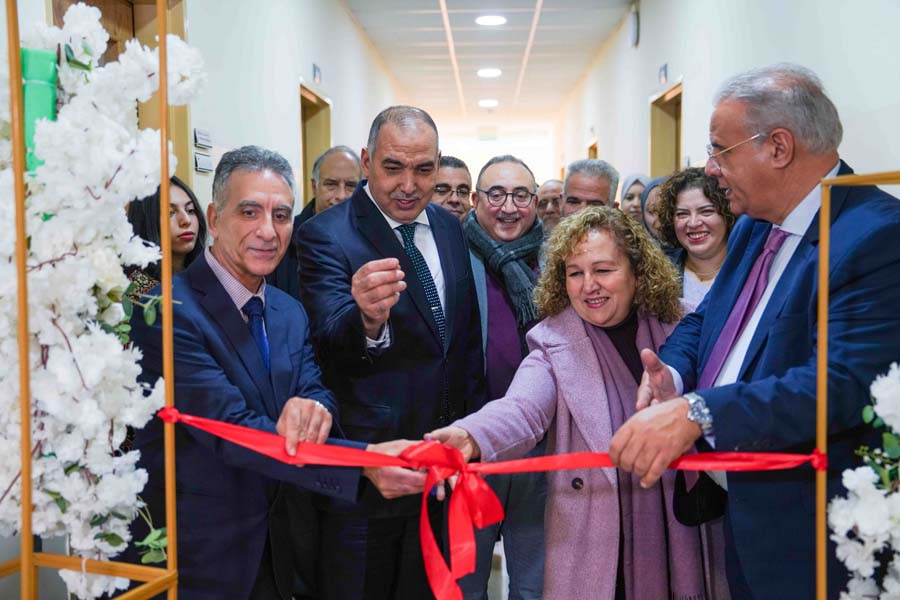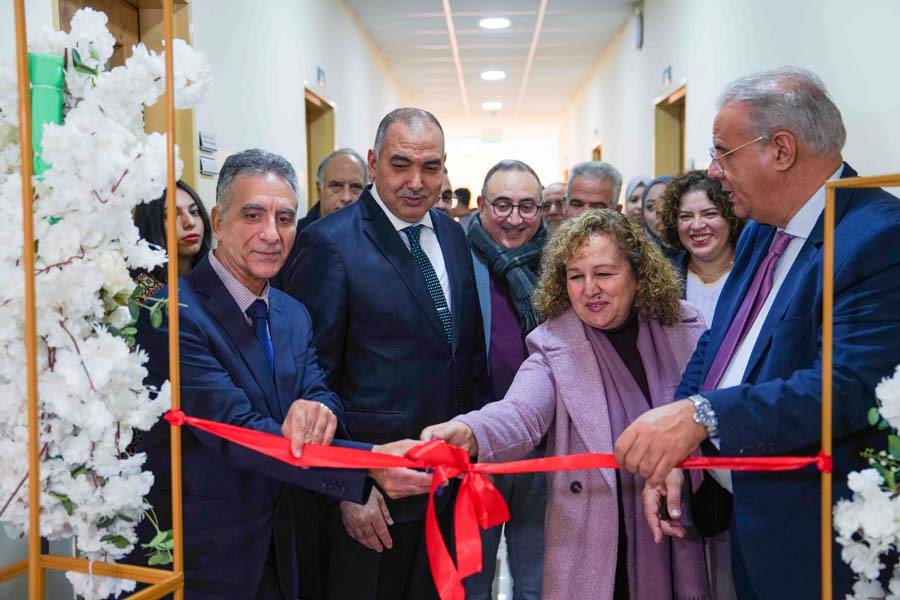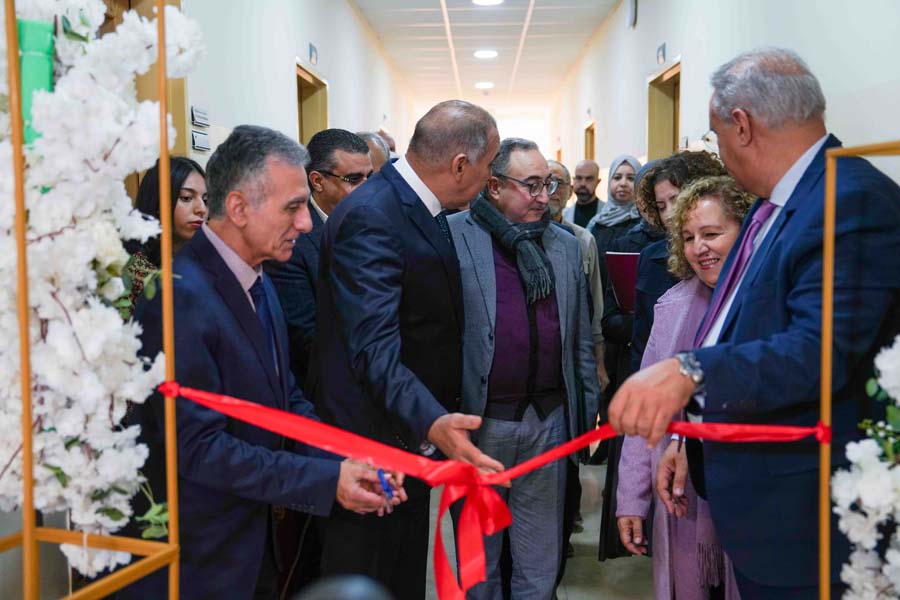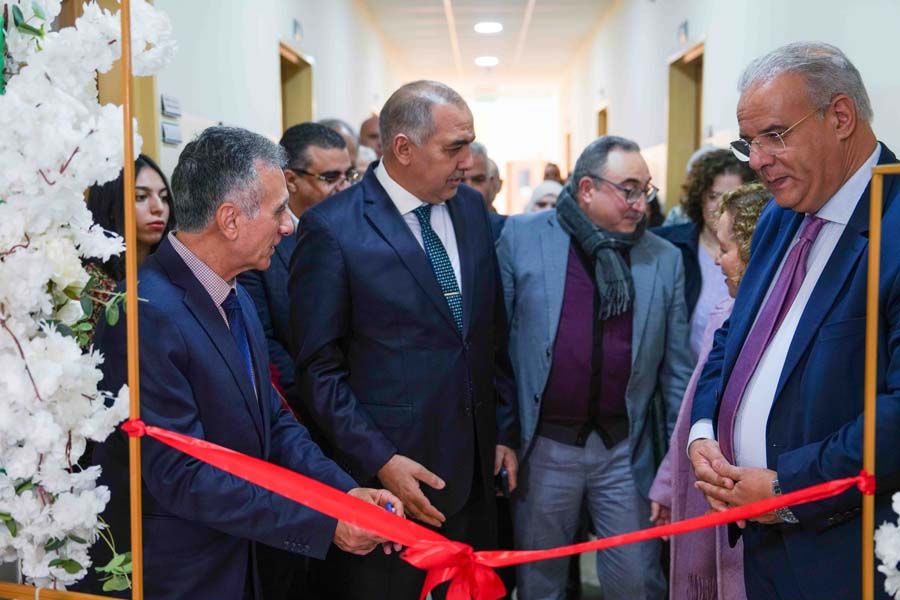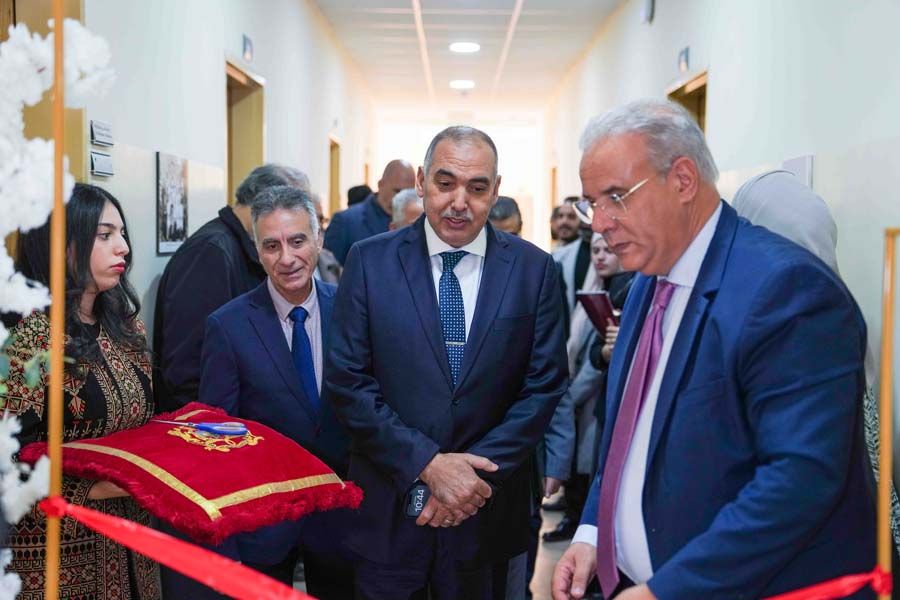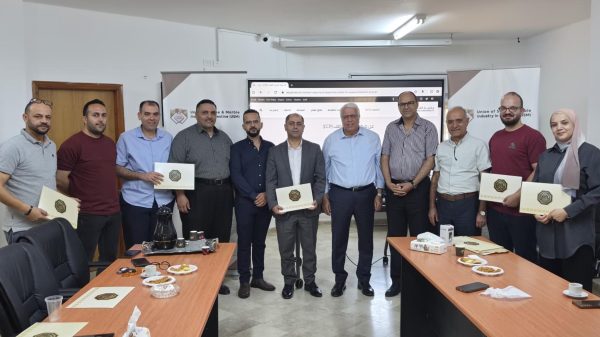

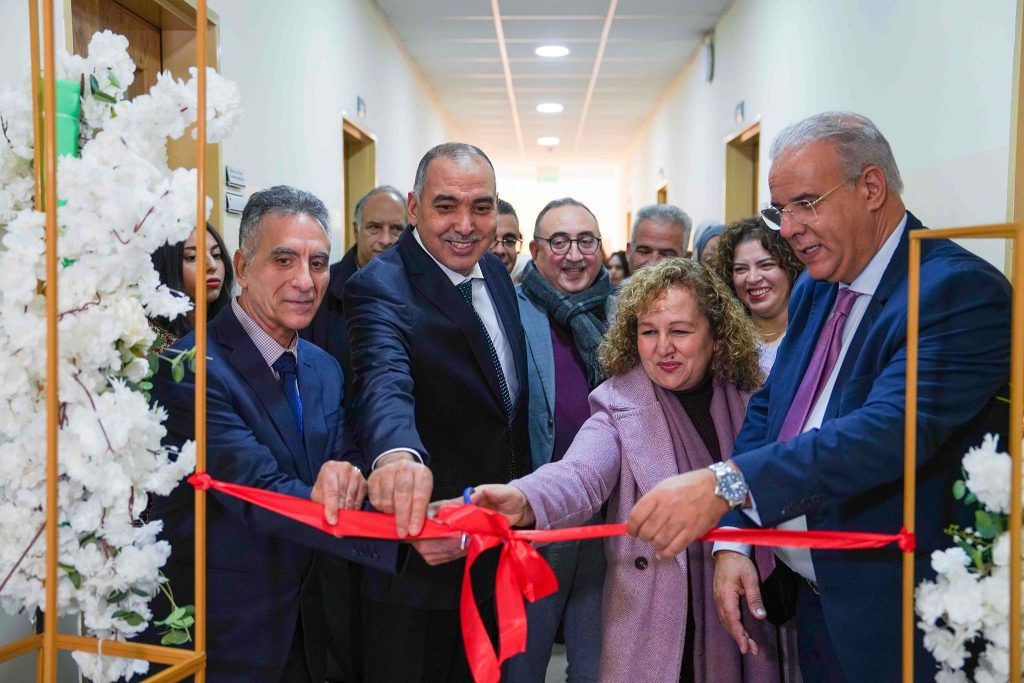
Al-Quds University inaugurated the official headquarters of the Chair of Moroccan Studies on its main campus in a formal academic ceremony. The event was attended by the University President, Prof. Dr. Hanna Abdel Nour; the Ambassador of the Kingdom of Morocco to Palestine, Abdel Rahim Meziane; the Acting Director of the Bayt Mal Al-Quds Agency, Mohammad Salem Al-Sharqawi; and the Chair’s Head, Dr. Safaa Nasser Al-Din.
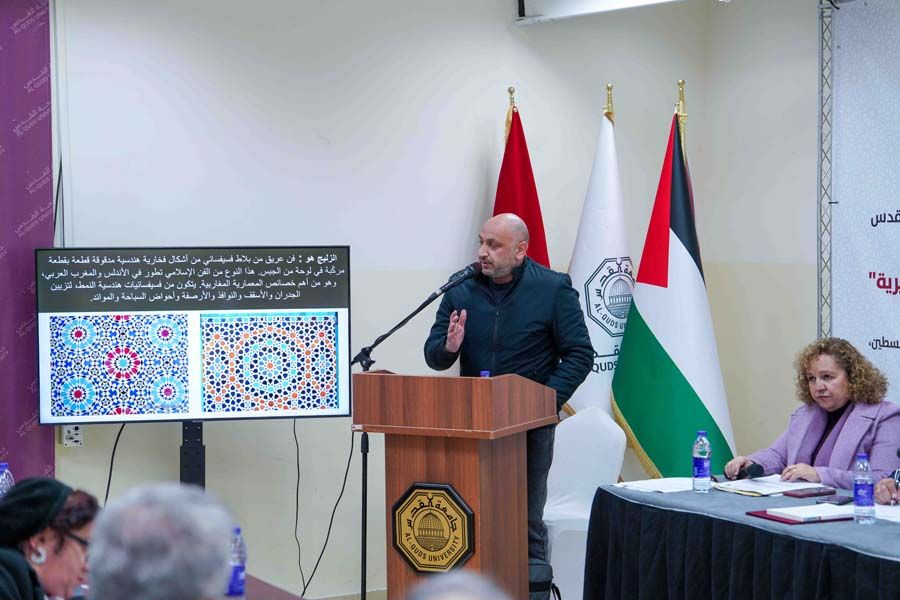
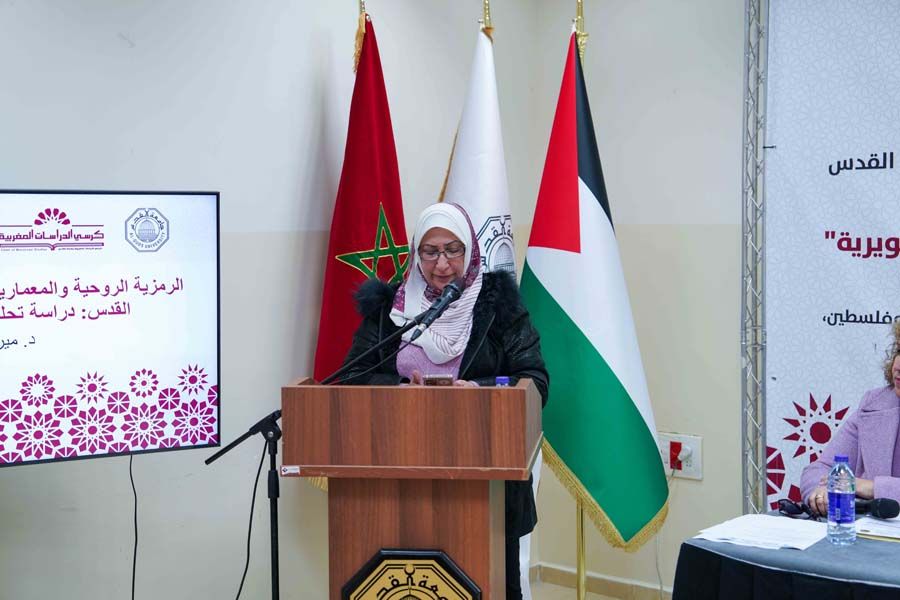
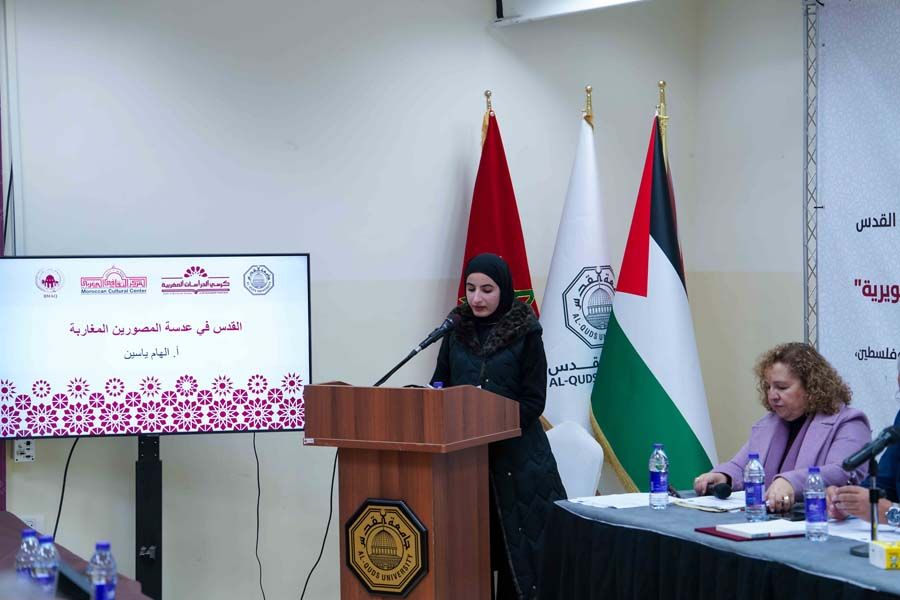
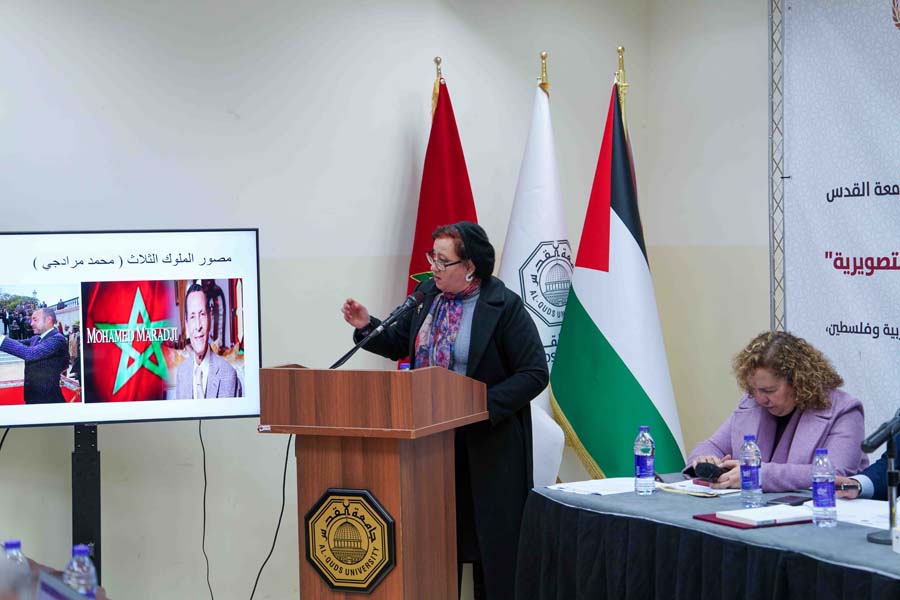
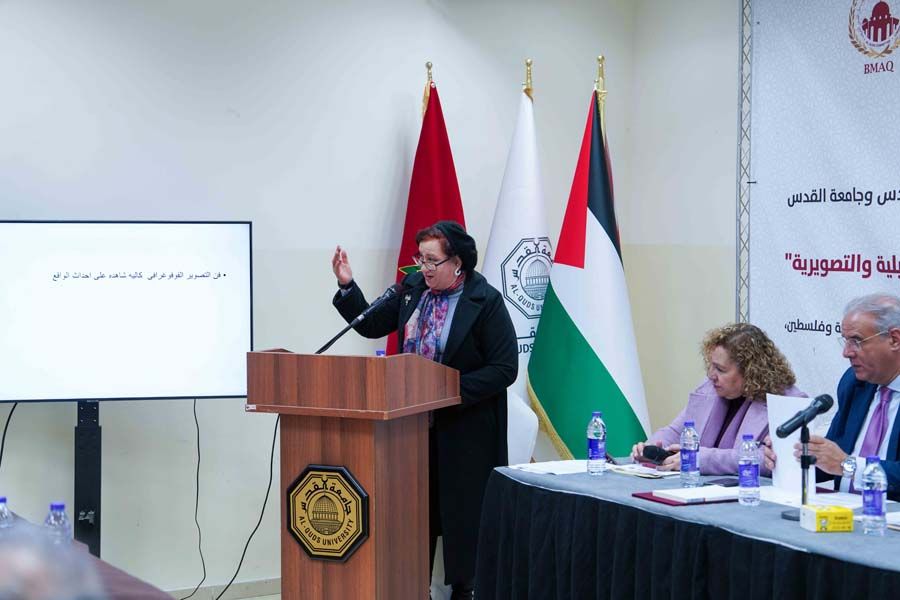
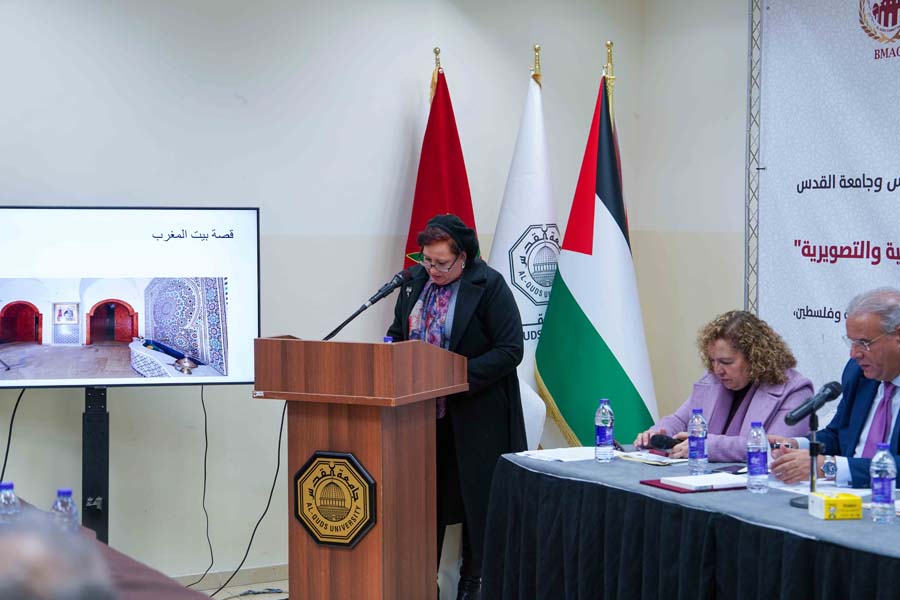
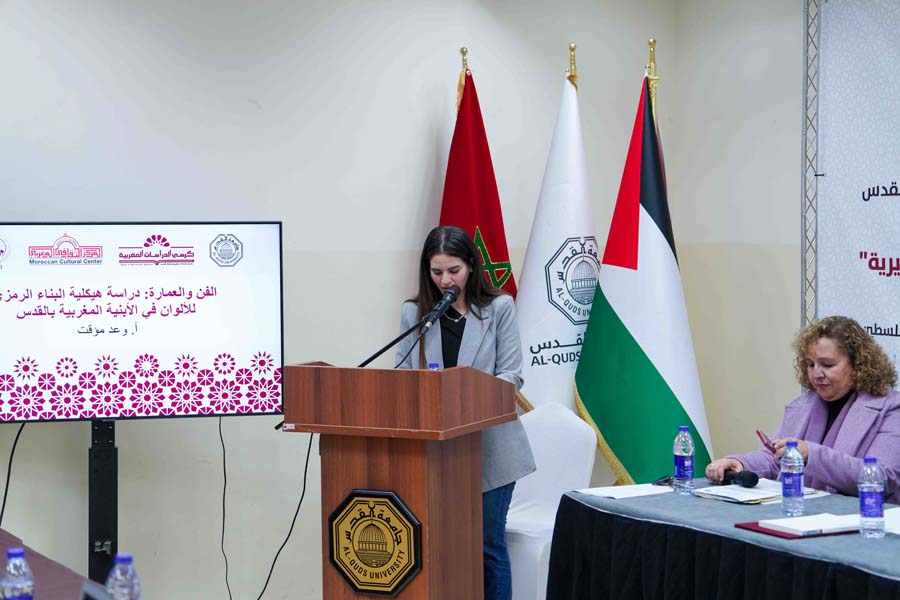
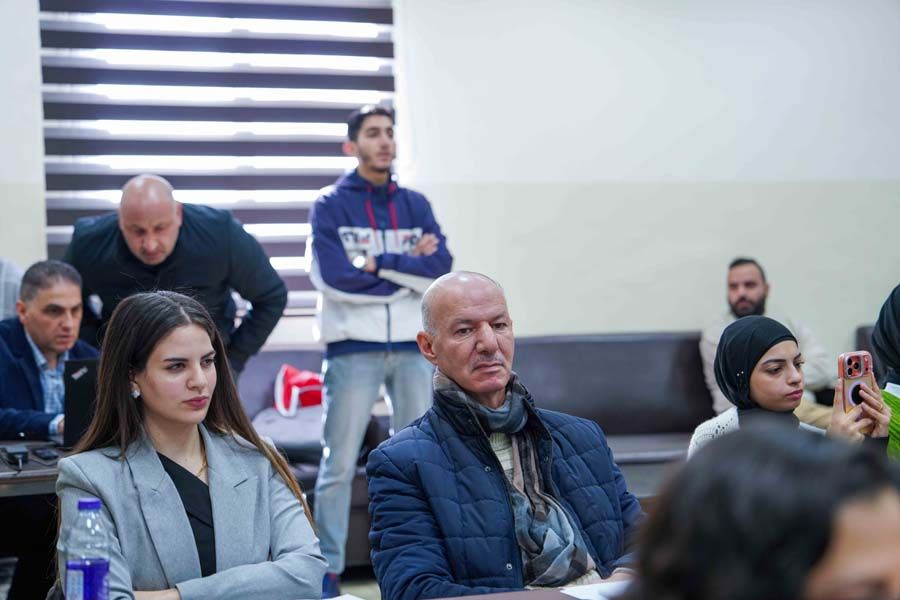
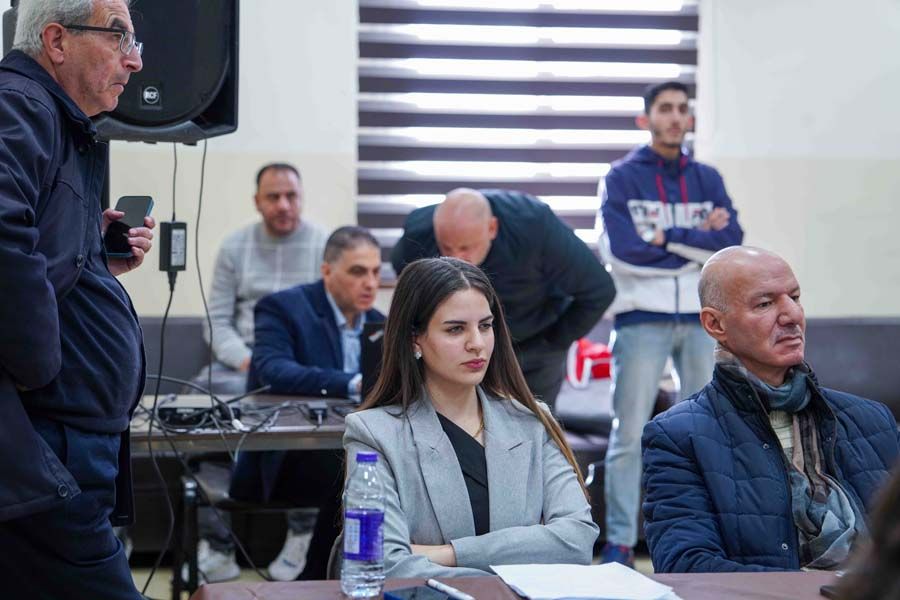
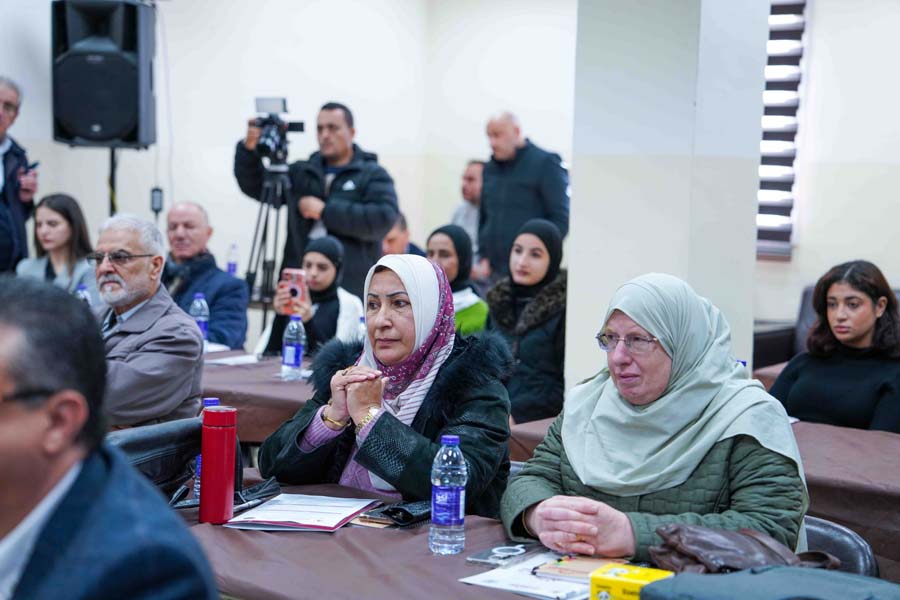
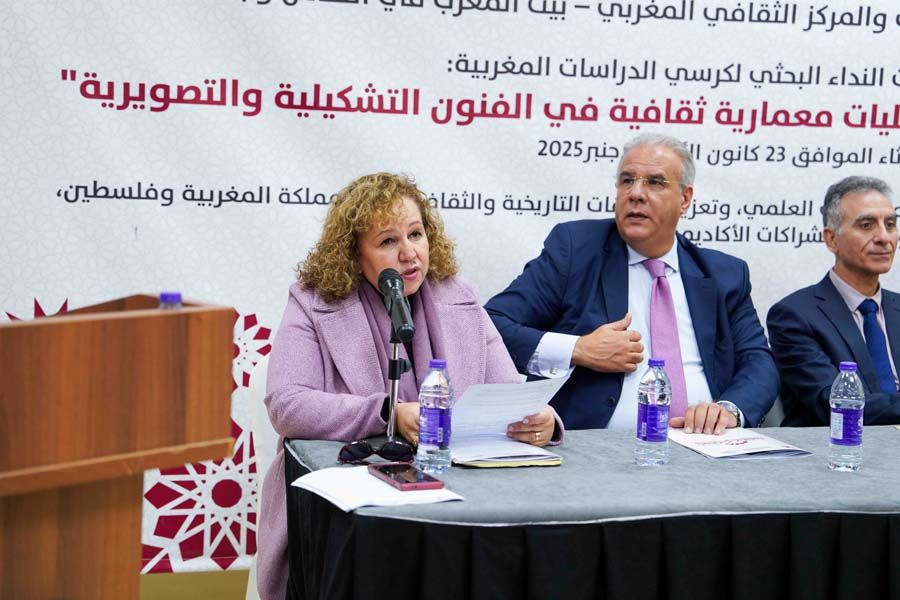
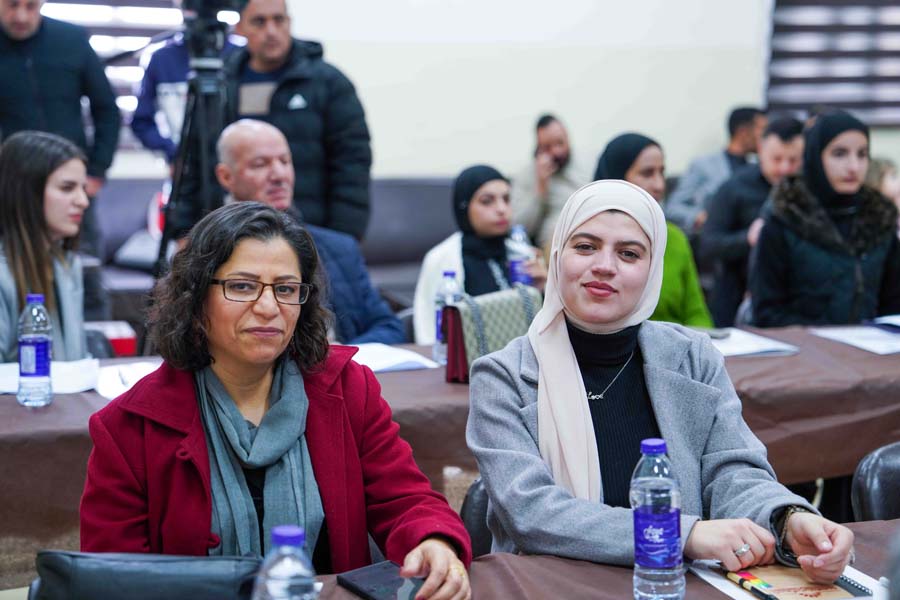
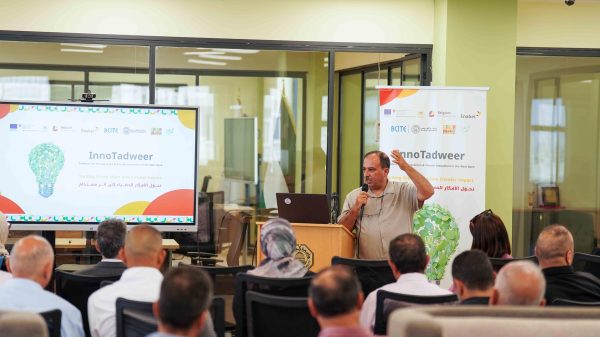
With this inauguration, the Chair transitioned from its establishment phase to a phase of institutional and intellectual empowerment. On this occasion, summaries of the work by faculty members and students participating in the Chair of Moroccan Studies’ first research call were presented, covering historical, cultural, architectural, and artistic aspects related to the Moroccan presence in Jerusalem and its civilizational manifestations. These presentations were discussed within a specialized academic forum, moderated by the Chair’s faculty members.
On this occasion, Prof. Dr. Abdel Nour expressed his pride in inaugurating the official headquarters of the Chair of Moroccan Studies within the university campus, emphasizing that the headquarters represents a distinctive architectural and aesthetic addition and “a valuable symbolic gift from Morocco to Palestine.”
Prof. Dr. Abdel Nour pointed out that the importance of the Chair lies in “its documentary and academic role in studying the historical and urban dimensions of the Moroccan presence in Jerusalem, preserving the shared memory, and promoting specialized scientific research in this field.”
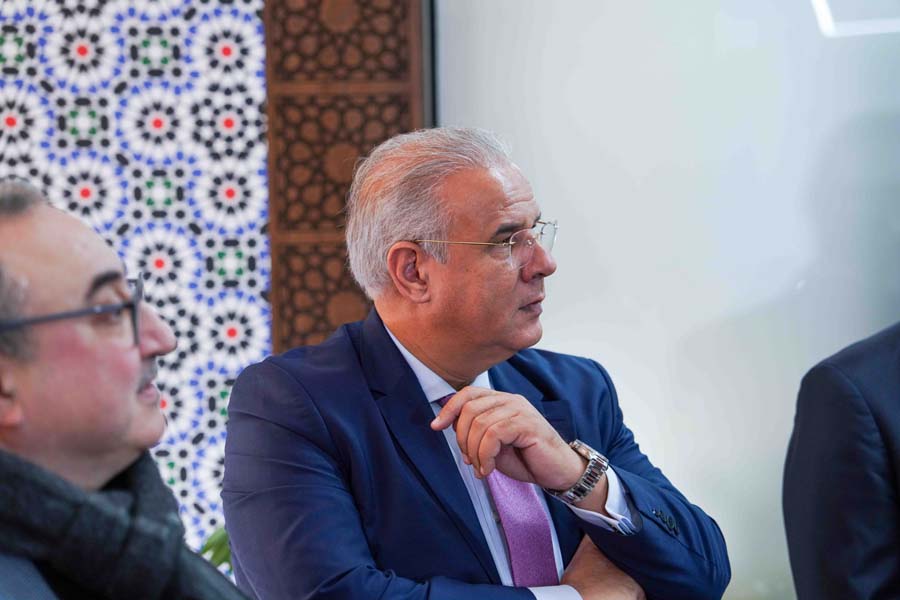
For his part, the Ambassador of the Kingdom of Morocco to the State of Palestine expressed his pleasure in participating in the inauguration, praising the university for hosting this distinguished academic project.
Mr. Meziane emphasized that dedicating an official headquarters for the Chair represents an important step in consolidating its institutional presence. He reminded that the Chair was born from the deep-rooted historical relationship between Morocco and Palestine, embodying a form of Morocco’s profound solidarity with Jerusalem and its resilient people, particularly in light of the symbolic significance of the Moroccan Quarter, Bab al-Maghariba, and the longstanding Moroccan presence in the city.
In turn, the Acting Director of the Bayt Mal Al-Quds Agency emphasized that Al-Quds University’s hosting of the Chair of Moroccan Studies provides it with a comprehensive academic and institutional framework that ensures its success and sustainability.
Mr. Al-Sharqawi explained that the Agency, operating under the supervision of His Majesty King Mohammed VI, President of the Jerusalem Committee, views education and scientific research as “a fundamental pillar for preserving identity and supporting social stability.”
For her part, Dr. Nasser Al-Din, Head of the Chair of Moroccan Studies, affirmed that the inauguration of the Chair’s official headquarters “does not merely signify the opening of an administrative space, but rather the consolidation of a long-term academic and intellectual trajectory aimed at generating knowledge, preserving memory, and developing profound research questions within the context of the Moroccan–Palestinian relationship, with Jerusalem at its heart.”
Dr. Nasser Al-Din noted that since its establishment, the Chair “has been built as a sustainable intellectual project, not limited to studying the Moroccan presence in Jerusalem and Palestine, but based on a broader vision concerned with the Moroccan experience in its civilizational and intellectual dimensions, with a particular focus on the Moroccan presence in Jerusalem as a living model of the Moroccans’ contribution to preserving the city’s identity, urban fabric, and cultural memory.”
It is worth noting that the inauguration of the official headquarters of the Chair of Moroccan Studies comes as the culmination of a foundational academic journey that began in March 2025. It constitutes an institutional base for implementing the Chair’s future plan, enhancing its research presence within Al-Quds University, and consolidating the Moroccan–Palestinian academic space as a dynamic environment for knowledge production and the preservation of shared memory.